
Lhasa Night Tour: No Lack of Oxygen | My Treasure Route from 6:00 PM to 11:30 PM, Compiled After Three Nights of Hiking (Including Night Photography Spots and Avoidance Tips)
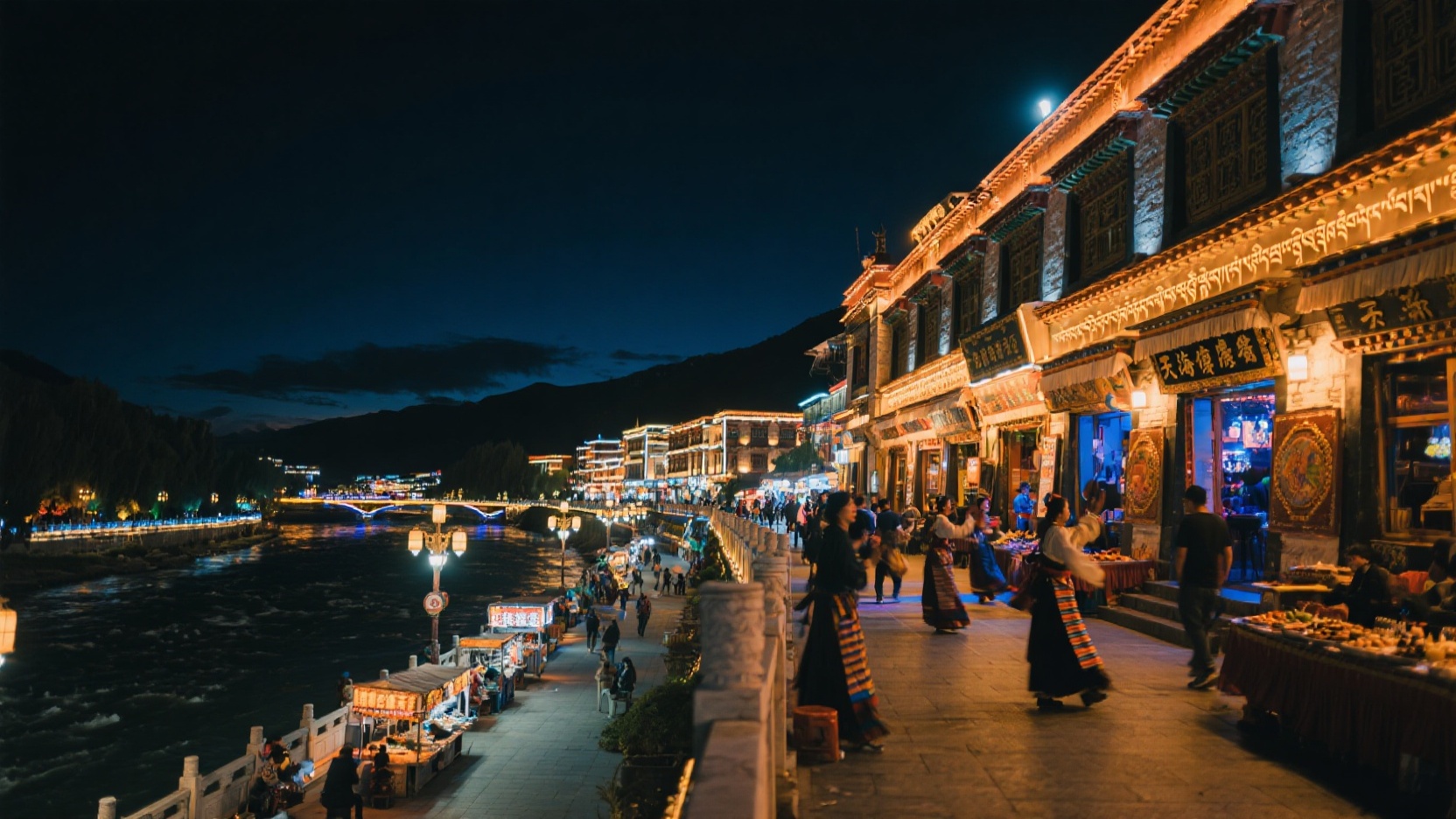
In Lhasa, don't rush back to your hotel for oxygen as soon as it gets dark. The Lhasa River and the old city at night are the true living room for locals. I stayed in Lhasa for nine days. For the first few nights, like most tourists, I only dared to stay around the guesthouse area after 7 pm. It wasn't until the third night, when the guesthouse owner took me to the Lhasa River, that I finally got to walk this night tour route three times. It lasts from 6:00 pm to 11:30 pm, and involves a combination of shared bicycles and walking. It's suitable for first-time visitors to Tibet who have already acclimatized to the altitude during the day.
18:00-19:10 Lhasa Riverside Road: Chase a highland sunset and the city lights
Entering the Lhasa Riverside Promenade from the bridgehead on the east side of Xianzu Island, it's recommended not to rush into cycling; walk or cycle slowly first. Under the dark sky, the city skyline and mountain lights in the direction of the Potala Palace will illuminate in layers, creating long reflections on the Lhasa River. Based on my own experience, this stretch of path takes about 40 minutes to walk slowly and about 15 minutes to witness the "Blue Moments." Do not go down to the riverbank, as the water level is not visible at night, and do not linger outside the guardrails.
Around 7:10 PM, I hailed a shared bike at the west end of Sun Island Bridge and rode along Deji Road towards Tianhai Night Market, which took about 20 minutes. The wind in Lhasa at night is very strong, so be sure to zip your windbreaker all the way up and wear thin gloves. This section is a transition from the city lights to the everyday life of the streets; there wasn't much traffic, making the cycling pace just right.
19:30-21:00 Tianhai Night Market: A local late-night eatery that tourists don't frequent.
Many travel guides only recommend Barkhor Street, but Tianhai Night Market is the real barbecue hotspot for Lhasa locals after get off work. I went for three nights in a row, and the stall owner remembered me and started teaching me how to distinguish yak tendon from regular beef tendon. I recommend starting with a serving of fried potatoes with chili powder at the entrance, then walking further in to try the grilled beef tendon and lamb trotters, and finally finishing with a bowl of warm yak yogurt. It's not fancy, and there's no sense of Tibetan dining ritual, but it's full of lively atmosphere, has a wide selection, and is reasonably priced at a few dozen yuan per person.
Enter the Tianhai Night Market on foot from the east entrance. About an hour is sufficient to stroll and eat your way through the market. Wear your bag in front of you, and avoid eating with bamboo skewers while walking, as the market floor may occasionally have oil stains. Exit from the west entrance around 9:00 PM to continue your ride.
21:00-21:20 Cycling through the Old City: A peaceful nighttime pilgrimage route.
The distance from Tianhai Night Market to the outer perimeter of Barkhor Street is about 4 kilometers, taking 15 to 20 minutes by shared bike. Once you enter the old town area, it's recommended to dismount and push your bike or walk. Even in the evening, there are still a few locals circumambulating the prayer wheels on the outer perimeter of Barkhor Street. The white walls under the streetlights seem to be bathed in a soft glow, perfect for digesting your meal. Taking photos here is allowed, but please don't use flash directly in the faces of those circumambulating, and don't suddenly get too close. This stretch of road gradually filters out the noise of the night market, preparing you for the upcoming nighttime entertainment.
21:20-23:30 Langma Hall: Don't go to the tourist shows, the locals' nightlife is here.
Most of Lhasa's old teahouses are open during the day, but the true local character at night isn't found in the touristy hotels with their "Tibetan evening performances," but rather in the long-established Langma Halls on the outskirts of Barkhor Street. Langma Halls are a combination of Tibetan livehouses and taverns, featuring traditional Tibetan folk dances like Tuixie, Guozhuang, and Zhamunye singing and dancing on stage. Local audience members often can't resist joining in the dancing, creating an atmosphere even more engaging than the performers. I chose a mid-range Langma Hall on the outskirts of Barkhor Street, ordered a pot of sweet tea, sipped some barley wine, and listened to Zhamunye's voice blending into the tap dancing – a cultural experience that no temple can provide during the day.
These venues typically offer mid-range prices, ranging from tens to hundreds of yuan per person. A special reminder: drinking alcohol at night in high-altitude areas can aggravate altitude sickness; it is recommended to only sample low-alcohol barley wine and primarily drink sweet tea. After leaving at 11:30 PM, prioritize using shared bicycles or taking a ride from a reputable platform back to your accommodation; avoid prolonged walking in deserted alleyways.
Night shooting: 5 camera positions and 4 safety measures
Camera position 1: Midway along the Lhasa River riverside promenade, around 7:00 PM during the blue hour, capture the outline of the Potala Palace and its reflection in the water.
Camera position 2: At the entrance of Tianhai Night Market, find a slightly higher step to shoot over the steam from the stalls and the crowd. Use your phone's night mode, and be careful to avoid shooting people directly in the face.
Camera position 3: Northeast corner of the outer ring of Barkhor Street, use the white wall to reflect the light and shadow of the people circumambulating the prayer wheel. Be sure to turn off the flash.
Camera position 4: Second floor of Langma Hall, near the side curtain, to shoot the stage side lighting and audience silhouettes, without blocking the service passage.
Camera position 5: Beijing East Road overpass, shooting the light trails of cars and the neon lights of the old city. After 11:00 PM, the number of vehicles decreases, and the picture is cleaner.
Safety tip 1: It's windy in Lhasa at night, so be sure to wear a hat and gloves when cycling. Wind blowing on the back of your head can easily cause headaches and worsen altitude sickness.
Safety Tip 2: Night markets and indoor areas like Langma Hall are crowded. Wear your bag on your back, wrap your camera around your wrist, and don't put your phone in the slanted pocket of your coat.
Safety tip 3: Do not drink more than a small glass of alcohol at night in high altitudes. If you experience tightness in the back of your head or a rapid heartbeat, leave immediately and return to your hotel for oxygen. Do not try to push yourself.
Safety tip 4: On the return trip, choose main roads, avoid poorly lit alleyways, and do not carpool with strangers alone.
The blogger concludes: I spent three consecutive nights exploring this night tour route before daring to write this article. Lhasa's nights don't need to be bustling, but they must be "right"—the blues by the river, the aroma of grilled fruit at the Tianhai Night Market, and the tap dancing in the Langma Hall—these elements combine to create the most authentic nighttime experience on the plateau. Spend your days visiting temples, and your nights exploring this route; you'll see the real Lhasa after the tourists have left.