
Staying in Lhasa | Core Accommodation Area Analysis: Choose the Right Place to Stay and Explore the Holy City
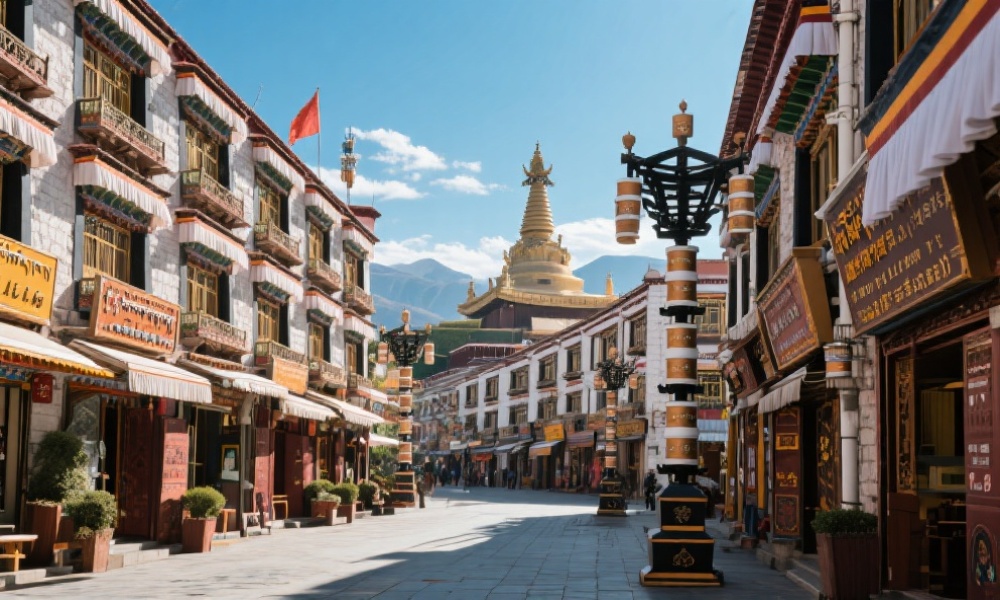
Lhasa, as the holy city of Tibetan Buddhism and the heart of plateau culture, attracts countless travelers every year. When planning your trip to Lhasa, choosing the right accommodation area not only affects the comfort of your journey but also directly impacts the depth and breadth of your experience of the city. XOOTOUR's experienced column provides in-depth analysis of Lhasa's four core accommodation areas to help you accurately locate your ideal place to stay.
1. Barkhor Street/Jokhang Temple Core Cultural Area
Suitable for: first-time visitors to Lhasa, cultural enthusiasts, food seekers, short-term stays, and those without a car.
Advantages:
- Location: This area is the cultural and historical heart of Lhasa, centered around the Jokhang Temple and radiating out to the Barkhor Street pilgrimage route. The Jokhang Temple, Ramoche Temple, and Potala Palace are all within walking distance (approximately 15-20 minutes), offering convenient transportation and saving significant commuting time.
- Cultural Immersion: Staying here allows you to deeply experience Lhasa's daily life and religious atmosphere. Wake up to the sound of pilgrims circumambulating prayer wheels in the morning; wander through the ancient streets and alleys in the evening, experiencing the rich Tibetan culture.
- Dining and Shopping: Barkhor Street and its surrounding area are home to numerous authentic Tibetan restaurants, teahouses, Nepalese restaurants, as well as handicraft shops and souvenir shops. From butter tea and Tibetan noodles to Thangka paintings and Tibetan silver jewelry, everything is available to satisfy your needs for dining and shopping.
- Accommodation options: From traditional Tibetan guesthouses and boutique homestays to budget hotels, there's a wide variety to suit different budgets. Many guesthouses are historical buildings themselves, featuring unique Tibetan courtyards and décor.
Shortcomings:
- Prices are relatively high: As a core tourist area, accommodation prices are generally higher than in other areas, especially during peak tourist season.
- The environment is noisy: Barkhor Street is crowded, especially during the day and evening, which may affect those who have high requirements for sleep quality. Some older buildings have poor sound insulation.
- Inconvenient transportation: The area consists mostly of pedestrian streets or narrow alleys, restricting vehicle traffic. Parking spaces are scarce and expensive, making it unsuitable for tourists with cars. Taxis or ride-hailing services may not be able to reach the hotel directly.
- The facilities are relatively outdated: some traditional inns may not have the same facilities as modern hotels, such as elevators and private bathrooms.
2. Beijing Middle Road/Yutuo Road commercial area
Suitable for: Business travelers, tourists seeking convenience and comfort, those who require modern facilities, transit travelers, and families.
Advantages:
- Location: This area is located east of the Potala Palace and connects to the Jokhang Temple area, serving as a core commercial artery of Lhasa. It boasts a well-developed transportation network, with multiple bus lines passing through and taxis and ride-hailing services readily available.
- Modern facilities: Most hotels along the route are star-rated or chain brands, offering more comprehensive modern facilities and services, such as gyms, conference rooms, and buffet restaurants, making the accommodation experience more standardized and comfortable.
- Dining and Shopping: In addition to Tibetan cuisine, there are more diverse options available, such as Sichuan cuisine, Cantonese cuisine, Western food, and fast food chains. Large shopping malls, supermarkets, banks, pharmacies, and other essential amenities are readily available, making shopping and daily life highly convenient.
- Scenic views: Some high-rise hotels offer distant views of the Potala Palace and provide unique city views.
- Relatively quiet: Compared to the bustling atmosphere of Barkhor Street, this area is relatively quieter at night, but still retains urban vitality.
Shortcomings:
- Lack of distinctive features: The hotels are mostly modern business or tourist hotels, lacking Tibetan cultural characteristics, and the immersive experience is not as good as in the Barkhor Street area.
- Prices are moderate to high: chain brand hotels have moderate prices, but prices may still rise during peak season.
- High pedestrian and vehicular traffic: As a major commercial thoroughfare, it experiences high pedestrian and vehicular traffic during the day, which may lead to traffic congestion.
3. Xianzu Island/Lhasa Riverside Leisure Area
Suitable for: leisure vacationers, family trips, long-term residents, those seeking tranquility and natural scenery, and self-driving tourists.
Advantages:
- Beautiful Environment: Xianzu Island is surrounded by the Lhasa River, boasting unique island scenery and wetland landscapes. Riverside hotels and guesthouses are mostly built along the water, offering a tranquil environment and fresh air, making it an ideal place to escape the hustle and bustle of the city.
- Accommodation quality: The area boasts numerous high-end resort hotels, boutique guesthouses, and uniquely designed inns, offering a high-quality accommodation experience. Some even feature distinctive facilities such as gardens, terraces, and hot springs.
- Activity space: Suitable for walking, cycling, and photography, offering close-up views of the Lhasa River's natural scenery. Some hotels organize riverside yoga, stargazing, and other activities.
- High cost-performance ratio: Compared to accommodations of the same quality in the city center, the prices in the Xianzudao area are usually more competitive.
- Convenient parking: The hotel offers ample parking spaces, suitable for tourists with their own cars.
Shortcomings:
- Inconvenient transportation: It is far from core attractions such as the Potala Palace and Jokhang Temple, requiring passengers to take a taxi, ride-hailing service, or bus (which may be infrequent), with a commute time of about 15-30 minutes.
- Limited dining and shopping options: There are relatively few dining and shopping options in the area, and people mainly rely on hotel facilities or going to the city center.
- Development status: Some areas of Xianzu Island are still under development, and the surrounding facilities may not be as complete as those in the city center.
4. Liuwu New Area Transportation Hub Area
Suitable for: transit passengers to and from Lhasa, business meetings, budget travelers, self-driving tourists, and long-term residents (those who do not frequently visit attractions in the city center).
Advantages:
- Convenient transportation: Liuwu New Area is a transportation hub in Lhasa, with Lhasa Railway Station located in this area, and it is also close to the Lhasa Gonggar Airport expressway entrance. It is extremely convenient for travelers who need to frequently enter or leave Lhasa or transfer there.
- The hotels are modern: As a newly developed area, the hotel facilities are generally new, and most of them are modern business hotels or budget chain hotels, providing standardized services.
- Price advantage: Compared to the city center, accommodation prices in Liuwu New Area are usually more cost-effective, making it suitable for tourists with limited budgets.
- Convenient parking: Hotels generally offer free or reasonably priced parking spaces, which is convenient for tourists traveling by car.
- Business amenities: The area has convention centers, government agencies, etc., making it suitable for business travelers.
Shortcomings:
- Located far from tourist attractions: It is far from core attractions such as the Potala Palace and Jokhang Temple, and it takes a long time to get there by public transportation or taxi (about 30-45 minutes).
- Lack of cultural atmosphere: The overall planning of the area is too modern, lacking traditional Tibetan style and cultural heritage, making it difficult to experience authentic Lhasa life.
- Dining and shopping options: Dining options are mainly chain fast food and hotel restaurants, while shopping options are limited and lack distinctive features.
In conclusion, when choosing an accommodation area in Lhasa, you should consider your travel purpose, length of stay, budget, and preferences for transportation, cultural experiences, and comfort.
XOOTOUR suggests: For first-time visitors to Tibet, Barkhor Street is the best choice for experiencing the culture. If you're looking for comfort and convenience while also enjoying views of the Potala Palace, Beijing Middle Road is a good option. For a peaceful vacation or family trip, Xianzu Island is a good choice. For transit or self-driving, Liuwu New Area is the most efficient option.