
Lhasa in the Festivals | Spend half a day as a local, experiencing Tibetan opera singing, Nyemo Tibetan incense, and Wangguo field walking.
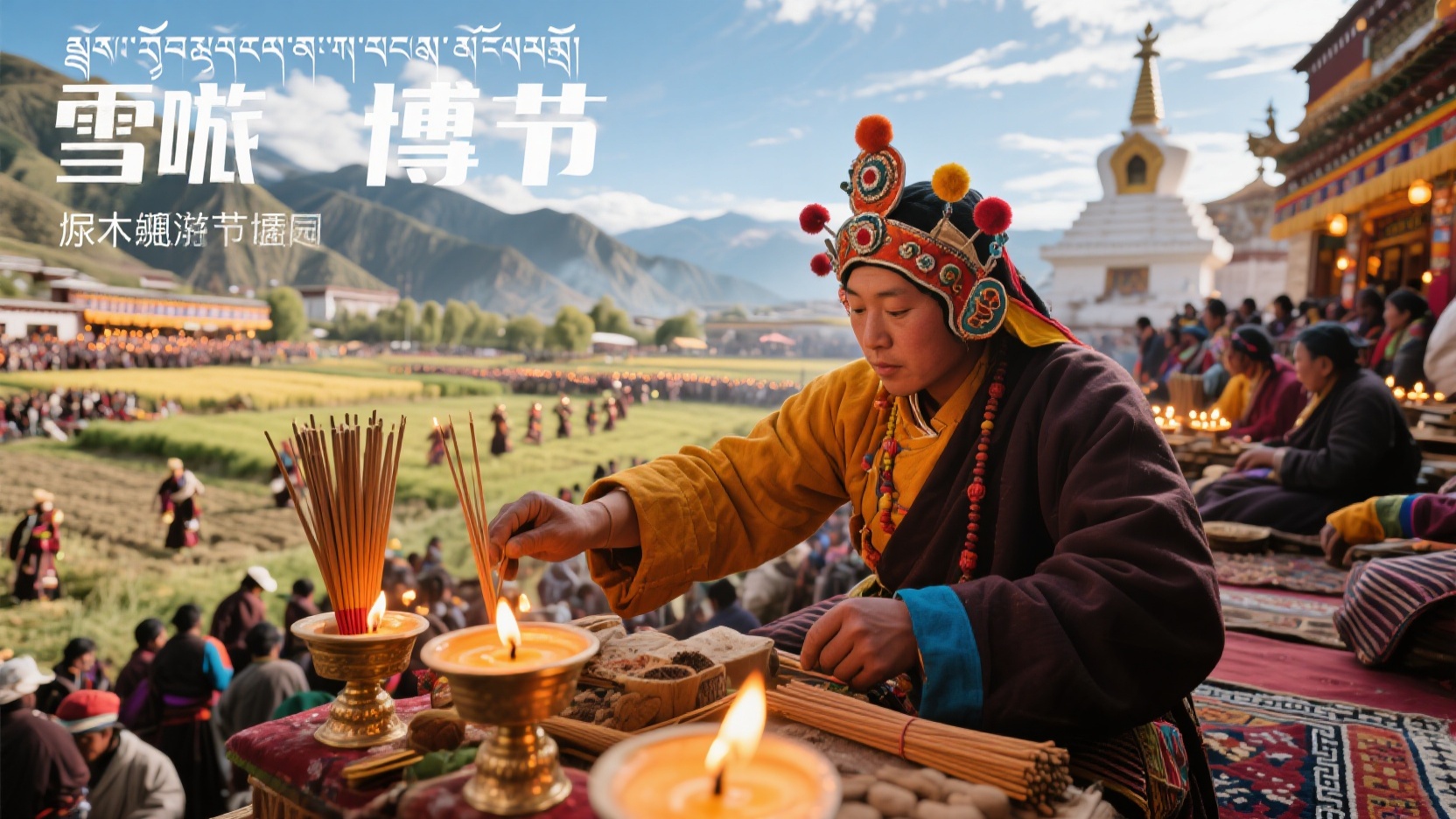
Lhasa's culture and art aren't found on the explanatory plaques in monasteries, but rather hidden in the drumbeats of festivals, the incense of handmade crafts, and the dust of pilgrimages around the fields. The typical "temple plus museum" route only offers a static glimpse of Lhasa. What truly engages visitors are four participatory folk and intangible cultural heritage experiences: listening to Tibetan opera during the Shoton Festival, making incense at the Nyemo workshop, participating in pilgrimages around the fields during the Wangguo Festival, and lighting lamps along Barkhor Street during the Butter Lamp Festival. The following content does not cover registration channels or fees, but only describes the time, setting, process, and the underlying cultural logic.
Shoton Festival: Understanding the Opening of "Wimbatton" at Norbulingka
The Shoton Festival is concentrated in late June to early July of the Tibetan calendar, mostly in August of the Gregorian calendar. Norbulingka and Zongjiao Lukang are the areas in Lhasa with the highest concentration of Tibetan opera performances. Before the opera performance, "Wenba" wearing blue masks come out to cleanse the venue. Afterwards, the main plays, such as "Prince Norsang" and "Princess Wencheng," will be performed for most of the day. When watching, it is not recommended to focus on understanding the lyrics, but rather pay attention to the colors of the masks and the movement patterns: dark red represents the king, yellow represents immortals and loyal ministers, white represents ordinary men, and half-white and half-black represents clowns. Local audiences will lay out cushions, yogurt, and barley wine, and softly respond when they hear the high-pitched "Ema O." To get closer to the local perspective, you can familiarize yourself with the basic plot of a Tibetan opera beforehand and identify the characters and the changes in the rhythm of the drums and cymbals on site, which is more immersive than simply taking pictures of the masks.
Nimu Tibetan Incense: From Cypress Mud to Fine Strips of Herbal Blends
In Thonpa Village, Nyemo County, grinding cypress wood into clay using a waterwheel is the initial step in Tibetan incense making. Some intangible cultural heritage workshops in Lhasa allow participants to begin by kneading the incense: mixing cypress clay with powders of over thirty medicinal herbs, including saffron, nard, sandalwood, and cloves, in specific proportions. The hands must not be too hot during kneading, otherwise the aroma will evaporate prematurely; the clay must be kneaded until it becomes as malleable as ghee before being filled into a horn-shaped incense press and stretched evenly into long strips on cotton cloth. The incense must be air-dried in the shade, never exposed to direct sunlight. The workshops will also explain an easily overlooked fact: Tibetan incense is not only used for offerings to Buddha, but also for purifying the air and regulating emotions. This helps participants understand why traditional recipes emphasize the pharmacological compatibility of the incense, rather than simply pursuing a strong aroma. Finally, participants take home a small bundle of incense they pressed themselves, which is more distinctive than store-bought incense.
Wangguo Festival: Reciting scriptures and responding to the chanting "La Suo" while following the procession through the fields.
The Wangguo Festival is a harvest festival in the agricultural areas of the Lhasa River Valley, held in the seventh month of the Tibetan calendar before the barley ripens, taking place in rotation in places like Dazi, Qushui, and Linzhou. The core of the festival is the "field circumambulation": young men carry scrolls of the Kangyur (Tibetan prayer book) wrapped in yellow cloth, circling the field ridges, followed by women carrying arrows, holding prayer flags, and chanting "Xieqing" (a type of prayer song). Visitors from other places may only focus on the field circumambulation and horse racing, but what's more engaging is the "Lasso" shout at the four corners of the field. The leader shouts "Lasso," and everyone responds in unison, signifying a prayer to the land god for no hail or frost. Those who join at the end of the procession often receive barley wine from the host. Afterwards, watching the horse racing and collecting hada (ceremonial scarves) while riding helps one understand that "a bountiful harvest is not only the result of agricultural work, but also the result of the entire village's rituals and footsteps."
Butter Lamp Festival: Butter lamps and offerings in Barkhor Street
The 25th of the tenth month of the Tibetan calendar is the anniversary of the passing of Master Tsongkhapa, and the Butter Lamp Festival begins in the evening. Butter lamps adorn both sides of the Barkhor Street pilgrimage route, the rooftops of houses, and the windowsills of monasteries, with a particularly high concentration in front of the Jokhang Temple. Unlike the typical tourist photo session, local believers prepare "tso" a day in advance using tsampa, butter, and brown sugar. These are dough offerings for giving, which are thrown into the fire or left for those in need after the lamps are lit. To participate without disturbing others, one can walk clockwise around Barkhor Street in the evening, observing the spacing of the butter lamps and the rhythm of the prayer beads held by the pilgrims. If someone offers you a "tso," accept it with both hands and say "Tashi Delek." This night is not about taking great photos, but about understanding the meaning of commemoration: the lamps are fleeting, but circumambulation and giving are the continuation of daily life.
What these four experiences have in common is that they are not stages built for tourists, but rather scenes of daily life still practiced by locals. Participation requires respecting rhythms and taboos; for example, do not walk in front of scriptures when circumambulating fields, do not blow incense ash directly with your mouth when making incense, and wash your hands before lighting lamps. Only by letting go of the "check-off" mentality can one truly sit down and learn in Lhasa.