
Lhasa Accommodation Avoidance | Local Testimonials: Avoid These 3 Popular Spots, These 5 Are the Really Worth Staying At
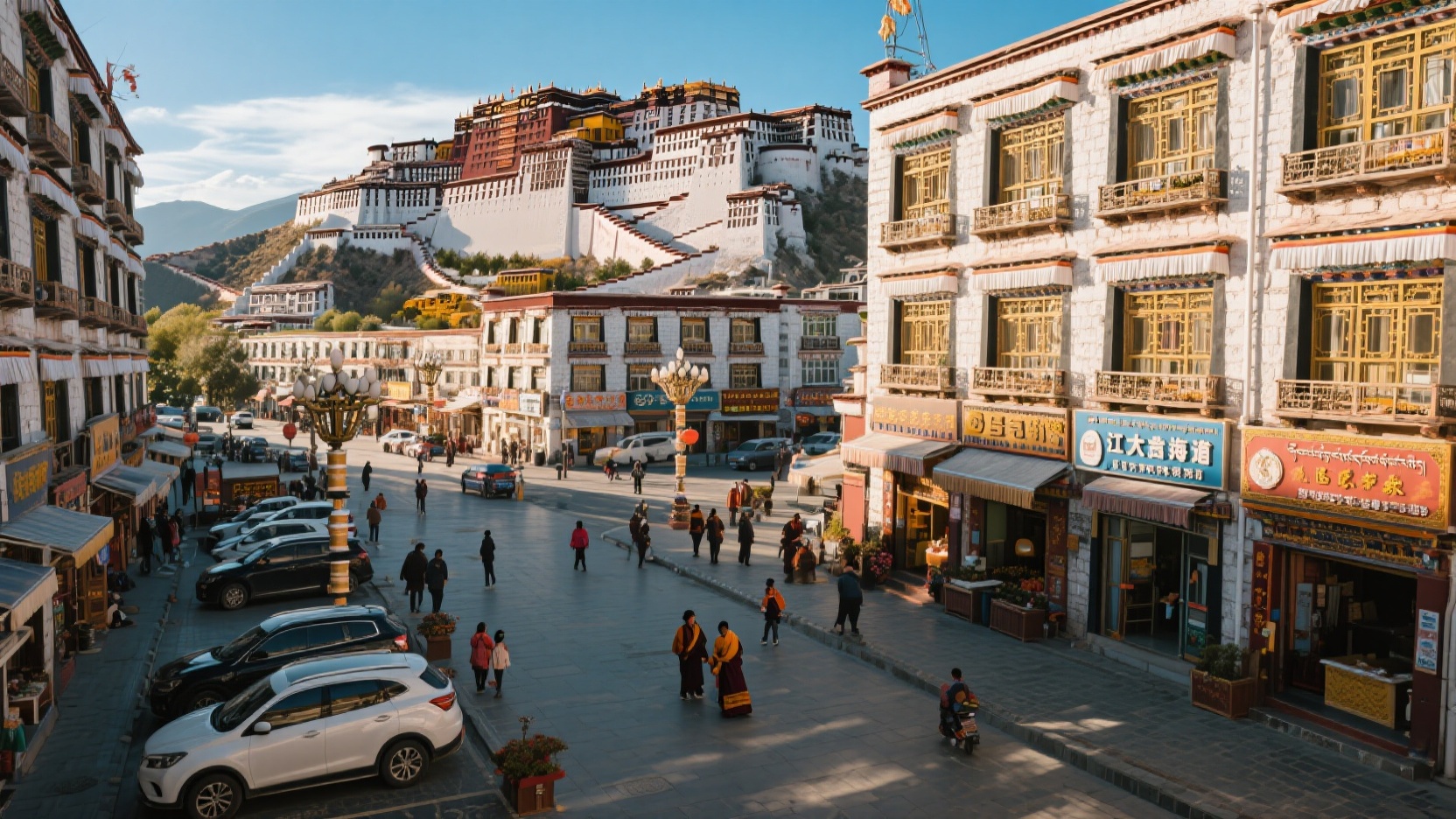
The biggest lie about accommodation in Lhasa isn't altitude sickness, but the claim that "you haven't truly experienced Lhasa until you stay in Barkhor Street." In my fifth year living in Lhasa, I was dragging my suitcase through the alleys of Barkhor Street late at night, chased by barking dogs. At that moment, I finally understood: locals never book hotels in the tourist hotspots. Lhasa's old city isn't large, but accommodation is extremely polarized. Travel guides recommend "the closer to the attractions, the better," while locals prioritize "good sleep, parking, avoiding taxi rip-offs, and getting back home late at night." Lhasa doesn't have a subway, so any guide that uses "next to a subway station" as a selling point can be disregarded. Below, I'll first blacklist three overhyped, trendy accommodation areas, and then give you a few truly livable local areas.
First, blacklist: Three popular areas recommended daily by locals that locals never stay in.
The first pitfall: the core alleys of Barkhor Street. Vehicles are prohibited, and taxis can only take you to the outer perimeter. You'll have to drag your suitcase along the cobblestone streets for over ten minutes. Arriving in Lhasa and immediately embarking on this arduous journey will likely trigger altitude sickness early on. The early morning circumambulation, street sweepers, barking dogs, and the sound of prostrating oneself before dawn make for a near-completely quiet experience. At night, the alleys are dimly lit with numerous forks in the road, making navigation frequently unreliable; getting lost after circling three times is common. While it seems close to the Jokhang Temple, carrying your luggage will leave you exhausted.
The second pitfall: "scenic rooms" directly opposite the Potala Palace. Traffic control along Beijing Middle Road is frequent, making taxi pick-up and drop-off extremely difficult; many taxis are unwilling to stop, and ride-hailing services often cancel. During the day, tourist buses are jammed, but at night, after the square is cleared, it's ridiculously deserted. Nearby dining options are limited, and most meals are tourist-priced. If the room faces the road, car horns can be heard from morning till night; the view is only worth the ten minutes before drawing the curtains.
The third pitfall: the area around the Princess Wencheng Theater in Cijuelin. This area is separated from the city by the Lhasa River. It looks close on the map, but in reality, once the performance ends, the bridges and mountain roads become completely jammed. Taxis and ride-hailing services rarely go there, and those without cars have to wait a long time to get back to the city. The lighting on the mountain roads at night is poor, making it unsettling to drive alone, and there are limited dining options. Unless you're driving specifically to see the performance, it's really not worth putting your accommodation there.
Truly livable area: Jiangsu Road - Linkuo East Road, a local community area on the edge of the old city.
This area is suitable for first-time visitors to Tibet who want to be close to the Jokhang Temple and Potala Palace but are afraid of noise. It is not in the core tourist area, but rather a residential area where local government offices and residents live together, making it feel safe.
It takes about 15 to 20 minutes to walk to Jokhang Temple, and about 10 minutes by taxi to Potala Palace. There are many Tibetan restaurants, Sichuan restaurants, and teahouses nearby, where you can eat comfortably for just a few dozen yuan per person.
Returning to the hotel late at night is relatively safe, as the streetlights are bright and there are many businesses nearby, unlike the alleyways of the old town that can be unsettling. Regarding parking, marked parking spaces on the street are limited, so it's best to confirm that the hotel has a courtyard or designated parking spaces when booking.
The late-night eatery for Lhasa locals is right downstairs on Tianhai Road-Deji Road in the western suburbs.
Suitable for foodies and those making a second trip to Tibet. There are almost no rooms with scenic views here, but it's a place where locals really gather for meals, with a very high density of restaurants along Tianhai Road and Deji Road.
A taxi ride to the Potala Palace takes about 10 to 15 minutes, and a bus ride is just a few stops. Nearby, Tibetan restaurants, Sichuan restaurants, barbecue restaurants, and teahouses are open from morning till night, with prices ranging from tens to hundreds of yuan per person, catering to all budgets.
There were still people eating noodles downstairs at midnight, so safety wasn't a major issue. However, if you're worried about noise, prioritize hotels on back streets or higher floors. Parking is the only drawback; it's difficult to find a table during mealtimes, so it's best to choose a hotel with parking available.
The section from Najin Road to Zangre Road in the eastern suburbs is the least likely to lead to problems when driving with children.
If you're driving into Tibet or traveling with children, skip the old town and head straight to the area around Najin Road and Zangre Road in the eastern suburbs. This area has many new residential complexes, wide roads, and a mature living environment, making it a popular choice for locals looking to upgrade their homes.
It takes about 15 to 20 minutes by taxi to Barkhor Street and about 25 minutes to the Potala Palace. It's not exactly close, but it's convenient because there's no traffic congestion, noise, or crowds. There are many shops in the nearby residential areas, offering a wide variety of options including Tibetan noodles, meat pies, Sichuan cuisine, and fruit.
Returning to the hotel late at night was quiet and safe, without the chaotic feeling of areas around tourist attractions. Parking was the easiest among the recommended areas, with many hotels and residential areas having ample parking spaces, making it extremely convenient for those driving.
Liuwu New Area and Sela Road in the northern suburbs: two "atypical but effective" secondary core options.
Liuwu New District is located on the south bank of the Lhasa River, making it suitable for those catching trains or flights, or those who prefer new hotels. It's very close to Lhasa Railway Station, and a taxi ride to the Potala Palace takes 20-30 minutes, though crossing the bridge can be slower during rush hour. The new district has many shopping malls, convenient dining options, wide and well-lit roads, good safety at night, and hassle-free parking.
The northern suburbs, along Sera Road and Zhaqi Road, are suitable for pilgrims and those who enjoy the lively atmosphere of the old town. Zhaqi Temple is within walking distance, and the Potala Palace is less than a 20-minute taxi ride away. There are many long-established Tibetan restaurants, teahouses, and markets nearby, offering reasonable prices.
The northern suburbs aren't the brightest at night, but they have many residential areas, so safety isn't an issue. Parking is a matter of luck; there are marked spaces along the main roads, but the alleys are narrower. These two areas each have their own roles, which is much smarter than trying to squeeze into Barkhor Street.
In conclusion
Five truths locals won't tell you: First, don't be fooled by claims of "5-minute walk to Jokhang Temple." Navigation systems often fail in Lhasa's alleyways, making it a 15-minute walk with luggage. Second, Lhasa doesn't have a subway. Listings as "next to a subway station" in guidebooks are basically copied and pasted. Third, if driving, prioritize Najin Road in the eastern suburbs or Liuwu New Area; avoid the old city alleys, parking will be a nightmare. Fourth, don't book a room directly opposite the Potala Palace or at Cijuelin Temple for your first night in Lhasa; altitude sickness combined with the inability to hail a taxi will be devastating. Fifth, the real local living areas aren't in Barkhor Street, but in places like Jiangsu Road, Tianhai Road, and Sera Road—places with teahouses and markets.