
Quanzhou Seasonal Limited-Time Foods | A Local List I Tried to Try 8 Times Based on the Four Seasons (Not the Internet Celebrity List)
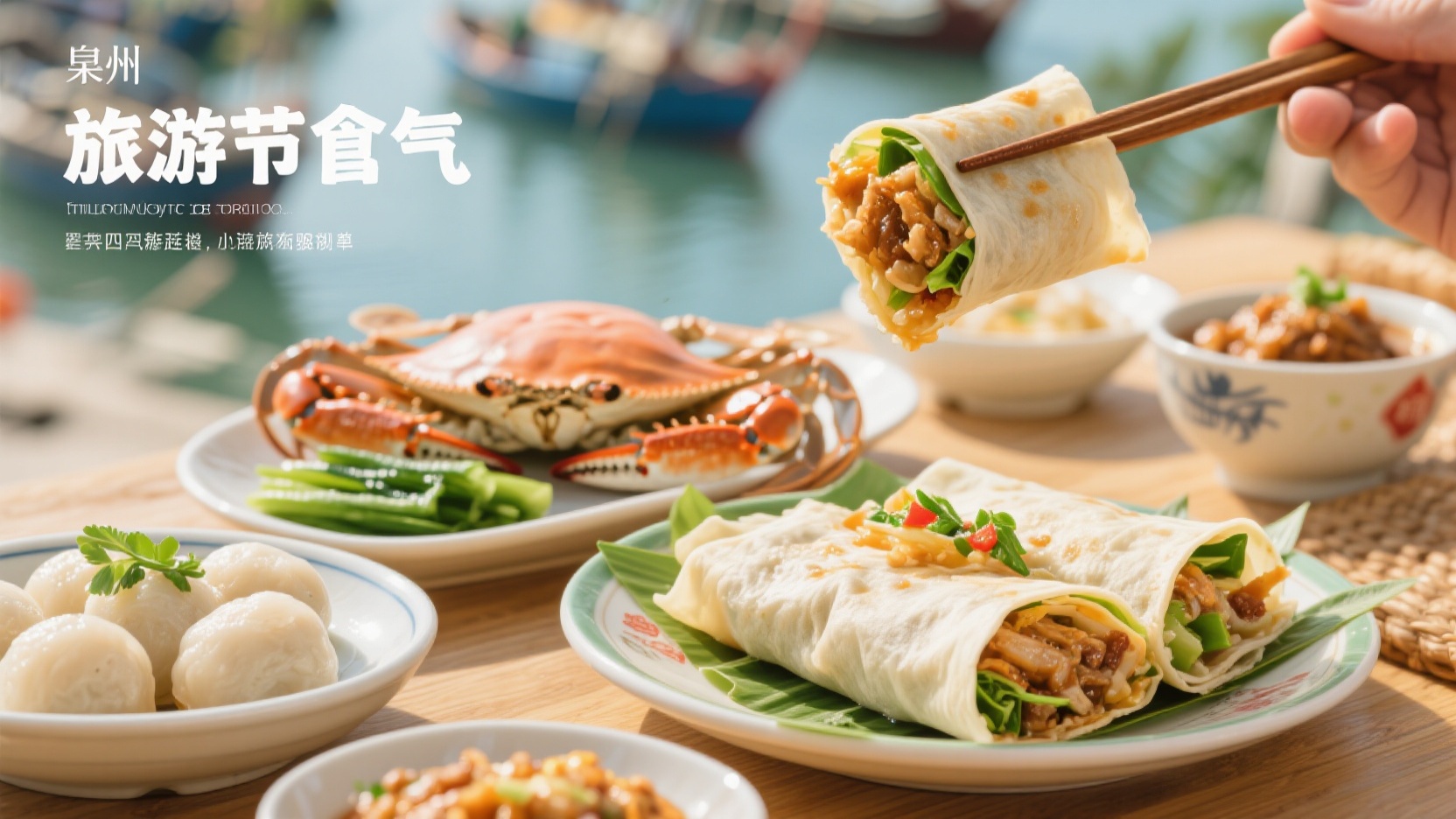
Having spent all four seasons in Quanzhou, I dare say: the city's menu isn't written according to shop signs, but rather according to the solar terms. Many tourists only focus on dishes like rice noodle soup and ginger duck, eating ginger duck in the summer and feeling sweltering in the winter while drinking four-fruit soup. In reality, the same local dish can be completely different depending on the solar term; the ingredients, cooking time, and overall palatability will be entirely different. The following eight dishes are seasonal Quanzhou recipes I compiled after repeatedly visiting various locations throughout the four seasons.
First, let me clarify that this article won't cover regular restaurants; it will only focus on seasonal foods that are worth visiting specifically for. If you happen to be planning a trip to Quanzhou during a particular season, you can refer to this guide.
I. Around Qingming Festival: Limited-edition "Herb-scented" Runbing and Cuddle Cake
In Quanzhou around the Qingming Festival, the must-try is runbing (spring roll). It's only made in large quantities by locals around the time of the Hanshi Festival (Cold Food Festival) for ancestor worship, for two main reasons: first, the runbing skin must be freshly made, as it hardens when cooled; second, oysters are at their plumpest and most tender around Qingming, giving the oyster omelet or fresh oysters wrapped in the runbing a distinct sweetness. In terms of ingredients, runbing emphasizes "dry and wet layers," requiring carrots, dried tofu, seaweed, crushed peanuts, cilantro, and shredded egg—all essential. The skin is so thin it's translucent yet resilient.
Locals are quite particular about how to eat it: the spring roll should be "dry filling first, then wet filling, and the opening should be sealed quickly so it doesn't fall apart when you bite into it." If it's your first time eating it, don't be greedy and roll it too full, otherwise the juice will leak out from the bottom, making for a messy eating experience. Pairing it with a cup of Tieguanyin tea can balance out the oiliness of the peanut crumbs and oysters.
The cudweed cakes made at the same time of year offer another way to experience the fragrance of Qingming grass. Cudweed is most fragrant when its tender shoots are in spring; after Qingming, the grass becomes tough and bitter. Locals prefer to eat freshly steamed cudweed cakes, with a dark green, soft, and slightly grassy outer layer, and fillings such as red bean paste and shredded radish. They are best eaten hot; once cooled, the skin hardens and the grassy aroma dissipates.
II. From Summer Solstice to Great Heat: The "Cooling Secrets" of Seaweed Jelly and Earthworm Jelly
As summer approaches and the heat intensifies, Quanzhou becomes sweltering and humid, prompting locals to collectively shift their sustenance to "icy, cool, and smooth" foods. Agar jelly is the star of this season, as agar plants are mostly harvested in early summer, resulting in the most refreshing gelatinous texture. After the peak of summer, the gelatin loses some of its freshness. Agar jelly itself has no flavor; its magic lies in its texture when scrambled into thin strands, resembling a jelly when eaten. Served with chilled honey water and topped with mung beans, barley, and taro seeds, it's a refreshingly sweet treat without being cloying.
Locals don't overindulge in agar jelly; they usually choose only two or three ingredients, otherwise the sweet soup will become cloudy, masking the refreshing taste of the agar jelly. True connoisseurs will request "more jelly and less water," focusing on the texture of the agar jelly threads gliding across their tongues.
Sea worm jelly is best enjoyed in the height of summer. The sandworms on the mudflats are at their fattest and most gelatinous after the summer tide recedes, resulting in a perfectly bouncy and translucent jelly. Locals believe the jelly should be "crystal clear and not crumble when cut." It's eaten by dipping it in garlic soy sauce with a little vinegar, and you shouldn't break it up with chopsticks, otherwise the flavor will dissipate. Sea worm jelly tastes fishy in winter and lacks the refreshing crispness of being chilled.
III. The Opening of the Fishing Season and the Frost's Descent: Autumn Nourishment Signals from Swimming Crabs and Ginger Duck
Quanzhou's seafood truly shines only after the autumn fishing season begins. From August to September, swimming crabs start to fatten up, their meat becoming plump and firm; female crabs have roe, and male crabs have cream, resulting in a sweeter flavor. Only at this time can steamed swimming crabs truly capture that bouncy, slightly chewy texture, naturally sweet and savory without any dipping sauce. The most common local preparation is steaming or boiling with noodles, allowing the crab juices to seep into the noodles, making it even more satisfying than eating crab meat alone.
The first two months after the fishing season opens are the peak season for eating crabs. After late autumn, the crab roe becomes thinner and the meat becomes looser. When choosing crabs, you can look at the crab's belly and pinch its legs, but you can't go too badly no matter what you choose this season.
Once the Frost's Descent solar term arrives, Quanzhou locals truly bring out the ginger duck on the table. Both old ginger and Muscovy duck need to cool down to have the full "nourishing" effect; eating it in summer might feel too drying, but in autumn and winter it warms the body. The ginger duck is prepared by slow-cooking in a clay pot, with slices of old ginger at the bottom. The duck meat slowly reduces in the oil, transforming the ginger flavor from spicy to mellow. Locals often request to "flip the bottom," eating the ginger slices at the bottom of the pot, soaked in duck oil and ginger juice, along with a bowl of white rice or noodles. The broth mixed with rice is the soul of the dish.
IV. From Winter Solstice to Lantern Festival: The "Reunion Time Difference" Between Winter Solstice Dumplings and Lantern Festival Rice Balls
Around the winter solstice, when new glutinous rice comes to market, its powdery texture is sticky and chewy. In Quanzhou, families gather to make winter solstice dumplings. These dumplings come in two colors: white and red. The white ones are made from pure glutinous rice, while the red ones have a little food coloring or red yeast rice added. They are cooked in a brown sugar ginger soup, and their significance in adding to one's age is greater than simply filling one's stomach. They only taste right at this time of year, not only because the new glutinous rice is good, but also because in the chill of the winter solstice mornings, a bowl of sweet ginger soup can warm you from your stomach to your fingertips.
Locals traditionally prepare the dough the night before the Winter Solstice and cook it the following morning. The dumplings should be bouncy and chewy but not too sweet, with a strong ginger flavor; you should feel slightly sweaty after drinking the soup. Don't use frozen dumplings from the supermarket; the taste is vastly different.
During the Lantern Festival, Quanzhou people eat "rolled" glutinous rice balls. The peanut and sesame filling is first diced, blanched, and then rolled repeatedly in glutinous rice flour until it forms a thick layer. Unlike the Winter Solstice dumplings, the outer skin of the Lantern Festival dumplings is thicker. After cooking, they need to be turned off and left to simmer for a while to allow the filling to melt into a runny center. Eating them around the Lantern Festival is the last sweet treat of the winter season in Quanzhou. Winter Solstice dumplings are served with ginger soup, while Lantern Festival dumplings are served with clear soup—don't get the order wrong!
Blogger's Summary and Tips on Avoiding Pitfalls
Quanzhou's seasonal delicacies are ultimately governed by a set of rules that "depend on the weather." The biggest pitfall for tourists isn't going to the wrong shop, but rather coming at the wrong time of year. Remember these key dates: during Qingming Festival, look for spring rolls and glutinous rice cakes; in the height of summer, look for seaweed jelly and sea worm jelly; when the fishing season opens, look for swimming crabs; during the first frost, look for ginger duck; during the winter solstice, look for winter solstice dumplings; and during the Lantern Festival, look for glutinous rice balls.
Tip 1: Don't force yourself to eat ginger duck in spring and summer, and avoid chilled agar jelly in autumn and winter. The climate of southern Fujian and your digestive system are not to be trifled with. Tip 2: It's best to buy Qingming spring rolls and cuddle cakes in the morning, as many stalls sell out by noon. Tip 3: Seafood prices fluctuate greatly after the fishing season opens, so ask about pricing before ordering and don't order too much at once. Tip 4: Winter Solstice dumplings and Lantern Festival glutinous rice balls are both made with glutinous rice; don't eat more than two bowls at a time, and pair them with tea to aid digestion. Eating according to the seasons is the right way to experience a city.