
Quanzhou Stroll | Family-Friendly Maritime Silk Road Cultural Tour
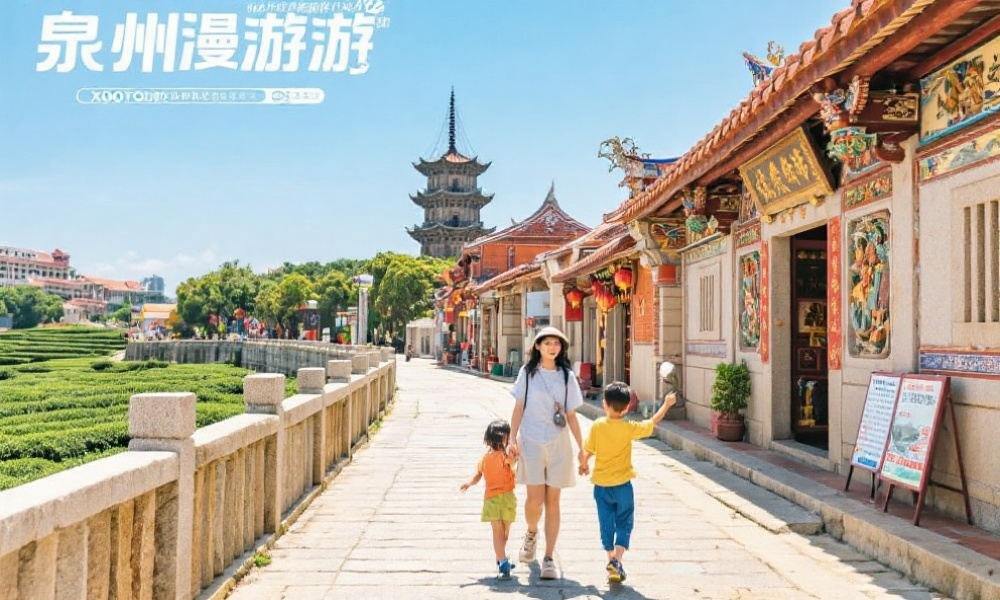
Quanzhou, an ancient city designated a UNESCO World Heritage City, is the starting point of the Maritime Silk Road and a model of harmonious coexistence of diverse cultures and religions. Its profound historical heritage, unique Minnan (Southern Fujian) charm, and relaxed pace of life make it an ideal destination for family trips. This guide will design a carefully selected three-day, two-night itinerary for Quanzhou, aiming to allow you and your family to deeply experience the city's cultural allure in a relaxed and enjoyable atmosphere.
Day 1: Exploring the Ancient City and Religious Integration
Upon arrival in Quanzhou, it is recommended to check into a hotel located in the city center or near West Street for convenient transportation. After lunch, your Quanzhou tour will officially begin.
Morning: Kaiyuan Temple
As Quanzhou's most famous landmark, Kaiyuan Temple is an important Buddhist temple on the southeastern coast of China, originally built in the Tang Dynasty. The most striking features of the temple are its two stone pagodas—the Zhenguo Pagoda and the Renshou Pagoda—which are the tallest existing pair of stone pagodas in China and symbols of the ancient city of Quanzhou. The temple also enshrines Vairocana Buddha and preserves precious cultural relics such as Hindu stone carvings and flying apsaras, showcasing the fusion of Quanzhou's diverse cultures. The temple's tranquil environment is perfect for families to stroll through and experience the weight of history.
Lunch: Local snacks or vegetarian food from West Street
The area around Kaiyuan Temple and West Street is home to many authentic Quanzhou snacks, such as rice noodle soup, spring rolls, and meat dumplings. You can also choose to enjoy a peaceful vegetarian meal at a vegetarian restaurant near the temple.
Afternoon: Stroll along West Street and explore the religious architecture.
West Street is the best-preserved ancient street in Quanzhou, carrying the memories of Quanzhou's thousand-year history. Here you'll find not only red-brick ancient houses and arcade buildings, but also various creative shops and local delicacies. Stroll through it and experience the vibrant atmosphere of everyday life. Afterwards, you can visit the nearby Guandi Temple to experience the unique folk beliefs of southern Fujian; or explore the Qingjing Mosque , an Islamic mosque built in the Song Dynasty, one of the oldest existing Arabic-style mosques in China, and a tangible testament to cultural exchange along the Maritime Silk Road.
Dinner: Enjoy authentic Quanzhou cuisine
Choose a local specialty restaurant and try Quanzhou's famous dishes such as ginger duck, sea worm jelly, and oyster omelet, immersing your taste buds in the flavors of this ancient city.
Day 2: Maritime Silk Road Imprints and Southern Fujian Customs
Morning: Quanzhou Maritime Museum
This museum is the only one in China dedicated to the history of overseas trade. It houses a large collection of precious artifacts related to the Maritime Silk Road, including ancient Song Dynasty ships and religious stone carvings. Through rich exhibits and interactive multimedia displays, children can gain a direct understanding of Quanzhou's glorious history as the "largest port in the East" and its important role in global maritime trade, making learning fun.
Lunch: Have lunch near the museum or back in the city.
There are light meals available near the museum, or you can return to the city center for a wider variety of dining options.
Afternoon: Tianhou Temple and Luoyang Bridge
Tianhou Temple is one of the birthplaces of Mazu worship in Quanzhou and is also the oldest and largest existing Mazu temple in China. Mazu, as the goddess of the sea, is the guardian deity of fishermen and merchants traveling at sea, and her worship was widespread along the Maritime Silk Road. Here, one can learn about Mazu culture and its profound influence on Quanzhou's maritime trade.
Afterwards, we will visit Luoyang Bridge , a cross-sea bridge built under the supervision of Cai Xiang, the prefect of Quanzhou during the Song Dynasty. It is one of China's four ancient bridges and the world's first beam-type cross-sea bridge built over a harbor. Its "raft foundation" and "oyster-planting foundation reinforcement method" are innovations in ancient bridge construction. Strolling on the bridge, we can feel the wisdom and resilience of the ancients and enjoy panoramic views of the Luoyang River.
Dinner: Experience Quanzhou's night market or local snacks
You can choose to sample more local snacks at the Quanzhou night market, or find a restaurant with a relaxed atmosphere for dinner.
Day 3: Choose one of two suburban scenic spots.
On the third day, you can choose nearby attractions based on your family's interests. It is recommended to depart in the morning and return to the city in the afternoon or go directly to the airport/train station.
Option 1 (Recommended): Chongwu Ancient City and the Charm of Hui'an Women
Chongwu Ancient City is located in Huian County, about an hour's drive from Quanzhou City. It is the most complete existing granite coastal stone city in China, originally built in the Ming Dynasty to defend against Japanese pirates. The city walls are majestic and well-preserved, offering panoramic sea views from the top. Inside the city, there are exquisite stone carvings and visitors can experience the unique folk customs of the "Huian women." Outside the ancient city, there is a beach suitable for children to play. Here, you can experience a perfect blend of coastal defense culture, stone carving art, and fishing village life.
Option 2 (Alternative): Anxi Tea Garden and Tea Culture Experience
Anxi is the birthplace of the world-famous Tieguanyin tea, located about a 1.5-hour drive from Quanzhou city. Families with a strong interest in tea culture can visit Anxi tea gardens, tour tea plantations, learn about the Tieguanyin production process, and taste authentic Anxi Tieguanyin. Some tea gardens also offer tea picking and tea-making experiences, allowing children to connect with nature and learn about traditional agriculture.
Transportation and Avoidance Tips
Transportation Guide:
- Arrival and Departure: Quanzhou Jinjiang International Airport (JJN) has flights to major domestic cities; Quanzhou Station and Quanzhou South Station are both high-speed rail stations, accessible by high-speed rail.
- Transportation within the city: Attractions in Quanzhou city are relatively concentrated; taxis, ride-hailing services (such as Didi Chuxing), or buses are readily available. The core area of the ancient city is within walking distance. For nearby attractions such as Luoyang Bridge, Chongwu Ancient City, and Anxi Tea Garden, hiring a car or driving yourself is recommended for greater convenience.
Travel tips to avoid pitfalls:
- Best time to travel: Spring and autumn (March-May and September-November) offer pleasant weather suitable for outdoor activities. Summers are hot and rainy, while winters are relatively damp and cold.
- Sun protection and clothing: Quanzhou has plenty of sunshine, so please take precautions against the sun, especially when outdoors (sunscreen, hat, sunglasses). Comfortable flat shoes are recommended for long walks.
- Food hygiene: Quanzhou has a wide variety of snacks. It is recommended to choose shops with high foot traffic and good reputation, and pay attention to food hygiene.
- Respect local customs: Quanzhou has many religious sites. When entering temples, mosques, etc., please dress appropriately, keep quiet, and respect local religious beliefs and customs.
- Accommodation booking: Hotels and boutique guesthouses are in high demand during holidays, so it is recommended to plan and book in advance.
- Itinerary pace: Quanzhou is a city suitable for slow travel, especially when traveling with children. Please do not arrange an overly tight itinerary, and leave enough time for rest and free exploration.
Quanzhou, an ancient yet vibrant city, awaits you and your family to unveil the mysteries of the Maritime Silk Road and experience its unique cultural charm.