
Six must-visit restaurants in Quanzhou | A local secret list I only dared to write after three trips (not the popular ones, with tips to avoid pitfalls)
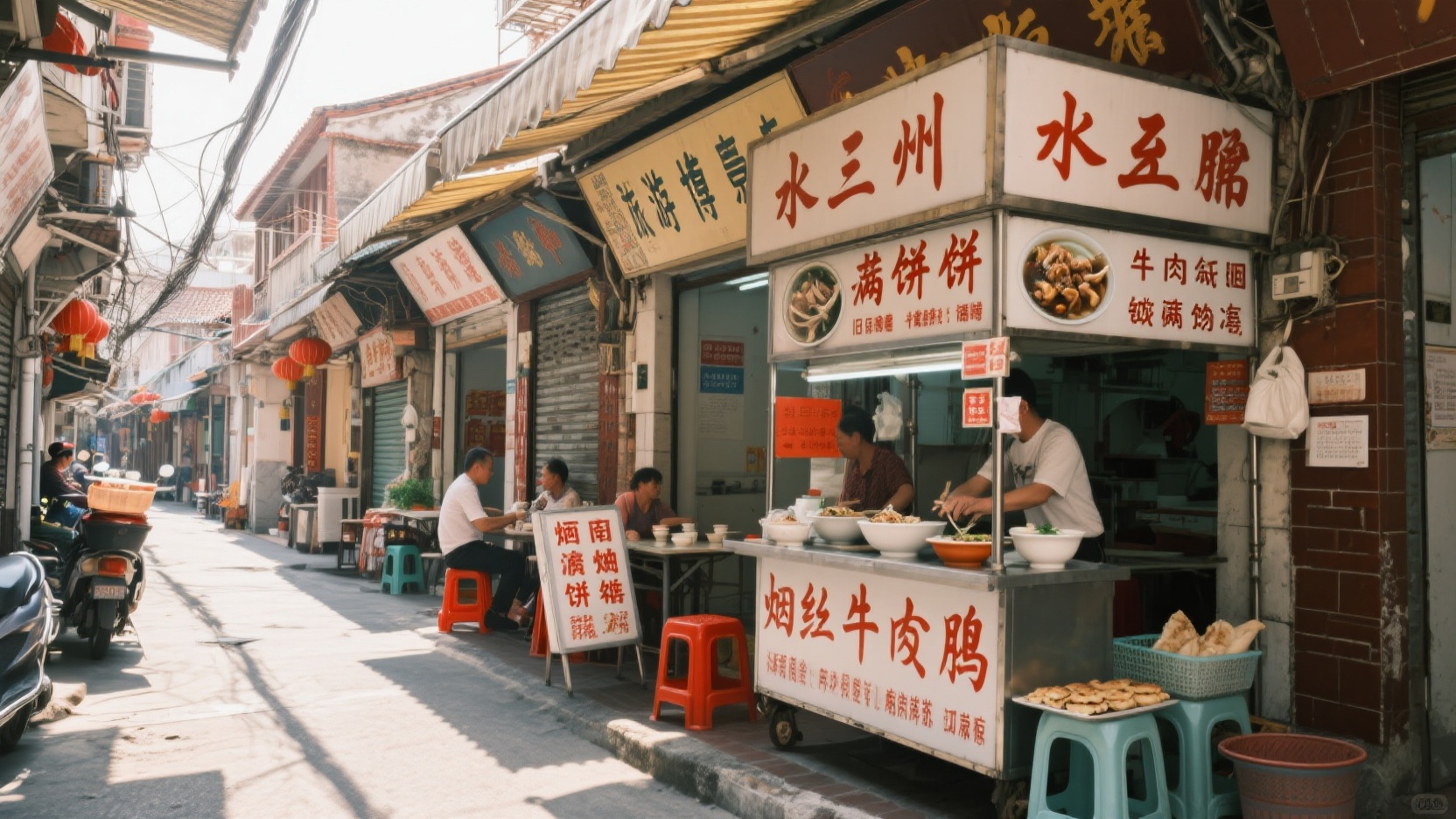
No-Signature Noodle Soup at the End of Shuimen Alley | Only Served in the Morning Market with Bone Broth
This shop doesn't even have a sign; they just start simmering bone broth at 4:30 AM. I almost missed it the first time I went; an old lady carrying a small aluminum pot led me in. The broth is richer than those at trendy shops, but it doesn't overpower the rice flavor of the noodles. The key is the final spoonful of angelica wine. How to order: a base of noodle soup, topped with vinegar-braised pork, braised large intestine, and a fried dough stick. Remember to ask the owner for "an extra spoonful of broth."
After you buy your cakes, don't rush off. Turn right at the alley entrance and you'll find a window selling "Xinbei cakes." They only bake two batches a day; they're crispy on the outside and soft on the inside, perfect with rice noodle soup. Nearby, there's also an old shop selling garlic sticks, which are sweet and savory and much more substantial than those in supermarkets.
Limited-time beef soup at the entrance of Rouge Alley | Handmade soup with savory rice
This beef soup stall at the entrance of Rouge Alley is only open until 11 a.m. The beef is hand-beaten by the owner every morning, resulting in a clear broth with a stronger ginger flavor than other places. The signature way to eat it is not to order the beef soup alone, but to have "beef soup + savory rice + half a spoonful of ginger shreds". The savory rice should be mixed with a little chili sauce, and the beef soup should be dipped in vinegar sauce.
A few steps away, there's a cart selling pickled radish and star fruit juice, pickled until crisp and refreshing, perfect for cutting through the greasiness of the meat soup. If you're lucky, you might also stumble upon a stall selling spring roll wrappers; buy a couple to take home and wrap leftovers—they're delicious!
At the entrance of Jiuguanyi Alley, Manjian Gao (a type of fried rice cake) | Thickly sliced in a charcoal-fired flat pan
This fried rice cake shop is hidden at the entrance of Jiuguanyi Alley. They fry the cakes fresh in a charcoal-fired pan, offering only two fillings: peanut and sesame, and brown sugar. The owner doesn't turn over tables; he only fries four cakes at a time, cutting them so thick they're hot to the touch. The signature order: half a cake with peanut and sesame filling, the outer layer slightly charred, so that when you bite into it while it's hot, the filling will slowly ooze out.
You can buy a bag of maltose candy or freshly made spring roll wrappers nearby. Maltose candy with a generous amount of fried rice cakes is a common after-school combo for students in the neighborhood. Note that this stall usually closes before 4 PM, so don't go too late.
Tusu jelly cart next to Tianhou Temple | The most authentic way to eat it is with a warm dressing.
Most tourists eat sea worm jelly frozen, cut into pieces, and dipped in soy sauce, but this cart next to the Tianhou Temple sells a warm, mixed version. The sea worms are crisper, and the garlic soy sauce has a touch of wasabi added. The owner only operates from 3 PM to 6 PM, depending on the weather. How to order: sea worm jelly with blanched octopus, drizzled with two spoonfuls of sauce, and a side of pickled radish.
After eating sea worm jelly, there's a stall in the alley next door that only accepts cash. The toppings aren't many, but the honey sea worm jelly with taro balls is very refreshing. If you're bringing elders, you can buy some pickled radish to take home.
Fried taro cakes fresh in the alley of Nanjun Road | Only one batch made per day
In an alley on Nanjun Road, there's an old lady selling taro cakes. She sets up shop at 4:30 PM and closes down as soon as she's sold out. She doesn't advertise or take pre-orders. The taro paste is steamed fresh daily, sandwiched between two layers of biscuits, and then fried. The original flavor is slightly sweet, while the salted egg yolk flavor is the most popular. Her recommended order: buy one original and one salted egg yolk. Don't buy more; they'll become crispier after being reheated once cooled.
There's an unassuming meat dumpling shop at the intersection where you can buy half a pound of raw meat dumplings to take away. If you're lucky, you might also stumble upon a stall selling fried rice cakes under the arcade, offering a wonderfully complex texture.
Ginger Duck in Residential Buildings at the Back of West Street | Casserole Version Only for Dinner
This ginger duck restaurant, located at the back of West Street, is situated under a residential building. The storefront is small, and they only start serving at dinner time. The casserole-cooked duck is drier and more fragrant than chain restaurants, with ginger slices sautéed until slightly charred, and the duck meat is tender. A hidden way to enjoy it is to order half a duck and add a side of duck blood and cabbage; these soak up the broth and become even more popular than the duck meat. The owner will remind you, "Don't just focus on the duck meat."
There are sometimes carts selling agar jelly outside the convenience store next door; a cup of honey agar jelly paired with ginger duck is perfect. You can also pick up some garlic twigs on your way to have for breakfast the next day.
Blogger's Summary
These six shops have one thing in common: they don't do marketing, they're hidden away, and their opening hours are flexible. It's best to schedule your trip outside of mealtimes, otherwise you might not get a table or face an incredibly long queue. The true flavors of Quanzhou aren't on the must-eat lists, but rather in these alleyways and from the pushcarts.
Useful Tips List
Tip #1: Avoid peak meal times. Local restaurants in Quanzhou have slow table turnover, so going during peak hours not only means queuing but also the possibility of them selling out. It's recommended to go before 10 AM or between 2 PM and 4:30 PM, as many restaurants only operate during fixed hours.
Avoid this pitfall #2: Don't just order the signature dishes. Ordering rice noodles without vinegared pork, ginger duck without cabbage, or sea worm jelly without boiled octopus is like only getting half the meal. Locals often order "main dish + hidden side dish".
Thirdly, remember to bring cash. At least three stores only accept cash or are not very familiar with QR code payments, especially those with shopping carts and older neighborhood shops. Bringing some cash and change will save you a lot of trouble.