
Quanzhou people's three meals a day | From morning rice noodle soup to late-night street food stalls
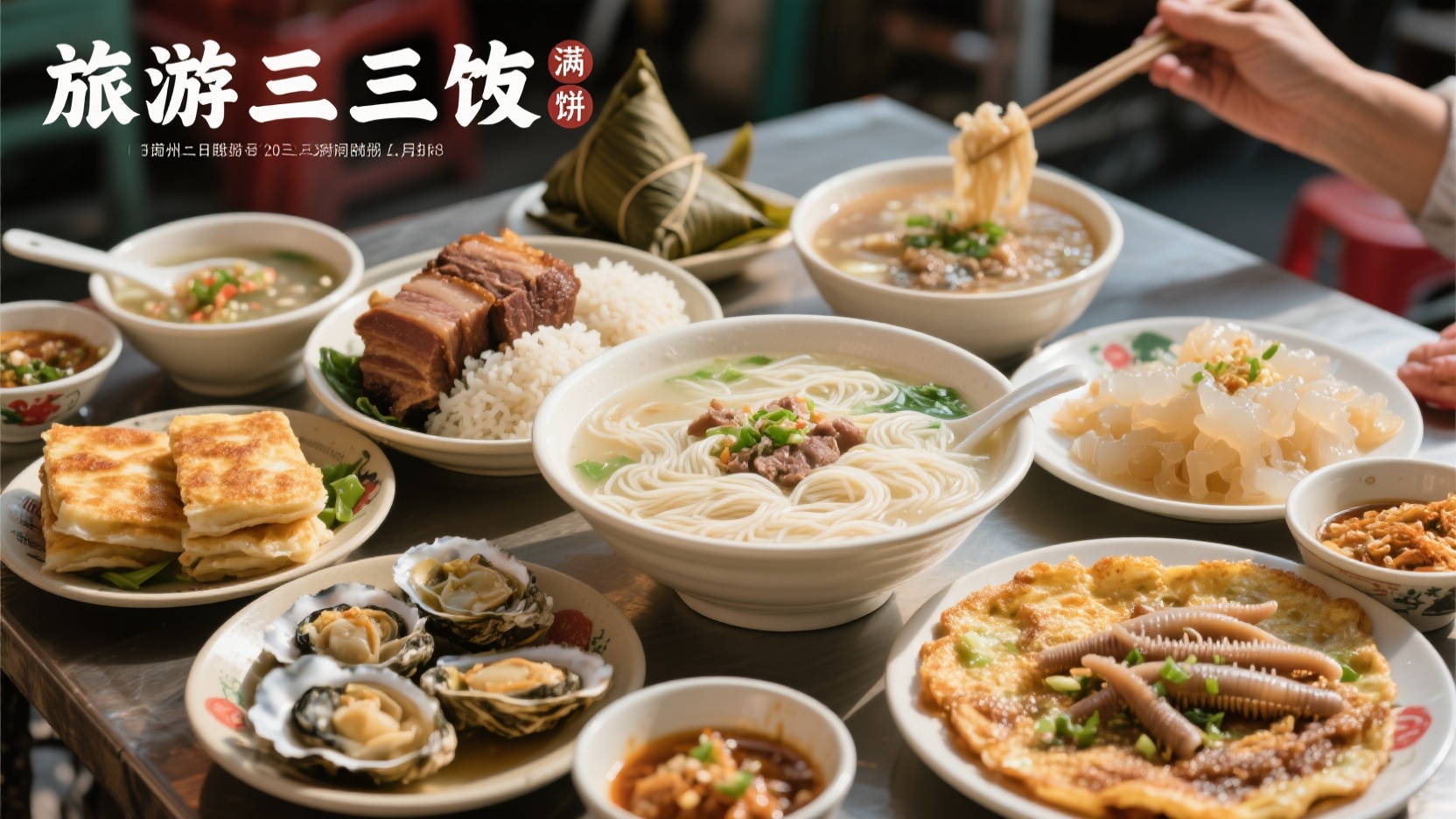
In southern Fujian, a morning begins with a bowl of rice noodle soup. In Quanzhou, people's meals aren't found in trendy restaurants in tourist areas, but rather in the corners of arcades, near markets, and at roadside stalls lit up late at night. Following the food scene throughout the day reveals the city's culinary character: a blend of salty and sweet, a distinct seafood flavor, and a constant stream of soups.
Breakfast stall in the early morning
Rice noodle soup is the absolute star of Quanzhou breakfast. Thin, hair-like noodles are sprinkled into a broth made from pork bones and oysters, thickened with sweet potato starch, and cooked until it's thick but not mushy. When eating, you can add vinegar-braised pork, pork intestines, braised eggs, or oysters according to your taste, and then dip a fried dough stick into the soup. The broth is clear and fresh, with a subtle peppery aroma, and the fried dough stick is half crispy and half soft. A bowl of this is warming and not too heavy. For locals, this soup is not only a quick breakfast left over from the dock era, but also a benchmark for judging whether a shop is authentic: fresh broth, fresh ingredients, and well-cooked noodles.
Often paired with rice noodle soup is manjiangao (a type of fried rice cake). Fermented dough is spread in a pan, sprinkled with brown sugar, crushed peanuts, and roasted sesame seeds, and then cooked over low heat until it develops a honeycomb-like texture before being folded in half and cut into pieces. The outer layer is slightly crispy, while the inside is soft and fluffy. The caramelized aroma of brown sugar and the texture of peanut pieces are released with each chew, and the sweetness is restrained. It was originally served with sacrificial tea and remains a common choice for breakfast and morning snacks in the old town, especially when paired with Tieguanyin tea.
Local eateries at lunchtime
In Quanzhou, lunch is typically a combination of "dry and wet" dishes, with beef soup and savory rice being the most common combination. Thinly sliced beef hind leg is coated with sweet potato starch and poached in beef bone broth until tender. The broth is seasoned only with ginger to remove any gamey smell, resulting in a clear, fresh, and slightly spicy flavor. The savory rice is often made with mustard greens or radishes, stir-fried with pork belly and dried shrimp, then simmered with the rice. The rice grains are distinct, oily, and not sticky. A bite of savory rice followed by a spoonful of beef soup—the alternation of savory and broth—is a familiar lunchtime rhythm for local office workers and residents.
For a more substantial meal, braised pork rice dumplings are another popular choice. The glutinous rice is first stir-fried with shallots and braising liquid, then wrapped around braised pork belly, shiitake mushrooms, dried shrimp, and salted egg yolks. Sometimes lotus seeds or chestnuts are added. It's then tightly wrapped in bamboo leaves and cooked until soft and sticky. When unwrapped, the rice grains are glossy, the oil seeping into the glutinous rice, carrying the aroma of the braising liquid and the fresh fragrance of the bamboo leaves. Locally, it's always served with sweet chili sauce and peanut sauce; the combination of these two sauces is a typical example of the harmonious balance of sweet and savory flavors in Southern Fujian cuisine.
Afternoon tea with snacks
In the humid afternoon heat, agar-agar jelly and four-fruit soup is a common way for Quanzhou locals to cool down. Agar-agar is boiled, filtered, and cooled to solidify into a transparent paste. It's then shredded or diced and topped with taro balls, red beans, mung beans, grass jelly, watermelon, pineapple, or white fungus, according to personal preference, and drizzled with chilled sugar syrup. The agar-agar jelly itself is smooth and slightly crunchy, the syrup is refreshingly sweet, and the toppings are layered and delicious. People often stand and eat a bowl at the old stalls under the arcades, finding relief from the heat and fatigue; it's not just a dessert for tourists.
When old Quanzhou residents enjoyed Kung Fu tea, garlic-flavored pastries were a classic accompaniment. The dough is rolled into strips, twisted into a braided shape, deep-fried until crispy, then coated with a syrup made from minced garlic. After cooling, a thin crust forms. Each bite is crispy at first, then fragrant, with a balanced garlic and sugar flavor that isn't overpowering. Sold by weight, these garlic-flavored pastries remain a staple in the old town's bakeries, a reminder that Quanzhou's afternoon tea has always been infused with the aroma of tea and fried pastries.
Midnight Diner Stall
After dark, oyster omelets are a must-order at almost every table at the food stalls. Fresh oysters are mixed with sweet potato starch batter and chopped green garlic, then poured into a pan heated with lard and fried until the edges are crispy. Egg is then poured over and the omelet is flipped over. It's served with a side of sweet and spicy sauce and sweet and sour pickled radish. The outer layer is crispy and fragrant, while the inside is soft and tender. The oysters burst with sweet juice between your teeth, and the pungent aroma of the green garlic perfectly balances the richness. The Quanzhou version of oyster omelet highlights the natural flavor of the oysters, using a restrained amount of sweet potato starch, a direct expression of protein from the daily lives of people living in the harbor.
The finishing touch could be sea worm jelly. "Sea worm" refers to the delicious sea worms found in the mudflats of the coast. After cleaning, they are boiled to extract their gelatinous substance, then portioned out and cooled into a jelly. When served, it's cut into pieces or served whole, topped with minced garlic, vinegar, and soy sauce; some add a touch of mustard. The jelly is cool and bouncy, the sea worms are crisp and chewy, and the garlic and vinegar sauce brings out the clean taste of the sea, eliminating any fishy smell. This cold dish is often considered a challenge by visitors, but locals have enjoyed it since childhood; it's a straightforward example of how coastal produce from southern Fujian enters the everyday dining table.
From the rice noodle soup of dawn to the sea worm jelly of late night, salty and sweet, soupy, seafood and tea aromas take turns appearing, and the people of Quanzhou live a day that can be chewed over as a chronicle of the city's everyday life. From the streets to the alleys, understand this city through its food in a day.