
Dongguan Residents' Three Meals a Day | Local Ways of Eating Congee, From Imperata cylindrica Root Porridge to Daojiao Meatball Congee
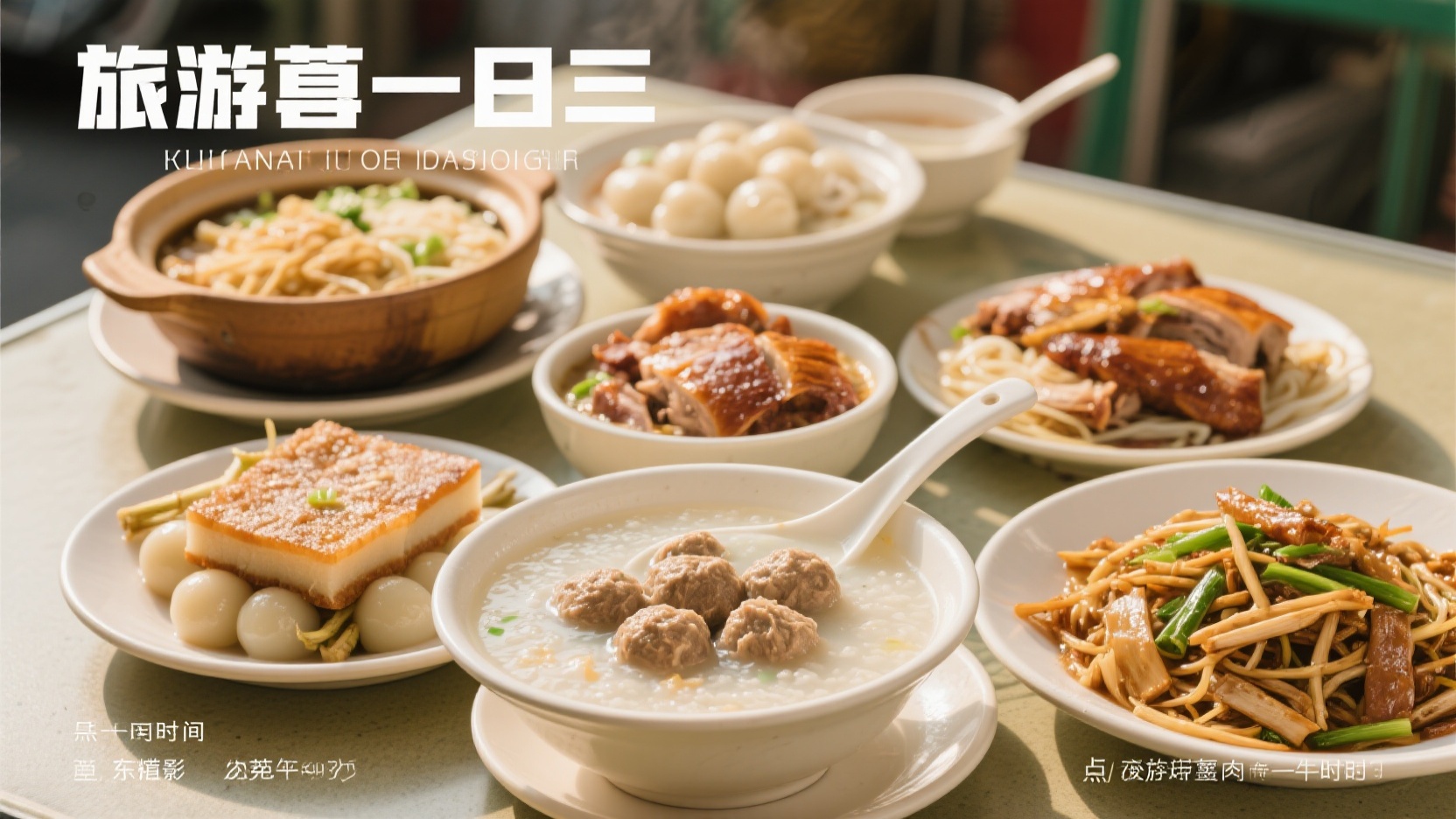
For Dongguan locals, the taste of the day isn't found in restaurants, but rather in the small shops and late-night food stalls in the alleyways. From a bowl of refreshing congee in the morning to a plate of wok-fried noodles late at night, the food is mostly the familiar, home-style flavors that have been repeated for decades. This article records the daily meals of eight local residents, arranged chronologically by three meals a day plus afternoon tea and late-night snacks.
Morning: Imperata cylindrica porridge and hot rice noodles
Imperata cylindrica porridge is a classic breakfast dish in Dongguan. The ingredients include imperata cylindrica root, sugarcane, water chestnuts, white beans, and rice. The method involves first boiling the imperata cylindrica root and sugarcane in water, then straining the liquid before simmering it with the white beans and rice. Some vendors add carrots or dried tangerine peel. It has a sweet, herbal flavor, with soft, powdery white beans and grainy rice that has opened up but remains whole. In Dongguan's hot and humid climate, older generations consider imperata cylindrica porridge a daily "cooling" remedy, often served with a side of hot rice noodles—a light and refreshing start to the day.
"Tangfen" is the local name for rice noodle rolls in the water towns. Freshly ground rice flour is spread thinly, steamed, and then rolled with pork, eggs, pork liver, or pork intestines. It's then drizzled with a sweet and savory soy sauce, and some shops add a spoonful of fried garlic oil. The rice noodle skin is slightly thicker than Cantonese rice noodle rolls, has a fragrant rice aroma, a soft and smooth texture, and a sweet and savory sauce. Paired with a light and rich congee, it forms a common breakfast combination in the area.
Lunch: Roast goose rice noodles and claypot rice with preserved meat
Roast goose rice noodles are most typical in the Houjie area. The rice noodles are made by straining glutinous rice batter through a sieve into boiling water to set the shape; the noodles are short, thick, chewy, and hold the broth without becoming mushy. The roast goose is made from black-bristled geese, marinated with five-spice powder, star anise, and fermented bean curd, then roasted in an oven until the skin is crispy and the meat is tender. The broth is usually a clear goose bone soup. When eating, the roast goose, skin and all, is placed on top, and a spoonful of roast goose sauce is poured over it. The result is crispy skin, tender meat, smooth noodles, and a flavorful broth. For locals, a bowl of roast goose rice noodles is a staple choice for a weekday lunch—quick, satisfying, and uncompromising.
Claypot rice with preserved meats is a staple in the small restaurants of Dongguan markets during autumn and winter. Dongguan sausages are made by dicing pork hind leg meat and fat in a specific ratio, marinating them with Fenjiu liquor, sugar, soy sauce, and salt, then stuffing them into casings and drying or baking them. The claypot rice uses long-grain rice, which is first cooked until the water is absorbed, then topped with sausages, preserved pork, or preserved duck, and simmered over low heat until a golden-brown crust forms at the bottom. It's served drizzled with soy sauce; the preserved meats are fragrant with wine, oily but not greasy, and the rice absorbs the oil, resulting in a crispy, caramelized crust. The order of eating the preserved meats first, then mixing the rice, and finally scraping off the crust is an unspoken rule among locals. Behind this is the Dongguan tradition of "drying preserved meats" after winter sets in, a testament to the wisdom of meat preservation in the past.
Afternoon tea: Tangyuan (glutinous rice balls) and black-eyed pea cake
Tang Bu Shuai is a traditional dessert from the water towns of Dongguan, resembling unfilled glutinous rice balls. Glutinous rice flour is mixed with water to form a dough, which is then rolled into small balls and boiled until cooked. Separately, a syrup is made with rock sugar and ginger, which is then used to coat the rice balls. The balls are then plated and sprinkled with crushed peanuts, sesame seeds, and shredded coconut. The texture is soft, chewy, and springy, with a sweet syrup and a hint of ginger spiciness, while the crushed peanuts and sesame seeds add a crunchy texture. In the past, it was often given as a wedding favor or served to guests. Even today, it is still commonly found in the afternoon at dessert shops in the old town, often paired with a pot of tea – a familiar afternoon tea combination for many elderly people in Dongguan.
Black-eyed pea cake is a representative savory snack. Black-eyed peas are first boiled until soft and powdery, then mixed with stir-fried dried shrimp, diced cured pork or sausage, and glutinous rice batter. The mixture is poured into a steaming pan and steamed over high heat until cooked through. After cooling, it is cut into pieces and pan-fried until lightly browned on both sides before serving. The texture is soft and powdery on top, with a dense and fluffy body. The cured meat and dried shrimp bring a savory flavor, and the pan-fried cake is crispy on the outside and soft on the inside, offering a savory and chewy experience. It was once a field snack during the busy farming season and is still found in morning or afternoon tea, continuing the tradition of simple goodwill.
Late at night: Daojiao meatball congee and stir-fried beef noodles
Daojiao meatball congee is a popular late-night snack. The meatballs are made from fresh pork hind leg meat, repeatedly pounded by hand into a paste, seasoned with a little cornstarch, salt, and pepper, and then squeezed into small balls before being added to the boiling congee. The congee base is made with Northeast rice or long-grain rice, cooked until the grains are fully dissolved and the porridge is thick. The cooked meatballs have a chewy texture and a sweet, meaty flavor; their elasticity comes from the hand-pounding process, not from additives. During late-night hours, the congee stall often offers toppings such as fried dough sticks, pig's blood, fish slices, and pig liver. A bowl of meatball congee soothes the late-night heat with its gentle warmth.
Stir-fried beef noodles are a common sight at Dongguan's street food stalls. The noodles are made with Shahe rice noodles, and the dish is served with beef, bean sprouts, onions, and scallions, emphasizing the "wok hei" (the smoky aroma imparted by a hot wok). The beef is first lightly fried until half-cooked, then the noodles are quickly stir-fried over high heat with soy sauce, dark soy sauce, and sugar. Finally, the beef and bean sprouts are added and stirred well. The resulting dish has glossy, dry noodles that don't stick together or break apart, tender beef, and crisp bean sprouts. Without sufficient "wok hei," it's considered unacceptable. More than a dish, it's the background noise of Dongguan locals chatting late at night at street food stalls; a plate of stir-fried beef noodles and a few bottles of iced drinks are what truly mark the end of the day.
From the streets to the alleys, experience the city through its food in a single day.