
Tracing the Footsteps of Dongguan: An In-Depth Exploration of Dongguan's Culture and Art
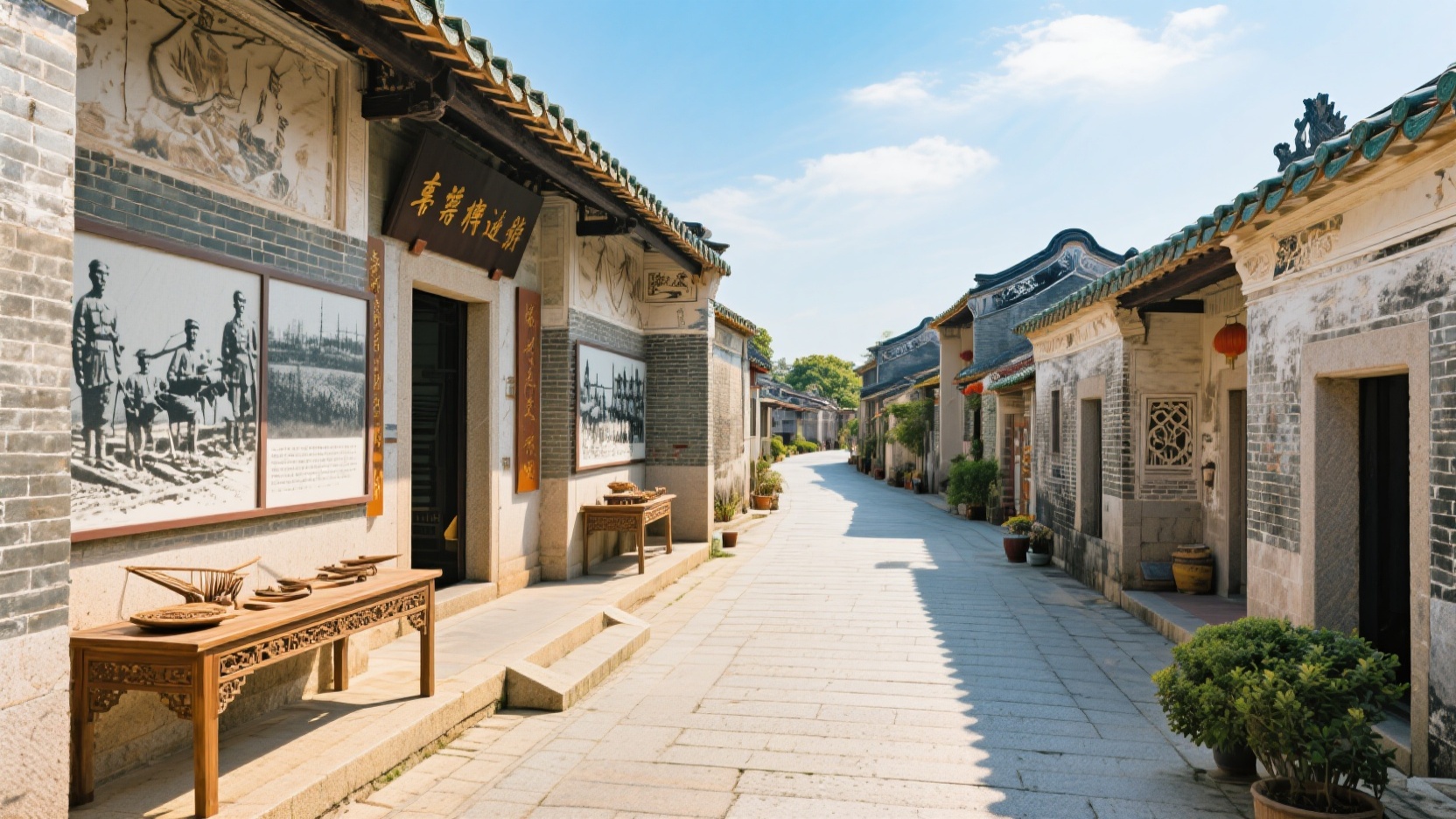
Dongguan, a city often seen as an industrial powerhouse, has its profound historical heritage and diverse cultural and artistic landscape overshadowed by its economic achievements. However, a deeper exploration reveals a unique tapestry woven from historical sites, intangible cultural heritage, and human stories. XOOTOUR has meticulously planned a Dongguan cultural and artistic in-depth tour route, aiming to guide you away from the hustle and bustle and allow you to calmly feel the city's inner pulse.
Echoes of History: The Humen Incident and the Backbone of the Nation
A cultural journey through Dongguan begins in Humen, the birthplace of modern Chinese history. The Lin Zexu Memorial Hall in Humen, also known as the Opium War Museum, serves as a window into that turbulent period of history. The museum's collection of historical materials, artifacts, and reconstructed scenes vividly depicts Lin Zexu's monumental act of "destroying opium at Humen" and the entire Opium War. Visitors can not only revisit historical events but also deeply appreciate Lin Zexu's unwavering integrity as a national hero and his profound concern for his country and its people, understanding the awakening and spirit of resistance that led him to "open his eyes to the world." The museum's architectural style, blending traditional Lingnan elements with modern design, is itself a work of art worthy of careful appreciation.
Adjacent to the memorial hall is the Weiyuan Fort, an important coastal defense fortification from the Opium War era. Climbing the ancient stone steps and wandering among the mottled walls and gun emplacements, one can imagine the scenes of fierce battle. The Weiyuan Fort boasts an ingenious layout and a robust defensive system; its architectural techniques and military strategic thinking were advanced for its time. These sturdy fortifications are not only witnesses to history but also a concrete manifestation of the indomitable spirit of the Chinese nation. Strolling among them, with the sea breeze on one's face, a profound sense of historical weight and national tragedy arises, prompting a deep dialogue between history and humanity.
Ancient Village Charm: Lingnan Architecture and Clan Culture
Leaving Humen, we turned to the heart of Dongguan to explore the ancient Lingnan villages where time seems to stand still. Nanshe Ming and Qing Dynasty Ancient Village is one of the best-preserved and largest ancient architectural complexes in the Pearl River Delta. It integrates ancestral halls, residences, academies, memorial archways, and ancient wells, showcasing a unique Lingnan architectural style. Gray tiles and blue bricks, carved beams and painted rafters, and wok-shaped roofs all demonstrate exquisite architectural art. The village is crisscrossed by lanes, with towering ancient banyan trees and clear ponds, creating a harmonious pastoral scene. In Nanshe, you can gain a deeper understanding of the clan culture, farming and scholarship traditions, and folk beliefs of the Lingnan region during the Ming and Qing dynasties, experiencing the fusion of ancient wisdom and aesthetic taste. Every ancestral hall and every old house carries the story of a family's rise and fall, waiting for discerning visitors to discover and interpret it.
If time permits, Tangwei Ancient Village is also a must-see. Similar to Nanshe, Tangwei Ancient Village is renowned for its unique "golden tortoise-shaped" layout and well-preserved traditional residential buildings. The architecture here reflects meticulous planning and feng shui principles. The village's deep alleys and winding cobblestone paths seem to transport visitors back hundreds of years. Strolling through the village, experiencing the tranquility and simplicity of this Lingnan water town, and appreciating the beauty of traditional architectural details, is an excellent way to deeply experience the cultural heritage of Dongguan.
Intangible Cultural Heritage Inheritance: The Elegance of Dongguan Incense and Traditional Craftsmanship
A cultural and artistic journey through Dongguan wouldn't be complete without exploring its intangible cultural heritage. Among these, "Dongguan incense," a regional cultural icon of Dongguan, carries a history spanning millennia. Dongguan incense, also known as agarwood, is highly prized for its unique fragrance and medicinal value, and has been a tribute item since ancient times. At the Dongguan Incense Culture Park or related experience centers, you can systematically learn about the cultivation, harvesting, and processing techniques of Dongguan incense, and even have the opportunity to try your hand at making sachets and incense sticks. This is not merely a sensory experience, but a tribute to and preservation of a traditional handicraft on the verge of extinction. Through hands-on experience, you will gain a deeper understanding of the cultural value, aesthetic appeal, and unique position of Dongguan incense within Lingnan culture.
In addition, Dongguan's folk arts, such as the Qilin dance and lion dance, are also vibrant. Although the daily experience points are relatively fixed, if you can catch a festival or event and personally experience these powerful and beautiful folk performances, it will undoubtedly add a vivid touch to your cultural and artistic journey. These intangible cultural heritage projects are not only a display of skills, but also a manifestation of community spirit and cultural identity.
A cultural and artistic journey through Dongguan is a profound exploration that transcends appearances. It invites you to slow down, to truly appreciate the weight of history, the art of architecture, the charm of intangible cultural heritage, and the human stories hidden in every corner. Here, you will discover a Dongguan unlike any you could have imagined, a treasure trove of Lingnan culture brimming with charm and tales.