
Don't just visit Quanzhou in spring | Local's firsthand experience: A list of must-try foods to avoid during the four meals after Frost's Descent
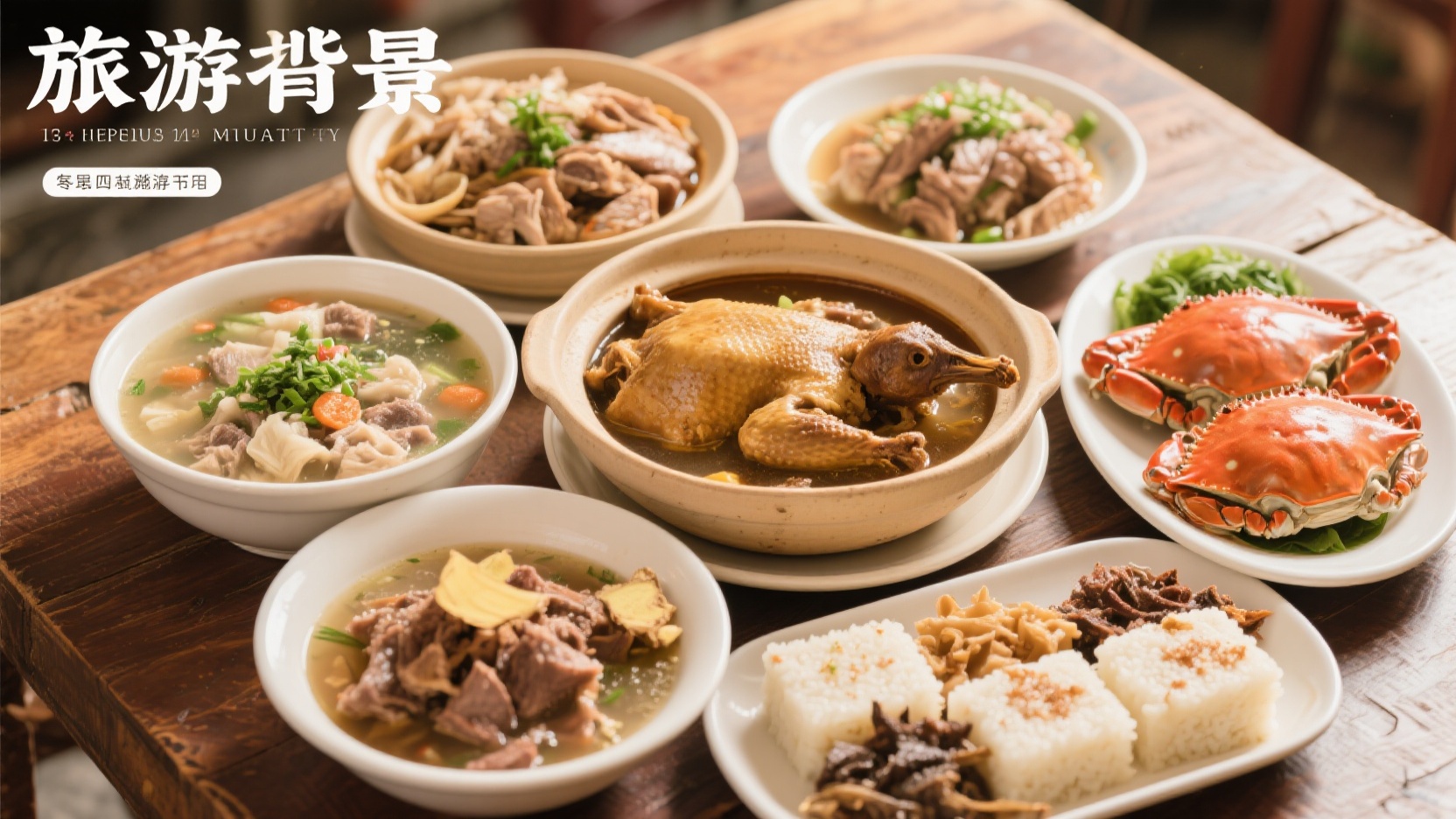
Last year, a friend came to Quanzhou in March and ate at three different ginger duck restaurants. After returning home, he complained that Quanzhou cuisine was "too oily and overpowering with ginger." I understood immediately when I saw the photos—he simply didn't go to the right restaurants at the right time of year. It wasn't his fault; online guides all recommended spring, but spring is precisely when Quanzhou locals are most discerning about food. The time when locals truly control their cravings according to the season is around the time of Frost's Descent.
Quanzhou is an underrated city when it comes to seasonal festivals. People often associate oyster omelets with Qingming Festival and spring rolls with the start of spring, but there's an old saying in Southern Fujian: "All the tonics you take throughout the year aren't worth the Frost's Descent." Once Frost's Descent arrives, ducks finish molting, beef begins to accumulate fat, persimmons lose their astringency after being touched by frost, and even the night air carries the scent of crab roe. Locals never consult lists when it comes to what to eat on this day.
Breakfast: Don't eat rice noodle soup during Frost's Descent; beef soup with savory rice is the secret code.
Many travel guides suggest having rice noodle soup for your first meal of the day, but around the time of Frost's Descent, the older generation of Quanzhou residents quietly switch to beef soup for breakfast. After Frost's Descent, cattle begin to fatten up for winter, resulting in firm and tender meat. A bowl of handmade beef soup, cooked in angelica root broth, warms you from your stomach to your toes after a morning meal. Eating it at this time isn't just making do; it's being seasonal.
The locals have a fixed way of serving it: a bowl of beef soup must be served with half a bowl of salted radish rice, plus two pieces of pickled radish. The salted rice soaks up the soup, the pickled radish cuts through the richness, and only a little chili sauce is added to the soup. Don't ask why there are no green vegetables; at this time of year, older people will shake their heads if they eat anything too cold for breakfast.
For the best beef soup, choose a broth with a hint of angelica root. The soup should have a crisp, bouncy texture, not a soft, mushy dough. On the morning of Frost's Descent, many old shops in Quanzhou's alleyways open early; the steam rising from the pots is more effective than any signboard.
Lunch: Ginger duck isn't meant to be eaten in March; it's best enjoyed in a casserole dish during the Frost's Descent season.
Quanzhou ginger duck has become too much of a trendy dish, with long queues forming outside restaurants in the spring, only to find the duck still covered in fat. The best ducks, however, are those that have just molted around the time of the first frost, when the subcutaneous fat is most evenly distributed. They are then braised in a clay pot with plenty of old ginger and sesame oil, resulting in duck meat that is neither fishy nor falling apart, and even the bones are fragrant.
On the day of Frost's Descent, locals eat ginger duck at noon. They always order an extra serving of rice blood or noodles, mixing the ginger oil sauce from the casserole into it. First, take a piece of duck meat with the skin on, paired with a bite of blanched noodles; don't rush to drink the soup. Those who truly appreciate good food will also look at the ginger—old ginger harvested after Frost's Descent is spicy enough that it's not watery and has a nourishing effect.
Don't be fooled by touristy restaurants with long queues. Locals often venture into backstreets and old neighborhoods. If the aroma of ginger is strong and there are plenty of clay pots at the entrance, the taste won't be off. The older the environment, the more likely it is to be an old-fashioned restaurant that prepares ducks according to the seasons.
Afternoon tea: Frost-covered persimmons are not eaten raw; locals enjoy them with tea.
There's a folk saying in Quanzhou: "Eat persimmons on Frost's Descent, and you won't get a runny nose." Tourists buy hard persimmons from fruit shops and peel them directly, which can be quite astringent. Locals, on the afternoon of Frost's Descent, will pick out soft persimmons, tear a small opening, suck out the flesh, and then pair it with a brew of old-growth narcissus or Tieguanyin tea. The astringency and sweetness are balanced by the tea, making it just right.
If guests come over, we'll also brew a pot of persimmon and longan tea, served with two fried dates. The persimmons are sun-dried around the time of the Frost's Descent solar term; they're thick and have a honey-like aroma. The longan is good for replenishing qi, and the fried dates are crispy on the outside and soft on the inside. This meal isn't about quantity, but about suppressing the dryness of autumn, making room for a nourishing meal later in the evening.
Don't bite into hard persimmons. People in Quanzhou usually slice them and dip them in a little salt or soy sauce, but that's a less common way to eat them. For soft persimmons that are in season, you don't need a knife at all; the most comfortable way is to suck them out.
Bonus: Red crab rice cake is a hidden surprise in the Frosty Wind.
Around the time of Frost's Descent, coastal red crabs begin to develop their roe, a phenomenon known in Southern Fujian as "When the wind blows after Frost's Descent, the crabs are at their fattest." If they haven't had a full lunch, locals will have a small portion of red crab rice cake in the evening. The glutinous rice is soaked with crab oil, and the crab roe is firm and not runny—a state that is absolutely unavailable in spring and summer.
This dish doesn't need to be prepared in a fancy restaurant; some food stalls in the old town will make it temporarily around the time of the Frost's Descent solar term. To eat it, first scoop out the crab shell with the roe, then mix it with glutinous rice and enjoy it with a sip of light tea. Don't treat it as a main dish; it's not meant to fill your stomach, but rather to whet your appetite for the delicious flavors that follow, like a late-night snack.
Late-night snack: Four-herb duck soup noodles, a local's secret nighttime treat.
On a night in Quanzhou during the Frost's Descent solar term, the wind begins to carry a chill. If there are elderly people in the family, they will definitely stew a pot of Four-Ingredient Duck Soup. Rehmannia glutinosa, Angelica sinensis, Ligusticum chuanxiong, Paeonia lactiflora and duck are simmered together slowly. The soup is dark in color and has a strong medicinal aroma. Those who do not know it think it is medicine, but those who know it know that this is a sign of winter nourishment in southern Fujian.
The proper way to eat late-night snacks isn't just to drink the soup; you pour the soup over the noodles and drizzle with oil from sautéed shallots. The duck meat is dipped in garlic soy sauce, and the noodles soak up the broth. Only after finishing this bowl can you truly say you've celebrated the Frost's Descent festival. Those who only check in during the day have no idea that Quanzhou has this late-night treat.
If you find the medicinal taste too strong, you can skim off a little oil from the soup first, but don't add vinegar. The rich flavor of Siwu Tang (Four-Substance Decoction) paired with the smooth texture of the noodles makes for the most comforting ending to a night of Frost's Descent.
In conclusion
Don't ask the locals, I didn't tell you:
First, don't follow the trend of eating ginger duck in spring. The Muscovy duck is at its fattest and leanest around the time of the first frost, and the aroma of oil and ginger is just right.
Second, don't just focus on rice noodle soup for breakfast. Beef soup with salted rice is the local secret code for the season.
Third, choose soft persimmons to pair with tea. Hard persimmons are astringent. Don't say that Quanzhou fruits are not good; it's just that they are not eaten at the right time of year.
Fourth, red crab rice cakes are not available year-round; they only ripen when the frost arrives and the wind blows. If you miss it, you'll have to wait another year.
5. If you haven't had Four-Ingredient Duck Soup Noodles at night, don't say you've been to Quanzhou's Frost's Descent Festival. Locals only start cooking it late at night.