
Avoid West Street in Quanzhou on rainy days | Local testimonial: A cultural and artistic indoor route that keeps you dry all day.
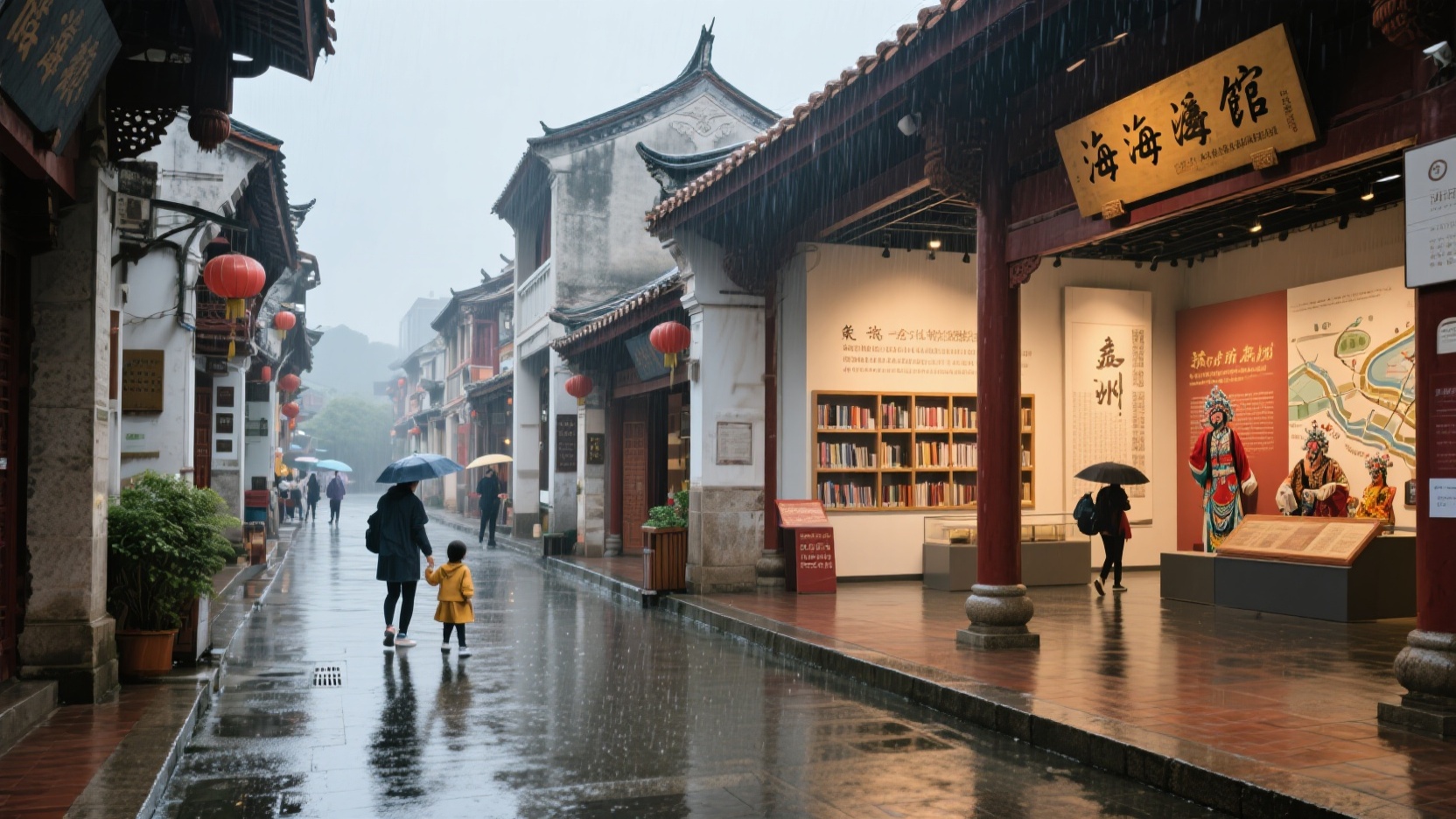
Last year, it rained for seven consecutive days in Quanzhou. I saw three tourists squatting by the arcade on West Street, wringing out their socks. The line for the milk tea shop next door stretched outside. At that moment, I knew that I should stop believing those online guides that say "the most romantic way to stroll through the ancient city is on a rainy day."
Quanzhou isn't just about West Street and Kaiyuan Temple. Especially during heavy rains, humid weather, scorching temperatures of 40 degrees Celsius, or bone-chillingly damp winters, locals often drive to museums and theaters. There's a whole indoor cultural and artistic route where you can avoid the sun, rain, and wet shoes, and escape the crowds.
First, in the morning, take refuge in the "Maritime Museum + Intangible Cultural Heritage Museum" – these two neighboring buildings – and avoid getting bogged down in the fake artsy atmosphere of West Street.
The Quanzhou Maritime Museum is truly a top-tier site for the Maritime Silk Road in the hearts of locals, but it's often only briefly mentioned in travel guides. The museum is packed with ancient Tang and Song dynasty ships, religious stone carvings, and traces of foreign culture; a leisurely visit would take about two to two and a half hours. It's closed on Mondays and open Tuesday through Sunday. Advance reservations via its official WeChat account are recommended. Admission is free.
The Quanzhou Intangible Cultural Heritage Museum, less than a ten-minute drive away, is the most underrated indoor venue on a bad day. The exhibits on puppetry, Hui'an women's clothing, Nanyin music, and Liyuan opera are quite interactive, and about an hour and a half is enough to explore. It's also closed on Mondays and requires reservations. The two museums are adjacent, so you won't see daylight all morning, and your shoes will be dry.
For dining, there are many local restaurants serving beef, rice noodle soup, and ginger duck on Donghu Street and Tian'an Road nearby, costing only a few dozen yuan per person, so there's no need to rush into the mall. It's not far from West Street, but don't go back on rainy days; the cobblestone streets are really slippery.
Second, instead of queuing at the mall at noon, have a light, "anti-tourist" meal around East Lake.
A few minutes' walk from the Maritime Museum towards Tian'an Road, you'll find a local restaurant that's been open for many years, specializing in beef soup, savory rice, and steak. The food is quick and inexpensive, much more affordable than the photo shops on West Street. It costs only a few dozen yuan per person, and you won't need to walk far with an umbrella on rainy days.
If you're bringing elderly relatives or children, you can find a Fujian cuisine restaurant near the west gate of Donghu Park. Order a pot of ginger duck or oyster omelet; it'll cost around 100 yuan per person and you'll be quite full. Don't be misled by highly-rated trendy restaurants on review apps; queuing in the rain means getting soaked.
After eating, I don't recommend going back to the hotel to rest. Good weather is rare in Quanzhou, and on bad weather, you should spend your time indoors looking at things. Next, take a taxi directly to the Four Petals of Donghai, which takes about half an hour. The taxi stops right in front of the building, so you'll basically stay dry.
3. In the afternoon, head to the "Four Petals" connecting corridor; the library and urban planning museum are the real shelters from the rain.
The new Quanzhou City Library is located in the Donghai Public Cultural Center, connected to the Science and Technology Museum, Grand Theater, and Urban Planning Museum via an indoor corridor, allowing residents to go without an umbrella even on rainy days. While not a tourist attraction, it's a popular weekend spot for locals to spend the whole day with their children. The library itself is so spacious that it takes more than two hours to explore; no reservations are required, but it's closed on Mondays.
The adjacent City Planning Museum is often overlooked by tourists, but its model of Quanzhou's ancient city and exhibits on urban development are actually very intuitive and easier to understand than simply walking around the ancient city. A visit takes about one to one and a half hours. It's closed on Mondays, admission is free, but reservations are generally required through official channels.
If you still have energy, you can also visit the science museum's permanent exhibitions, but note that some interactive exhibits require separate reservations. Nearby restaurants are concentrated in Donghai Taihe Plaza or Vanke City, with prices ranging from tens to hundreds of yuan per person. While there are fewer options compared to the city center, their proximity is a major advantage.
Fourth, a semi-indoor alternative is the "Yuanhe 1916" inner street. You can stroll around without getting wet in the rain, but don't have too high expectations.
If the rain stops or lessens in the evening, you can return to the old town and visit Yuanhe 1916 Creative Park. It's converted from an old factory and features several covered inner streets and small exhibitions, perfect for a quick one-hour visit. Don't follow the trendy photo spots; many corners are poorly lit on rainy days, making them ideal for sitting down and having a coffee.
There are no fixed closing days, but the opening hours of each exhibition hall vary, so it's recommended to check in advance for real-time opening times. The Xinmen Street area nearby offers convenient dining options, and the Liyuan Classical Theatre is also located here, allowing you to combine dinner with an evening performance without having to walk through the wet area.
If the rain continues to be heavy, skipping this place won't be a loss. You can stay at Donghai and wait for the evening performance at the Grand Theatre, or take a taxi to the Old Town to see a play. Quanzhou's indoor cultural density is enough to make you skip the open-air cultural and creative park.
5. Listening to Nanyin or Liyuan Opera in the evening is the perfect way to enjoy a slow and peaceful time, especially on bad days.
Both the Quanzhou Liyuan Classical Theatre and the Nanyin Art Garden are located in the heart of the old city, offering a true "local cultural experience." A Liyuan opera performance lasts about one and a half to two hours, while a Nanyin performance is about one hour. Tickets need to be purchased in advance through official channels and are usually inexpensive, costing only tens to a hundred yuan per person. They are not open separately when there are no performances, and the days they are closed depend on the schedule.
Don't wait for good weather to go see the show; on a clear night, you might find yourself squeezed in the crowds of tourists and unable to find a ticket. Rainy days, on the contrary, are less crowded, the venue is quieter, and the actors' singing and the details of the instruments are clearer. After the show, the stone path outside is wet, but you no longer need to rush to other attractions.
If you're traveling with parents or children, prioritize Nanyin music; it's slow-paced, has subtitles, and is easy to sit through. Younger friends can try Liyuan Opera; the movements and dialect require some skill, but it's well worth the effort. There are late-night snacks on Zhongshan Road and Tumen Street nearby, costing only a few dozen yuan per person, perfect for a quick meal before heading back to the hotel.
6. How to choose between art malls and concert halls? Locals don't recommend "browsing for the sake of browsing."
Quanzhou doesn't have any truly comprehensive art malls. The complexes mentioned online are mostly restaurants and retail stores. If you really want to see visual arts, you can check out the occasional exhibitions at the Quanzhou City Library or the small art exhibitions in the lobby of the Grand Theatre. You can see them while you're there, so there's no need to make a special trip for an "art mall".
It's worth buying tickets in advance for concerts, plays, and dance dramas at the Quanzhou Grand Theatre. Entry opens an hour before the performance. When there are no performances, you can briefly stop by the exterior of the building and the public lobby, but it's not necessary to make a special trip to see them. Nearby restaurants include Donghai Taihe, offering everything from snack stalls to full-service restaurants, with prices ranging from tens to hundreds of yuan per person.
If you just want to escape the heat or torrential rain and aren't interested in traditional opera, libraries and some newly opened city study rooms are the safest options. They're well-air-conditioned, less crowded, and free, making them feel more like "local life" than any trendy spot.
In conclusion
1. Don't ask the locals if I didn't tell you: Don't wear canvas shoes in Quanzhou on rainy days, as water will splash up from the cracks in the stone slabs. Wearing non-slip leather shoes is the safest option.
2. Monday is the closing day for most museums and libraries in Quanzhou, so don't plan this route on Monday, otherwise you'll only be able to go to the shopping mall.
3. All free venues basically require reservations through the official WeChat account. On-site reservations may not be available, especially on rainy days when everyone crowds indoors.
4. West Street is not the best choice for bad weather. The arcades can't keep out heavy rain, and umbrellas will bump into each other on the narrow streets. Avoid going during peak season.
5. Always check the schedule in advance if you want to see a performance. Liyuan Opera and Nanyin Opera are not performed every night, so it is easy to miss out if you buy tickets on the day of the performance.