
The Flavors of Wuhan in the Market: Cooked Foods, Cured Meats, and Seasonal Delicacies at Tiansheng Street and Dacheng Road
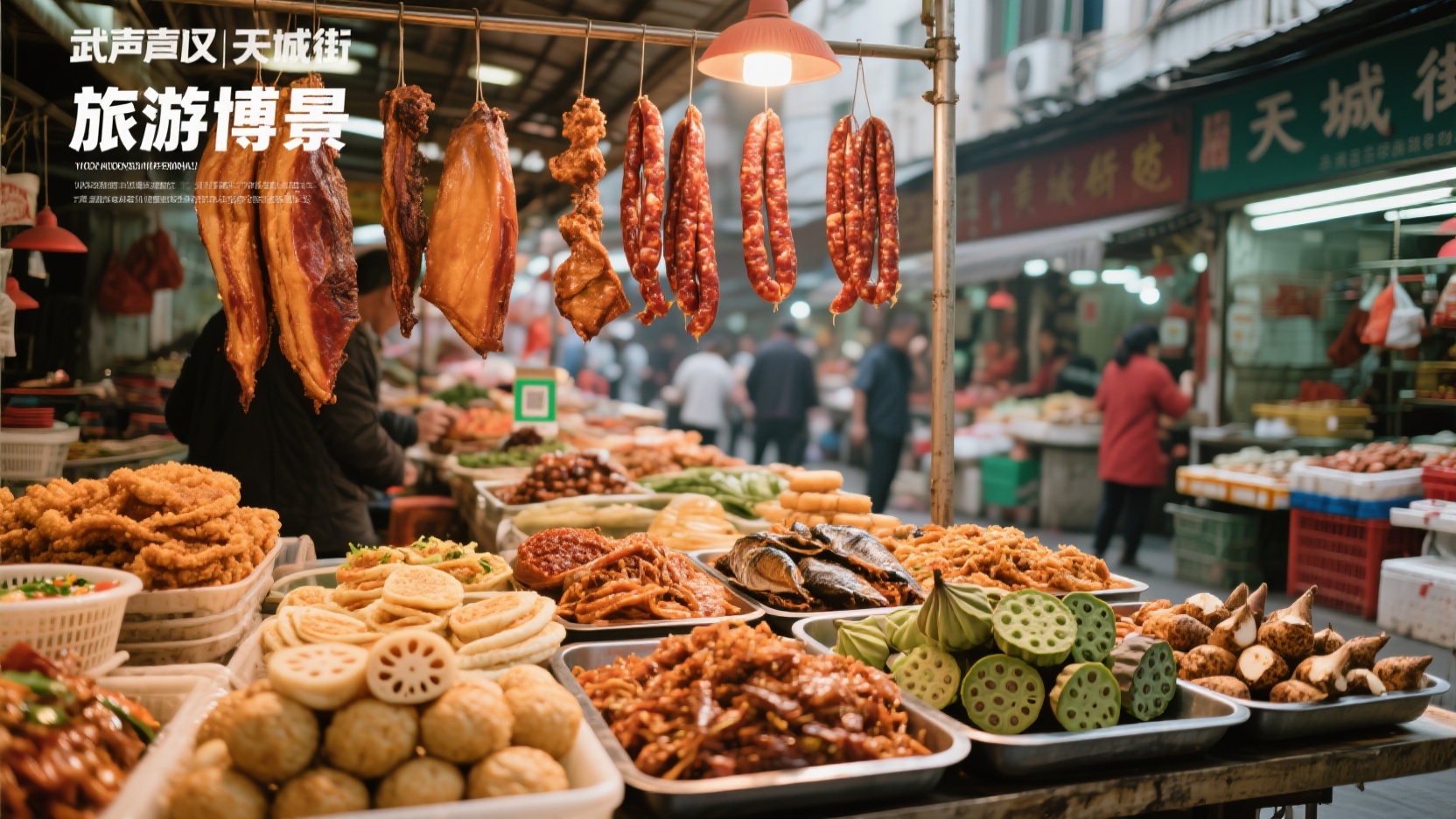
The morning market on Tiansheng Street starts around six in the morning. By the time vendors bring freshly fried lotus root balls to their stalls, the street is already packed with residents pulling carts to buy groceries. Across the river from Tiansheng Street, the Dacheng Road Fresh Food Market in Wuchang retains the slower pace of old Wuchang. Neither of these markets is geared towards tourists, but they hold the most stable culinary order on Wuhan's dining tables. Tiansheng Street has a high density of cooked food stalls, with fried foods and fish balls readily available; Dacheng Road is more geared towards family shopping, with a concentration of cured meats, pickles, and handmade pastries, making it suitable for leisurely browsing.
When shopping at these kinds of markets, you don't need to follow the trendy stalls. Just look for which stall has locals queuing or weighing their wares, and you usually won't go wrong buying from them. The following eight to ten items can be categorized into four types: cooked food, snacks, preserved meats, and seasonal items.
Cooked food stall: Fried lotus root balls, Huangpi Three Delicacies and smoked fish
Fried lotus root balls and lotus root sandwiches are the most popular items at the cooked food stalls. When choosing lotus root balls, look for a deep yellow color on the outside and clearly visible lotus root pieces. Freshly fried lotus root balls have a crispy outer shell and a soft, chewy inside; their texture will noticeably decline as they soften after being left out for a while. For lotus root sandwiches, check if the filling is firm and if the batter is evenly thin. As for how to eat them, they are delicious on their own, but reheating them briefly in an air fryer or oven at home will make the outer shell firmer.
Huangpi Three Delicacies refers to fish balls, meat balls, and meat cakes, often sold alongside large tubs of fish balls in the market. Choose fish balls with small air holes on the surface that are springy when lightly squeezed; meat balls should smell of scallions and ginger, not a powdery smell; and meat cakes should have an even distribution of lean and fat, and the edges should not be dry. After buying them, simply boil them in water with a few pieces of greens to make a common three-delicacies soup in Wuhan households.
Sweet and savory smoked or crispy fish is commonly found in the deli section. Choose fish pieces that are whole, have a clear, glossy sauce, and where the meat and bones don't separate. It's best eaten cold, paired with congee or hot rice. If the sauce is too thin or the fish pieces are sticky, it means they've been stored for too long, and it's not recommended to buy them.
Handmade snacks: Bean threads, rice cakes, and glutinous rice chicken
Bean curd strips are one of the most representative Hubei rice products found in markets, and they come in two types: fresh and dried. The best fresh bean curd strips are light yellow in color, soft and chewy to the touch, and have no sour smell. For dried bean curd strips, choose those with neat edges and uniform thickness. Fresh bean curd strips are best cut into strips and cooked with cured meat and cabbage, while dried bean curd strips are better suited for stir-frying or making soup, as they absorb broth and don't break easily.
Rice cakes and steamed rice cakes belong to the same category of fermented rice-based desserts. For rice cakes, check if the bottom is evenly browned and if the internal honeycomb structure is fine; for steamed rice cakes, choose those with no cracks on the surface and that spring back when pressed. Both are suitable for breakfast, especially with hot soy milk, and can be reheated after cooling to restore their texture.
Glutinous rice chicken isn't actually chicken; it's deep-fried glutinous rice balls with a crispy outer shell and a filling mainly of glutinous rice and a small amount of minced meat. When choosing them, check if they are intact and have a golden-red color. They are best eaten freshly fried; if you take them home, you should refry or reheat them to avoid eating them cold.
Pickled and preserved vegetables: preserved fish, sausage, dried radish, and fermented bean curd
The cured meat stalls in the market are most abundant in winter, but many stalls offer cured fish, cured pork, and sausages year-round. Choose cured fish with oily skin, translucent red flesh, no mold spots, and a faint smoky aroma rather than an overly oily smell. For sausages, they should feel firm and not sticky when gently squeezed, with a clear distinction between lean and fat on the cut surface. The safest way to eat cured meats is to wash them in warm water, steam them, slice them, and leave them unseasoned. They can also be cooked with bean curd strips.
Spicy pickled radish, fermented bean curd, and fermented black beans from pickle stalls are staples on the breakfast tables of Wuhan families. When choosing pickled radish, select those with a natural color, a crisp and tender texture, and no gritty feel; choose fermented bean curd that is whole and doesn't fall apart when soaked in chili oil. They are a more direct and satisfying accompaniment to congee, fried rice, or noodles than many restaurant side dishes.
Seasonal delicacies: lotus pods, water chestnuts, and water caltrops
During the summer and autumn, vendors often sell lotus pods and water chestnuts from shoulder poles at the entrance of the market. Choose lotus pods with plump seedpods, green lotus seeds without any obvious blackening; select water chestnuts with firm shells that feel heavy in your hand. Tender and young water chestnuts can be prepared differently. Tender water chestnuts are suitable for eating raw, while older water chestnuts become soft and powdery after being boiled in salt water.
Water chestnuts are commonly found in winter and spring markets. Those with a purplish-red skin, a firm texture, and no soft or rotten spots are more durable. Water chestnuts can be washed, peeled, and eaten raw, or chopped and mixed with minced meat to make lion's head meatballs or dumplings. They are crisper than canned water chestnuts.
Exploring the local markets is the best way to experience a city. The hot dry noodles, three-delicacy soup, and preserved pork with bean curd that tourists enjoy on the streets of Wuhan can almost all be found in more authentic versions at the markets. There are no elaborate platings or filters, only the vendors' seasonal produce, the feel of weighing items by weight, and the everyday choices made by locals with their feet. If you want to understand why Wuhan's breakfast and lunch options are so diverse, just head to the market with an empty bag—it's more effective than reading ten travel guides.