
Tianjin 48-Hour Flash Mob | A Two-Day, One-Night High-Density Itinerary and a List of Things to Avoid
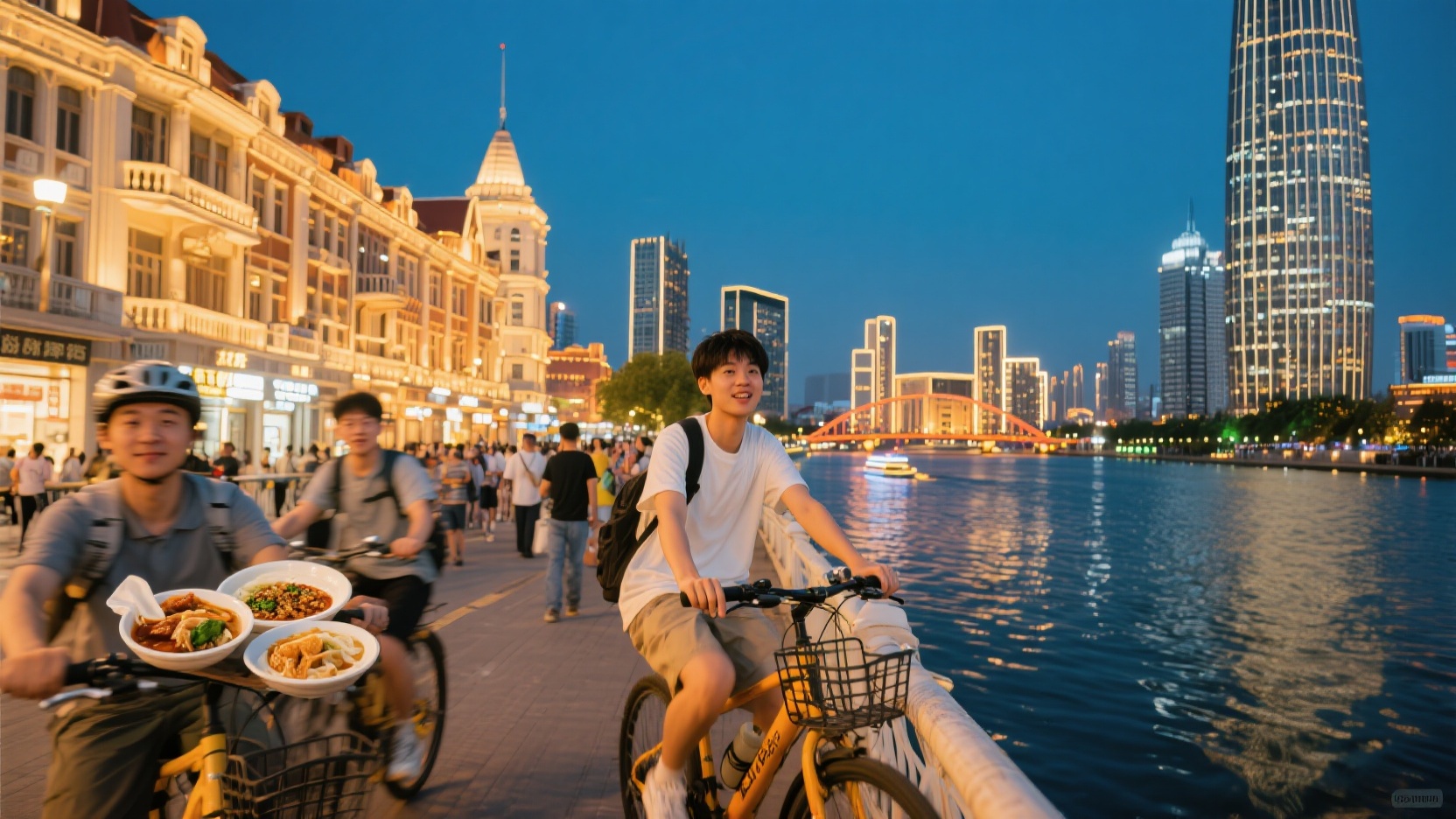
Tianjin is one of the few northern cities where a true "weekend getaway" is possible: high-speed rail services are frequent, city center attractions are highly concentrated, and attractions and restaurants are easily connected by walking and subway. The following itinerary is designed as "Day 1: High-density city center sightseeing + Day 2: In-depth exploration of the old town," suitable for young travelers with only two days and one night who don't want to waste any commuting time.
Day 1: Start with breakfast in the northwest corner, then enjoy a one-stop tour of downtown attractions, food, and night views.
For your first stop, I recommend arriving at the Northwest Corner before 8:00 AM. This isn't a tourist attraction, but rather a hub for breakfast in an old residential area of Tianjin. You can sample a variety of dishes, including guoba cai (crispy rice crust with vegetables), miancha (millet porridge), lingjiao tang (water chestnut soup), juanquan (rolled dough rings), and jianbing guozi (Chinese crepes). Don't get bogged down in the longest queues; the jianbing stalls and tofu pudding shops in the surrounding residential buildings often offer consistent quality and shorter wait times. After breakfast, take the subway to the Ancient Culture Street and stroll around before 9:00 AM when the crowds are still relatively small. Focus on the Tianhou Palace, the opera house, and the street signs; don't spend too much time on the replica antique goods.
From the Ancient Culture Street, cross the river or cycle to the Italian Style Area. Daytime is better for observing the architectural facades and the relationship between the streets and alleys; cafes and restaurants can be visited in the afternoon. At midday, head to the Five Avenues area; using shared bikes instead of walking is recommended. The Five Avenues are large, and cycling can efficiently cover Machang Road, Chongqing Road, Dali Road, Changde Road, and the Xiaobailou area. After lunch around Minyuan Square, continue cycling to the Xikai Church and the exterior of the Porcelain House. The exterior of the Porcelain House is more suitable for quick photo opportunities than the interior. The Xikai Church can be entered quietly outside of worship hours; please be mindful of maintaining silence.
In the evening, move from Jiefang North Road towards Jinwan Square. This street, known as the "Wall Street of the East," is best lit around sunset, making the details of the old bank buildings and foreign firm entrances even more appealing than during the day. After dark, enjoy the Haihe River night view: walk from Jiefang Bridge towards Bei'an Bridge, which is the section of the Haihe River with the most concentrated lights, offering a panoramic view of the bridges on both banks, Jinwan Square, and the Tianjin Eye. It's not recommended to buy tickets and queue for the Tianjin Eye; viewing it from a distance or taking photos from below the bridge is more time-efficient and helps avoid crowds.
Day 2: In-depth exploration of the old town, or alternatively, a coastal cultural tour.
The second day doesn't require revisiting popular tourist attractions; instead, focus on the architectural fabric and local life of the old town. For breakfast, leave the northwest corner and try some tofu pudding or flatbread rolls in the residential areas around the hotel—the taste is more homely. In the morning, start from the Five Courtyards on Tai'an Road, walking along Anglican Church, the perimeter of the Astor House Museum, and Jiefang North Road to the opposite bank of Jinwan Square. This walking route takes about two hours, has a high building density, and the morning light is perfect for taking photos, avoiding direct encounters with tour groups.
Take a break near Xiaobailou at noon, then head out to the non-core areas of the Five Avenues in the afternoon, such as Xianong Courtyard, Minyuan Xili, and surrounding side streets. These semi-open alleyways are less noisy than the main streets, offering a glimpse into the daily lives of people living under the old Western-style buildings. In the afternoon, you can find a street-side cafe for a short rest, but queuing for trendy photo spots is not recommended. If you have the energy before sunset, you can cycle to the vicinity of Liuzhuang Bridge on the Haihe River to watch locals fishing and flying kites, ending your two-day trip in a low-intensity way.
If you're more interested in the ocean and contemporary architecture, Day 2 can be replaced with a half-day trip to the Binhai New Area: make a reservation for the National Maritime Museum in the morning, visit the interior of the Binhai New Area Library in the afternoon, and decide whether to go to the Dongjiang Seaside Park depending on your energy level. Note that this trip takes about an hour one way from the city center, and the museum is closed on Mondays; reservations are essential for weekends.
Useful Tips: Transportation Saving Card, Packing List, Avoiding Queues
Transportation Savings Card: Covers core areas of Tianjin Metro and bus services; simply activate the local transit code on a travel platform—no physical card required. Shared bikes are the most flexible option along the Five Avenues and Haihe River; short-time rides are more cost-effective than single rides. Accommodation is recommended near the Haihe River or Xiaobailou area for convenient concluding a two-day itinerary.
Packing list: One backpack or small carry-on suitcase is enough for two days and one night. Essentials include a power bank, sun hat, comfortable walking shoes, umbrella, and an empty water bottle. Tianjin experiences significant temperature differences between autumn and spring, and the night breeze along the Haihe River can be quite cool; even if it's warm during the day, it's recommended to bring a lightweight windproof jacket.
Avoiding queue traps: Some stalls in the northwest corner have queues from morning to noon, so try to arrive before 7:30 am, or choose a stall in a residential area instead; Tianjin Eye and Porcelain House do not require tickets to enter, and the external views are better for photos; free venues such as the National Maritime Museum require advance reservations for weekends and should be avoided on Mondays; be wary of queuing traps when you encounter popular shops that claim "no locals go there".