
A leisurely 7-day trip to Shengjing: an in-depth itinerary for elderly people and children, featuring palaces, hot springs, and wetlands.
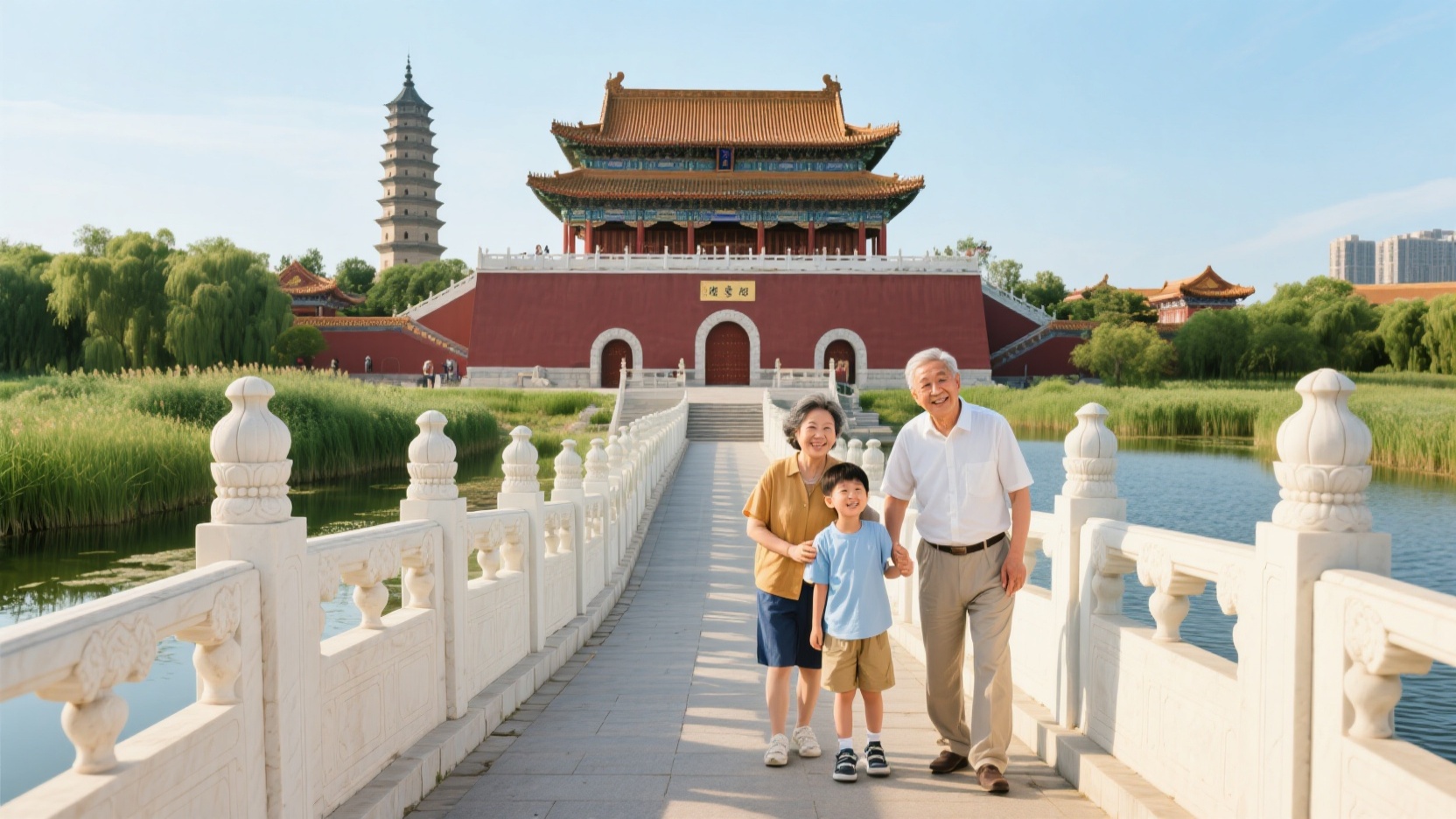
Extending the Shenyang trip to seven days and six nights isn't about the number of places to visit, but rather about accommodating the physical demands of the elderly and children with a schedule of "one place in the morning and one place in the afternoon." It's recommended to stay near the Zhongjie or Qingnian Avenue subway lines to minimize transfers. Most accommodations are in the city center, while suburban stops only require a day trip or a one-night stay nearby.
Day 1: Arrive in Shenyang, stroll through Zhongjie at night to get used to the pace.
No long-distance attractions are planned upon arrival. In the evening, visit Zhongjie Pedestrian Street and Toutiao Hutong, admiring the old building facades along the street, and find a time-honored dumpling or shumai restaurant for dinner. The Zhongjie pedestrian area is flat and suitable for strollers and wheelchairs; the walking experience is even better after the lights are turned on at night. If you arrive late, you will only eat near the hotel to ensure you have enough energy for the next day.
Day 2: Shenyang Imperial Palace and Zhang Family Mansion, two destinations in one day, no rushing.
In the morning, visit the Shenyang Imperial Palace, focusing on the Dazheng Hall, the Ten Kings Pavilion, and the Phoenix Tower. It's recommended to make reservations in advance through the official WeChat account. The Shenyang Imperial Palace is smaller than the Forbidden City in Beijing, and can be leisurely explored in about two hours. Have lunch and rest at Zhongjie. In the afternoon, walk or take a short drive to the Zhang Family Mansion to visit the Daqing Building, Xiaoqing Building, and the former residence of Zhao Yidi. The area between these two sites is mostly flat, with shaded trees and indoor exhibition areas, allowing for convenient stops.
Day 3: Qing Zhaoling Mausoleum North Mausoleum Park + Liaoning Provincial Museum (indoor and outdoor combination)
In the morning, we visited Beiling Park. The main road leading to the Qing Zhaoling Mausoleum area is flat, with gentle slopes among the ancient pine forests, perfect for a leisurely walk. In the afternoon, we went to the Liaoning Provincial Museum, focusing on the permanent exhibitions on ancient Liaoning and the Qing Dynasty imperial collection. The museum has ample rest areas, a good backup if the weather is bad. We avoided overexertion that day and returned to the hotel before 8 PM to conserve energy for the next day's trip to the nearby suburbs.
Day 4: Choose one of two options in the suburbs: hot spring therapy or Liaohe Wetland folk tour.
The journey from the city center takes about an hour. Choose one branch based on the physical capabilities of your family members. Option A is the hot spring route, spending a day at Qinghe Peninsula or Beitang Hot Spring, choosing a venue with children's shallow pools and senior citizen rest areas. Return to the hotel or stay overnight nearby in the afternoon. Option B is the nature reserve and folk culture route, first visiting the Liaohe Wetland at Qixing Mountain in Chenbei, walking along the boardwalk to see the river estuary and migratory birds, then visiting Daomeng Space or Xibe Ethnic Culture Square. This route focuses on flat terrain sightseeing, avoiding mountain climbing. It is recommended to bring some snacks and hot water, as there are scattered supply points in the suburbs.
Day 5 Qingfu Mausoleum East Mausoleum Park + Qipanshan Lakeside Slow Walk
In the morning, visit the Qing Fuling Mausoleum at Dongling Park. The 108 steps are manageable; the elderly and children can take the gentle slope on the west side or rest near the mountain gate. In the afternoon, visit Qipanshan Scenic Area, choosing only the lakeside trail or taking the sightseeing bus to the viewing platform; no hiking or amusement park activities are planned. If you are tired after soaking in the hot springs the previous day, you can replace Qipanshan with a rest trip in the city.
Day 6: September 18th History Museum + Xita Korean Ethnic Street
In the morning, visit the September 18th History Museum. The exhibition layout is clear, and the interior is well-designed and accessible, making it suitable for seniors and school-aged children. In the afternoon, head to the Xita area, stroll along Xita Street and the surrounding alleys, and experience the Korean ethnic cuisine and market atmosphere, focusing on sampling snacks and purchasing souvenirs. If time permits, you can visit either the China Industrial Museum or the 1905 Creative Culture Park; choose only one.
Day 7: North Market Morning Market and Return Trip
On the last day, only visit the North Market or Xiaoheyan Morning Market to buy freshly made pastries, pickles, and dried fruits from Northeast China. The morning markets are crowded, so it's recommended to avoid the early morning rush and leave before 9:00 AM to return to the hotel to collect your luggage and head to the station or airport. If your return trip is in the afternoon, you can take a walk in a park near the hotel while waiting.
Recommended gentle slope routes suitable for the elderly and children
For those in the city, the preferred route is the main road from Beiling Park to Zhaoling Mausoleum, which is entirely paved and has a gentle slope. For Dongling Park, take the gentle slope from the mountain gate to the west side of the mausoleum, avoiding the 108 steps. For Qipanshan, only the lakeside boardwalk is recommended. The Liaohe Wetland boardwalk and the rice paddy path in Daomeng Space have almost no elevation difference. For those pushing wheelchairs or strollers, the Forbidden City Square, the interior of the Provincial Museum, Zhongjie Pedestrian Street, and Xita Street are preferred.
List of frequently used local apps
For transportation, you can use "Shengshitong" to scan the QR code to take the subway and buses; for navigation, use Gaode or Baidu Maps; for cross-city inquiries, use Railway 12306; for scenic spot reservations and opening hours, please refer to the official WeChat accounts of each venue; for dining and market reviews, refer to Dianping or Meituan, but you don't have to follow the rankings exactly.
Clothing suggestions for rainy and dry seasons
The rainy season in Shenyang is concentrated in July and August, with hot and humid days and frequent afternoon showers. It is recommended to bring quick-drying short-sleeved shirts, light trousers, a folding umbrella, and non-slip sandals or sneakers. The dry season is from November to March of the following year, with large temperature differences between indoors and outdoors. You need to prepare down jackets, windproof coats, hats, and gloves. Spring and autumn are windy, so a windproof jacket is sufficient in the morning and evening. Always bring an extra pair of dry socks for the elderly and children.