
Shenyang Art Realm | Exploring the Ancient Charm of Fengtian: An In-Depth Cultural and Artistic Journey
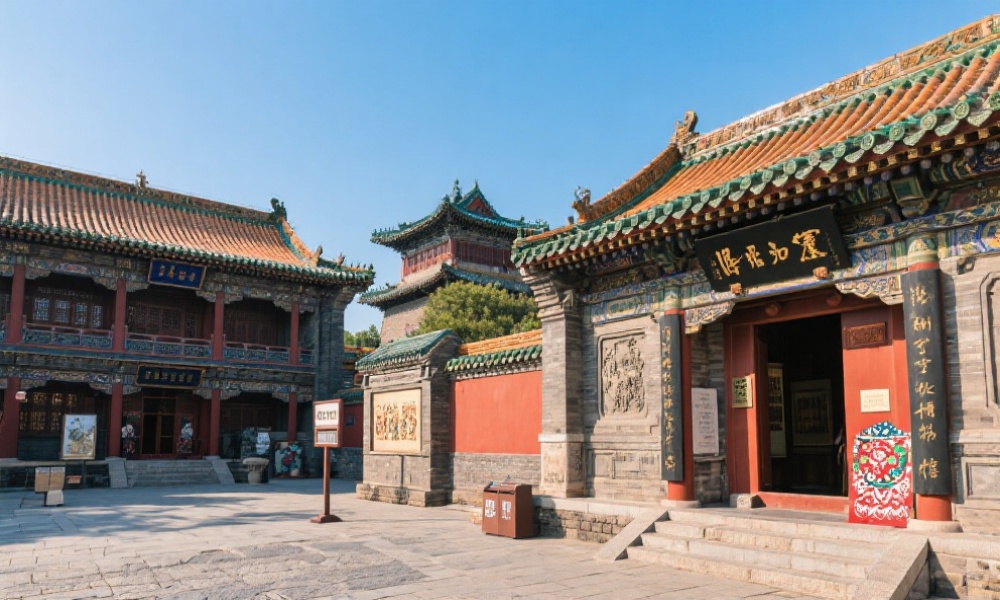
Shenyang, a major city in Northeast China hailed as "the birthplace of a dynasty and the capital of two emperors," is not only the cradle of industrial civilization but also a city with a profound historical heritage and diverse culture and arts. Its cultural lineage spans its rise in the early Qing Dynasty, the turbulent changes of the Republic of China, and its current artistic prosperity. This selected blog post will guide you beyond superficial observation, delving into the very fabric of Shenyang and embarking on an immersive cultural and artistic journey.
First stop: The legacy of the Qing Dynasty palace, the birthplace of the Chinese dynasty.
At the start of our journey, we first visited the Shenyang Imperial Palace , a UNESCO World Heritage Site. As the imperial palace of the Qing Dynasty before its conquest of China and later as the secondary capital palace after the capital was moved to Beijing, the Shenyang Imperial Palace holds a special historical position. It was not only the power center of two generations of emperors, Nurhaci and his son Huang Taiji, but also a testament to the integration of Manchu culture with Han, Mongolian, and other diverse cultures.
The Shenyang Imperial Palace boasts a unique architectural style, differing from the grandeur and solemnity of the Forbidden City in Beijing, exhibiting instead a more refined and practical design. The Dazheng Hall and the Ten Princes' Pavilions are arranged in a V-shape, symbolizing the Eight Banners system and representing the political structure of the early Qing Dynasty. The Phoenix Tower, as the highest point of the palace, was once the place where emperors and empresses observed ceremonies and held banquets; its exquisite brackets and painted decorations showcase the superb craftsmanship of early Qing artisans. Strolling through the palace, you will find that the furnishings, murals, and various handicrafts reveal the unique aesthetic tastes and customs of the Manchu people, such as shamanistic totem worship and traces of hunting culture. This is not merely an architectural complex, but also the starting point for the Qing Dynasty's rise from the Northeast to the national stage; every brick and tile tells of the ambition and wisdom of its founders.
Second stop: The Turbulent Republican Era, a microcosm of changing times.
From the imperial grandeur of the Qing Dynasty to the turbulent era of the Republic of China, the Zhang Family Mansion Museum is an unmissable second stop in Shenyang. This former official residence and private home of Zhang Zuolin, the "King of Northeast China," and his son Zhang Xueliang, is one of the most representative historical architectural complexes in Northeast China in the early 20th century. It blends traditional Chinese architecture, Western architectural styles, and Japanese architectural elements, forming a unique "Marshal's Mansion" character.
The bricks, tiles, wood carvings, paintings, and various furniture furnishings inside the Marshal's Mansion reflect the luxurious lifestyle and aesthetic preferences of a warlord family during the Republic of China era. This place was not only the living and working space of the Zhang family, but also the site of a series of major historical events such as the "Northeast Flag Change" and the "September 18 Incident." Through the restored offices, reception rooms, and living quarters, as well as detailed historical exhibits, visitors can truly experience the political struggles, family rise and fall, and personal choices of that turbulent era. Every detail of the Marshal's Mansion is like a slice of history, allowing people to glimpse the complexity and profound history of modern Northeast China.
Third stop: Liaohai Cultural Heritage, a Gathering of Millennia of Art
To gain a comprehensive understanding of the history, culture, and artistic achievements of Liaoning Province, the Liaoning Provincial Museum is your best choice. As a national first-class museum, it houses precious cultural relics from ancient times to modern times in Liaoning, serving as a window into the systematic understanding of Northeast China's regional culture and art.
The museum's permanent exhibitions cover several themes, including "Ancient Civilization of Liaoning," "Modern History of Liaoning," and "Ethnic Customs of Liaoning." The "Ancient Civilization of Liaoning" exhibition hall displays Hongshan Culture jade artifacts, Liao Dynasty Khitan artifacts, and Jin Dynasty Jurchen artifacts. These unique objects are not only significant archaeological discoveries but also important evidence of the diverse yet unified nature of Chinese civilization. The Hongshan Culture jade dragons and jade pig dragons, with their mysterious shapes and exquisite craftsmanship, showcase the artistic creativity and spiritual beliefs of prehistoric peoples. Meanwhile, Liao Dynasty murals and painted sculptures vividly recreate the life scenes and aesthetic tastes of the Khitan people. In addition, the museum regularly hosts various special art exhibitions, providing visitors with opportunities to appreciate fine art from home and abroad. Here, you will see how art, as a carrier of history, tells the thousand-year story of the Liaoning region.
Fourth stop: The sacred site of the imperial mausoleum, a place of reflection for emperors in their final resting place.
During a cultural and artistic journey in Shenyang, Zhaoling (Beiling Park) is a prime example of the fusion of Qing Dynasty imperial mausoleum art and royal gardens. Zhaoling is the joint tomb of Emperor Taizong of Qing (Huang Taiji) and Empress Xiaoduanwen (Borjigit), and is also a World Cultural Heritage site, "Qing Zhaoling".
The Zhaoling Mausoleum boasts a rigorous architectural layout, nestled against mountains and beside water, embodying the essence of traditional Chinese "Feng Shui" theory. Its main buildings, including the Long'en Gate, Long'en Hall, the Square City, and the Treasure Mound, all feature glazed tile roofs and intricately carved beams and painted rafters, creating a magnificent atmosphere. The painted decorations and caisson ceiling within the Long'en Hall, in particular, are exquisitely patterned and vibrantly colored, possessing extremely high artistic value. The stone statues lining the Sacred Way are exquisitely carved, each with a unique form, not only symbolizing imperial majesty but also masterpieces of stone carving art. Zhaoling is not only a royal mausoleum but also integrated with Beiling Park, serving as a place for citizens to relax and engage in cultural immersion. Strolling among the ancient pines and cypresses, feeling the solemnity and grandeur of the imperial mausoleum, and contemplating the weight of history and the cycle of life, is an important part of a deep cultural experience.
In-depth experience: Intangible cultural heritage preservation and artistic life
Shenyang's culture and art extend far beyond museums and historical sites; they also thrive in the transmission of intangible cultural heritage. In Shenyang, you can explore intangible cultural heritage items such as Liaoning paper-cutting, Manchu embroidery, and Manchu folk music .
Liaoning paper-cutting is renowned for its bold, unrestrained, and simple natural style, often drawing inspiration from folk tales, flowers, birds, fish, and insects, carrying auspicious meanings, and representing northern folk art. Manchu embroidery, with its unique needlework and patterns, showcases the aesthetic taste and wisdom of the Manchu people, with techniques such as "gold thread embroidery" and "piled silk embroidery" being exquisitely beautiful. While direct participation in intangible cultural heritage experience sites may require advance reservations or finding specific workshops, you can still encounter these exquisite intangible cultural heritage derivatives and experience their unique artistic charm in some cultural and creative blocks, time-honored shops, or cultural and museum stores. For example, around Zhongjie Pedestrian Street in Shenhe District, there are sometimes intangible cultural heritage displays or handicraft shops. Purchasing an intangible cultural heritage piece is not only taking home a souvenir, but also supporting traditional craftspeople and respecting cultural heritage.
A cultural and artistic journey through Shenyang is a dialogue across time, an interweaving of history and reality. It requires us to slow down and appreciate the stories behind every relic and artifact. Through in-depth, slow-paced cultural exploration, you will see more than just the surface of Shenyang; you will touch the city's profound soul and unique artistic realm.