
Shenyang's Hidden Art and Culture Map: Spiritual Corners from Old Factories and Independent Bookstores to Community Cafes
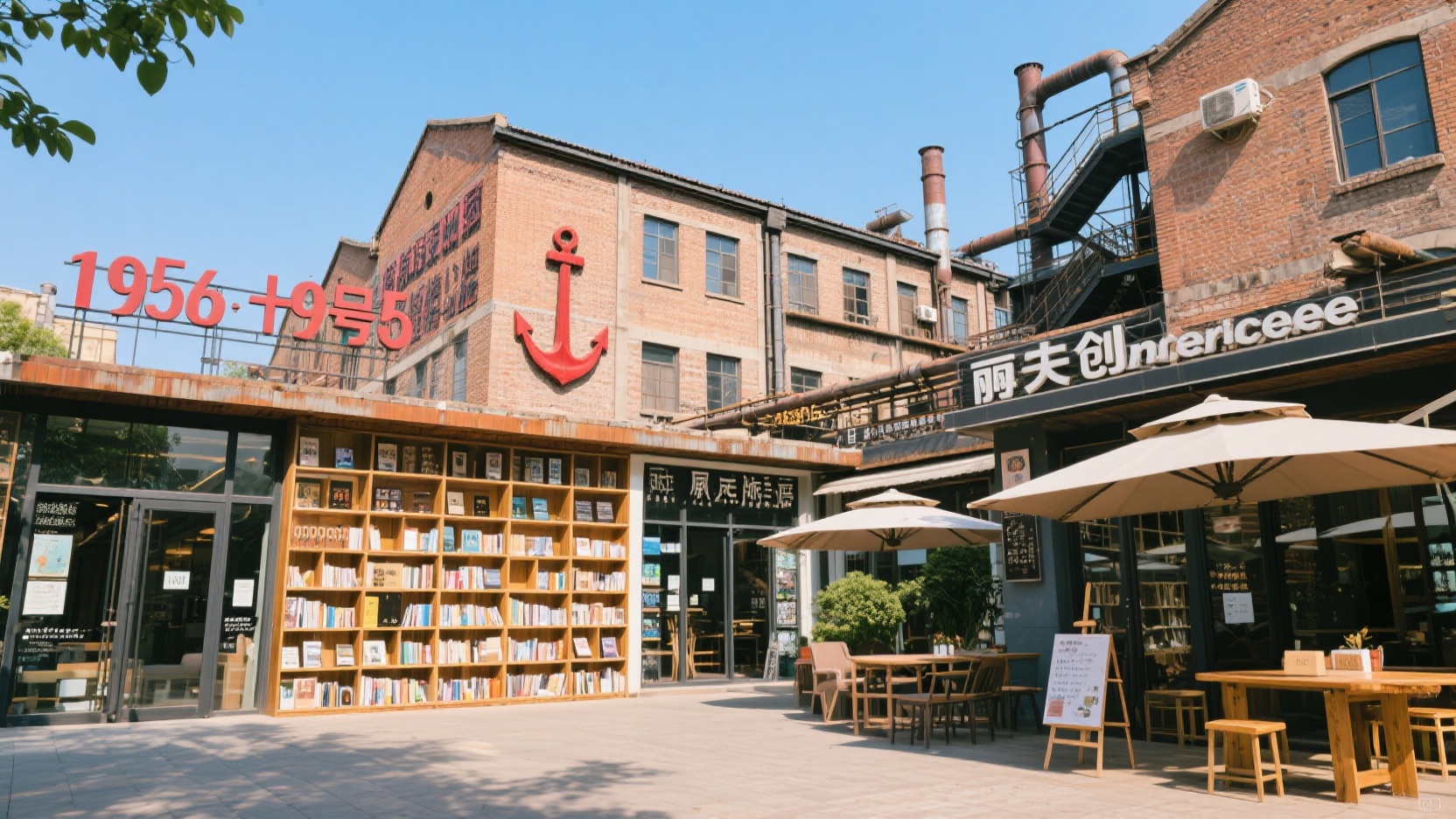
Shenyang's artistic and cultural landscape extends beyond the red walls of the Forbidden City and the bustling crowds of Zhongjie Street. Many more spiritual corners are scattered throughout the old factory areas of Tiexi, the old warehouses of Dadong, and the old printing factory of Shenhe. From cultural and creative parks transformed from old factory buildings to independent bookstores on community corners, this niche cultural map is suitable for a day of selective exploration or for visiting in several sections. The eight locations avoid the usual major tourist attractions, offering a closer look at the everyday spiritual consumption scenes of Shenyang's younger generation.
Hongmei Cultural and Creative Park: Art Museum Next to the Fermentation Tank
Transformed from the old Hongmei MSG factory site, the red-brick factory buildings and giant fermentation tanks have been completely preserved, creating a space that blends industrial heritage with contemporary art. The highlights are the contemporary art exhibitions and occasional experimental projects at the "Fermentation Art Center," while the live performance space within the old workshops often hosts independent music performances. For photography, it's recommended to take advantage of the strong lines of the red brick walls and metal staircases in the afternoon; wearing solid-colored clothing will help highlight the spatial structure. The connecting corridor next to the fermentation tanks is ideal for capturing depth and perspective; if you happen to be there during an exhibition opening, you can document the juxtaposition of artworks and industrial components.
1905 Cultural and Creative Park: An Artistic Variant of a Heavy Machinery Workshop
Formerly a workshop of the Shenyang Heavy Machinery Factory, it retains steel frames, overhead cranes, and old machine tools, making it even more "industrial" in scale than typical cultural and creative parks. The park juxtaposes small theaters, independent design shops, and handicraft workshops, with the small theaters and exhibitions frequently updated. The highlights are the eclectic blend of industrial components and small performance spaces, as well as the public furniture made from repurposed old machine tools. For photography, it's recommended to stand on the second-floor connecting corridor and shoot over the first-floor space, or use a wide-angle lens to capture the overhead crane beams and old brick walls. At night, with the lights on, the metal structure's outline is more suitable for low-ISO, slow-shutter photography; remember to use the overhead crane tracks as leading lines.
Iron Anchor 1956 Cultural and Creative Park: A Quiet Community Amidst Red Brick Courtyards
Converted from an old sandpaper factory, this small space features red-brick buildings enclosing an inward-facing courtyard, exuding a tranquil and everyday atmosphere. Inside, you'll find a café, handmade leather goods shops, and small design studios, perfect for a leisurely stroll. The highlights are the red-brick arched windows, the old factory's skylights, and the layered shadows cast by trees on the brick walls in the afternoon. For photography, it's recommended to take photos around 10 am or 4 pm, utilizing oblique lighting to capture the red-brick walls. The old iron gate and greenery in the courtyard can serve as foreground elements to add depth. On rainy days, the red bricks appear darker, creating a low-saturation industrial feel that's ideal for capturing in photos.
Courtyard No. 11 Art District: A cluster of galleries in an old printing factory
Originally a letterpress printing factory, several old buildings have been transformed into galleries, designer studios, and independent publishing spaces. The area is quiet, with frequent exhibitions but low foot traffic. The highlights are the contemporary painting and photography exhibitions in the independent galleries, and the architectural details that retain traces of the old staircases, vintage wooden doors, and printing workshop. For photography, it's recommended to use the geometric lines of the old staircases to frame the scene, or to take photos of your back as you view the exhibitions against the white walls of the galleries. The hallways are dimly lit, so high ISO or your phone's night mode is recommended. Pay attention to the weathered paint on the old wooden doors to add texture.
Failed Bookstores: Strongholds of Art Books and Niche Publications
Hidden in a corner of the art district, its name carries a self-deprecating tone. The selection leans towards art, photography, design, and independent publications, and it also hosts small-scale sharing sessions. The space is small, with densely packed but clearly categorized bookshelves, perfect for leisurely browsing. The highlights are the rare-to-find foreign art books and local independent publications, as well as the regularly changing small-scale themed displays. For photography, it's recommended to use the bookshelves as a backdrop for close-up shots, or utilize the warm lighting of the lamps to create contrast. Due to the compact space, it's advisable to use a standard focal length rather than a wide-angle lens to avoid distortion, and to turn off the flash to maintain the desired indoor lighting.
Nahan Bookstore: A late-night haven for humanities and social science reading
Known for its selection of humanities and social science books, the store boasts a strong reading atmosphere and regularly hosts book clubs and author meet-and-greets. It feels more like a community public library, with low shelves for easy access. The highlight is the selection process and handwritten recommendations; you can find many substantial works that aren't bestsellers. For photography, we recommend taking pictures of the pages and coffee in natural light from a window seat, or arranging the spines in regular color blocks as a background. Taking silhouette photos of readers under warm lighting at night also creates a great ambiance; please be mindful of disturbing other readers and maintain a quiet environment.
M56 Art Museum: Experimental Exhibitions in a White Cube
This private contemporary art museum features predominantly white cube-shaped spaces, showcasing experimental paintings, installations, and videos at a stable pace. Compared to larger museums, the experience here is quieter and allows for greater engagement with the artworks. Highlights include small solo exhibitions and themed group exhibitions with clear curatorial threads, often featuring local young artists. For photography, it's recommended to use framing techniques for symmetrical compositions at the exhibition entrance, or to leave sufficient negative space in front of the works. In video exhibitions, capture silhouettes and projected light spots, avoiding the use of flash.
Linals Cafe: A community living room in an old building
Nestled among old buildings in the Heping District, this coffee shop retains its original doors, windows, and patterned tiles, attracting local residents and freelancers. The coffee is consistently good, and the space avoids the overly trendy, Instagrammable atmosphere, instead offering a relaxed community lounge feel. The highlights are the details of the old architecture, the street views from the windows, and the hand-drip coffee service at the bar. For photography, it's recommended to sit by the window and use natural light to capture the coffee and old window frames, or to photograph people inside bathed in warm light through the glass from the outside. The patterned tile floor is suitable for shooting close-up shots from above; avoiding peak hours will make it easier to get clean, sharp images.
From the heavy industrial relics of Tiexi to the old printing factory in Shenhe, and then to the aroma of coffee in the old buildings of Heping District, this route connects not just spaces, but also another kind of daily life that grows out of Shenyang beyond its historical depth. Measure the spiritual corners of this city with your footsteps.