
Living in Ningbo's old town or new town? Six comparisons to clarify things for you.
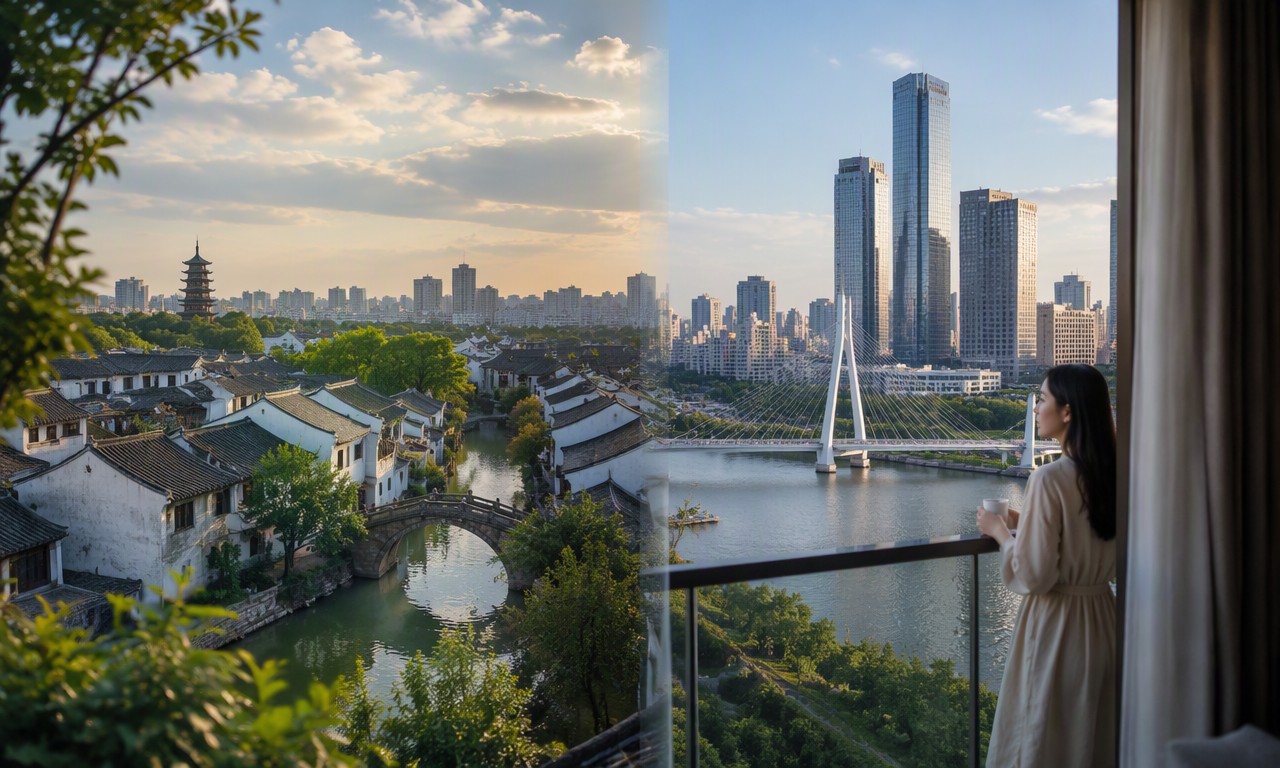
Many readers get stuck on the same question before booking accommodation in Ningbo: old town vs. new town, shopping districts vs. areas near scenic spots, hotels vs. guesthouses – how do you choose? Focusing solely on price can easily lead to booking the wrong place, resulting in wasted time commuting every day. This article presents six of the most common comparisons, explaining the differences and suitable options for different people and itineraries.
Group 1: The old town area around Gulou and Yuehu Lake vs. the eastern part of the new town and the Yinzhou area.
Most travel guides will tell you that "staying in the old town is the only way to experience the true Ningbo flavor." Indeed, the old town is densely populated, with the Drum Tower, Moon Lake, and Tianyi Pavilion all within walking distance. It's convenient to eat at time-honored restaurants, stroll through old streets, and enjoy the morning view of Moon Lake. However, many buildings in the old town are quite old, rooms are generally small, parking is difficult during peak season, and some rooms facing the street are not quiet at night.
The new city follows a different logic. The eastern new city and the central area of Yinzhou have wider roads, newer buildings, and generally larger rooms, making them suitable for families with children, those renting cars, or those needing a quiet place to sleep. The trade-off is that they are far from traditional tourist attractions; even going out for a simple bowl of noodles in the evening requires a car or taxi. If you're only staying one night and mainly want to see Tianyi Pavilion and the old street, stay in the old city; if you're staying two nights or more and your itinerary includes Dongqian Lake or the southern business district, staying in the new city is more comfortable.
Group 2: Accommodation in commercial areas vs. accommodation near scenic spots
Most travel guides will tell you that "staying in a shopping district is convenient for eating and shopping." In fact, accommodations in shopping districts near Tianyi Square and the Bund are indeed suitable for first-time visitors to Ningbo who have a specific goal: shopping and dining. There are restaurants right downstairs, and it's not quiet at night. However, the shopping districts can be noisy on weekend nights, which may disturb light sleepers.
Typical accommodations near scenic areas are along the Dongqian Lake and Xikou line. The biggest advantage of staying here is the privacy you have in the early morning and evening, avoiding the crowds of day tourists. However, dining options are limited, and many guesthouses become quiet around 7 or 8 pm, so you'll need to drive if you want to grab a late-night snack. If you're planning a slow-paced vacation and want to spend the whole day by the lake, staying near the scenic area is worthwhile; if you need to go into town every day or frequently change locations, the commercial district is more practical.
Group 3: Choosing a hotel in the old town vs. choosing a guesthouse in the old town
Most travel guides will tell you that "guesthouses in the old town have a more authentic local feel." In reality, hotels in the old town are more stable, with basic guarantees of soundproofing, bathroom facilities, and bedding, making them suitable for those with lower expectations for accommodation quality. The downside is that they tend to be generic, and some older hotels have decor that dates back many years.
The guesthouses in the old town vary greatly. Good guesthouses can indeed be found in old gatehouses or renovated buildings, with views of the streets and alleys right outside the window, but some may have poor soundproofing, cramped bathrooms, or no elevator. The criteria for judging are simple: if you are willing to accept some inconvenience for the atmosphere and don't have much luggage, a guesthouse is fine; if you are tired from walking all day and just want a good night's sleep, a mid-range hotel in the old town is a better choice.
Group 4: The Bund area vs. the Moon Lake and Tianyi Pavilion area
Most travel guides will tell you that "the Old Bund is lively at night and a good place to stay." In reality, the Old Bund has a high concentration of bars, and it's not quiet even on weekend nights until the early hours of the morning. Staying in hotels or guesthouses near the core area will likely compromise your sleep quality. It's more suitable for nightlife enthusiasts who want to have a drink, listen to live music, and stroll along the river.
The area around Moon Lake and Tianyi Pavilion is a quieter part of the old city. A morning stroll along the lake is very pleasant, and its proximity to Tianyi Pavilion means you don't have to rush. The downside is the limited nighttime shopping; after 9 pm, the streets are quiet, and finding a convenience store requires a walk. If you have a busy day and just want a peaceful night's rest, the Moon Lake area is more suitable than the Bund.
Group 5: Dongqian Lake Resort Hotel vs. Dongqian Lake Homestay
Most travel guides will tell you that "you should stay in a guesthouse at Dongqian Lake". In reality, the resort hotels at Dongqian Lake usually have better lake views, independent parks, convenient parking, and some even have hot springs or indoor pools, making them suitable for families or couples to stay for a whole day without leaving the area.
The guesthouses around Dongqian Lake are more scattered, some hidden in lakeside villages. They offer a rustic atmosphere and relatively affordable prices, but the facilities and services vary. The criteria for judging are: if you prioritize views and amenities and have a sufficient budget, resort hotels are more worthwhile; if you are more price-conscious and willing to explore the lakeside paths yourself, guesthouses can meet your basic needs, but don't have too high expectations for "lake view rooms".
Group 6: Near the high-speed rail station vs. the old city center
Most travel guides will tell you that "it's convenient to catch a train near the high-speed rail station." In reality, Ningbo Station is just on the edge of the old city, not far from Yuehu Lake and the Drum Tower, so staying near the high-speed rail station won't sacrifice much convenience for sightseeing. If you arrive late and leave early, or need to catch an early train the next day, budget hotels near the high-speed rail station offer great value for money.
The old town in the city center is suitable for those who plan to explore on foot and don't mind spending an extra ten minutes or so walking to the station. The difference between the two isn't as significant as you might imagine; Ningbo isn't large, and a taxi ride from the old town to the high-speed rail station is quite short. It mainly depends on how much luggage you have and your departure time: if you have heavy luggage or are taking an early train, choose a location near the high-speed rail station; if you want to experience the old town on foot, stay near Yuehu or Gulou.