
If you only have one meal left in Ningbo, what should you eat?
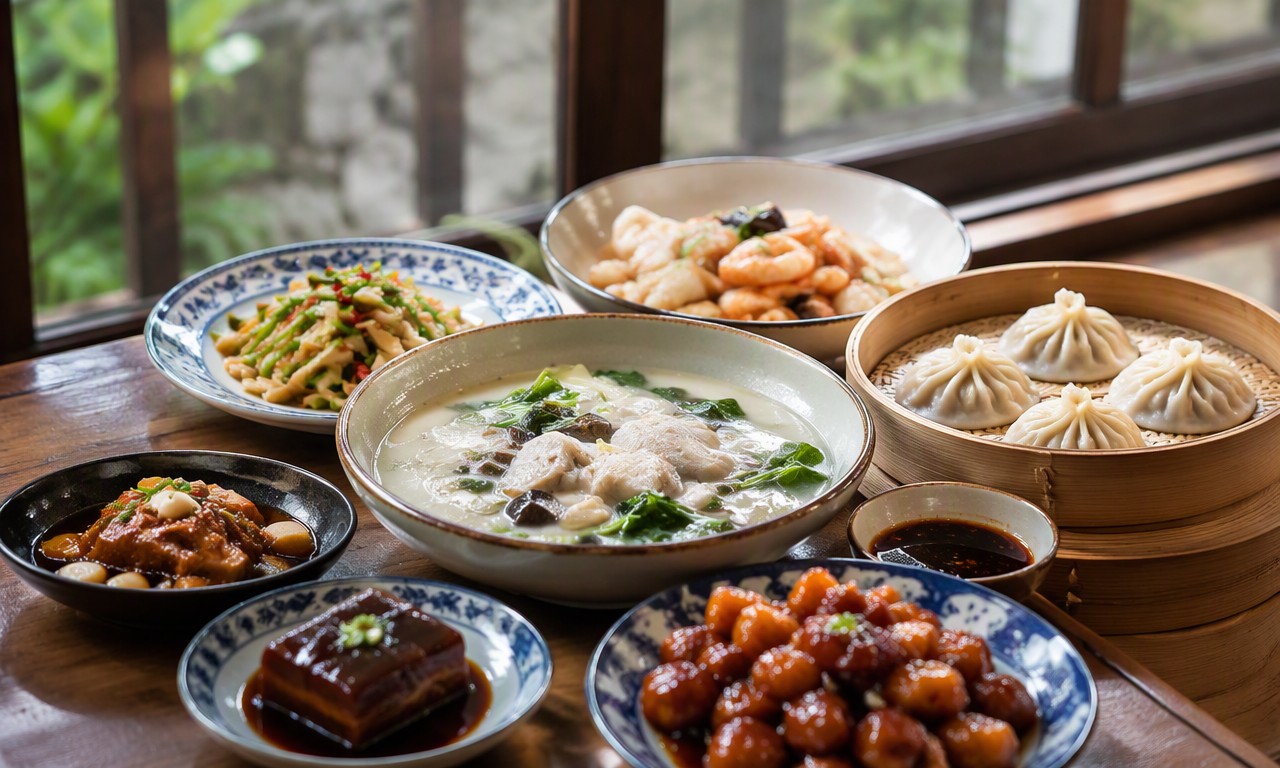
Many readers ask the same question before their trip: Is the food in Ningbo worth making a special trip to eat? If time is very limited, or even if you only have the budget for one meal, how should you choose to avoid regrets? There's no single answer to this question, because the three variables—"who you're going with," "how much money you're willing to spend," and "how many days you can stay"—will push the answer in completely different directions. This article doesn't provide a comprehensive list; instead, it uses a decision tree approach to help you find your niche.
First, clarify three variables: time, travel companions, and budget.
Unlike some cities where food is concentrated on one or two streets, Ningbo's cuisine is more like a scattered network. The old town offers traditional flavors, the Dongqian Lake area boasts clusters of restaurants with pleasant ambiance, and Beilun and Cixi each have their own unique characteristics. Therefore, the first step isn't to open a map and search for food, but rather to determine how many meals you have available, who you'll be eating with, and what level of expense you're willing to spend.
If you only have one meal, don't aim to "eat everything," but rather find that one irreplaceable taste of Ningbo. If you have a whole day, it's worthwhile to combine snacks and main dishes. Only if you have three days can you truly explore eating your way from street vendors to restaurants, from the city center to the surrounding areas. Don't cram too much into your schedule when you're short on time; it will only lead to exhaustion and poor eating habits.
Only one meal: How does a person traveling alone eat?
The problem for one person isn't "not being able to finish the food," but rather "having too little variety to eat." Therefore, the best place to eat alone in Ningbo is somewhere that embodies the local flavor while also being suitable for solo diners. The first choice is a restaurant in the old city that serves single-person set meals or small portions of Ningbo cuisine, such as a small restaurant specializing in classic dishes like braised yellow croaker with salted vegetables, roasted vegetables, and pan-fried ribbonfish. Ordering a braised yellow croaker with rice and a vegetable dish is a common meal for Ningbo locals.
Why not recommend going to the food streets? Because going alone on a food street can easily lead to "only eating a bite of each thing and not really understanding what you're eating." If you really want to experience the atmosphere of the food streets, I suggest having your only meal near the Drum Tower or City God Temple. Choose a dim sum shop with fixed seating, order a bowl of pork lard dumplings and a basket of xiaolongbao, eat, and leave. This way, you'll at least have two core memories of Ningbo dim sum.
Only one meal: Key considerations for couples traveling together
Couples traveling together have higher expectations for the "atmosphere" and "sense of sharing," so if it's just for one meal, you can increase your budget a little and choose a Ningbo cuisine restaurant where you can chat while you eat and where the portions are suitable for two people to share. Mid-range Ningbo cuisine restaurants usually have small portions or set meals for two, so you can enjoy both seafood and meat dishes at the same time, avoiding the waste that can occur with large banquets.
For dishes, it's recommended to prioritize visually appealing and flavorfully distinctive dishes like "Red Roe Spicy Crab" or "Scallion Oil Clams." The salty freshness of the crab and the texture of its roe are often the first impressions visitors have of Ningbo seafood. If your budget allows, find a riverside restaurant or one housed in a renovated old building; the ambiance itself can become part of the dining experience. But remember, the core focus should be on the quality of the food; the ambiance is secondary.
Only one meal: the safest approach is to take your parents.
When taking your parents to eat Ningbo cuisine, caution is key. Parents usually don't like long queues, noisy environments, or risky food choices. Therefore, this meal should prioritize established or reputable Ningbo restaurants, focusing on hot dishes and avoiding raw marinated or cold dishes, unless your parents specifically prefer them.
The recommended menu is "three hot dishes and one soup": one braised meat dish, one steamed or home-style braised fish, one seasonal vegetable dish, and one soup characteristic of Ningbo. Examples include braised mantis shrimp, steamed ribbonfish, roasted vegetables, and salted mustard greens soup. This combination is both recognizable as Ningbo cuisine and caters to the tastes and sense of security of most middle-aged and elderly people. Avoid taking your parents to those trendy restaurants that only serve raw marinated food and raw crab; the risk is too high.
Only One Meal: Tips for Families with Children to Avoid Common Pitfalls
When traveling with a child to Ningbo for just one meal, the biggest pitfall is choosing restaurants with long wait times, overly salty and savory flavors, and unsuitable environments for children. Ningbo cuisine is generally on the salty side, and many seafood dishes have shells and bones, which are not very friendly to young children. Therefore, the focus of this meal was not "authenticity," but rather "food that both children and adults can enjoy."
The first choice is restaurants that offer snacks and home-style dishes, such as those serving milder dishes like Ningbo glutinous rice balls, steamed dumplings, steamed eggs, and braised pork. These kinds of restaurants are easy to find in Ningbo's old town and large shopping malls. When ordering, ask for less salt and order a separate non-spicy soup or noodles for your child. Don't try to make your child "experience authentic Ningbo flavors" in a limited time; if he eats well, the whole family will eat well too.
A full day: Find your seat according to your budget
If you can spare a full day and night, a budget-friendly itinerary can be arranged like this: In the morning, go to the food stalls in the old town for brunch, and have glutinous rice balls, steamed buns, and wontons in rotation; in the afternoon, stroll around the vicinity of the wet market and buy some freshly made snacks to eat on the go; in the evening, go to the food stalls or community restaurants frequented by locals, order some seafood and staple food, and you can have a decent meal for just a few dozen yuan per person.
A day on a mid-range budget allows for a slower pace: lunch at a proper Ningbo-style restaurant, ordering three or four signature dishes; afternoons spent relaxing in a teahouse or café in an old building; and dinner at a more comfortable home-style seafood restaurant by the river or lake. This approach offers both a street-style feel and a formal atmosphere, with an average cost of around 100 yuan per person being reasonable.
A day on a high-end budget doesn't require rushing around. At noon, head to a refined restaurant specializing in Ningbo cuisine, ordering soup, fish, crab, and dim sum. In the afternoon, plan a stroll around Dongqian Lake. For dinner, return to the city center and choose a high-end Ningbo cuisine or fusion restaurant that requires advance reservations, savoring the layers of the "salty and savory" flavor. The high-end approach is about "completeness," not quantity.
Three days: How to experience the layers of flavor in Ningbo cuisine
The first day's task is to establish a basic sense of taste. Start with snacks in the old town and finish with proper Ningbo cuisine for dinner. On this day, you will understand what "xianji" (咸齑) means to the people of Ningbo, why they like to eat seafood in its original flavor, and why glutinous rice balls are filled with lard.
The next day, you can venture a little further out to Dongqian Lake or the surrounding towns to enjoy fresh lake delicacies and local farm-style dishes. The cooking methods in these places are slightly different from those in the city, being more home-style and reliant on seasonal ingredients. It's recommended to order dishes that are labeled "local" on the menu, such as local snails or local river shrimp, which often turn out to be more delightful than the usual signature dishes.
The third day is reserved for foods that require advance planning. For example, a famous old restaurant you want to try, an ingredient that is only available in a specific season, or a restaurant that requires reservations. Don't rush the last day; leave time to pack souvenirs, such as rice cakes, dried seafood, and snacks. Buying the right things will allow you to bring the taste of this trip home.
Three reminders applicable to all paths
First, the soul of Ningbo cuisine isn't spiciness, but rather saltiness, umami, and aroma. First-timers might find it a bit salty, but this is the essence of the local flavor, so don't resist it. Pairing dishes with white rice and soup will make it much more enjoyable. Second, seafood is highly seasonal. Before you go, it's best to ask, "What's in season now?" This is more reliable than ordering from a travel guide. Third, restaurants in the old town close earlier than you might expect, especially snack shops. Choices decrease significantly after 8 or 9 pm. If you want authentic, traditional flavors, it's best to go around lunchtime or in the afternoon.