
For my first time visiting an exhibition in Ningbo, which pavilions are really worth making a special trip to?
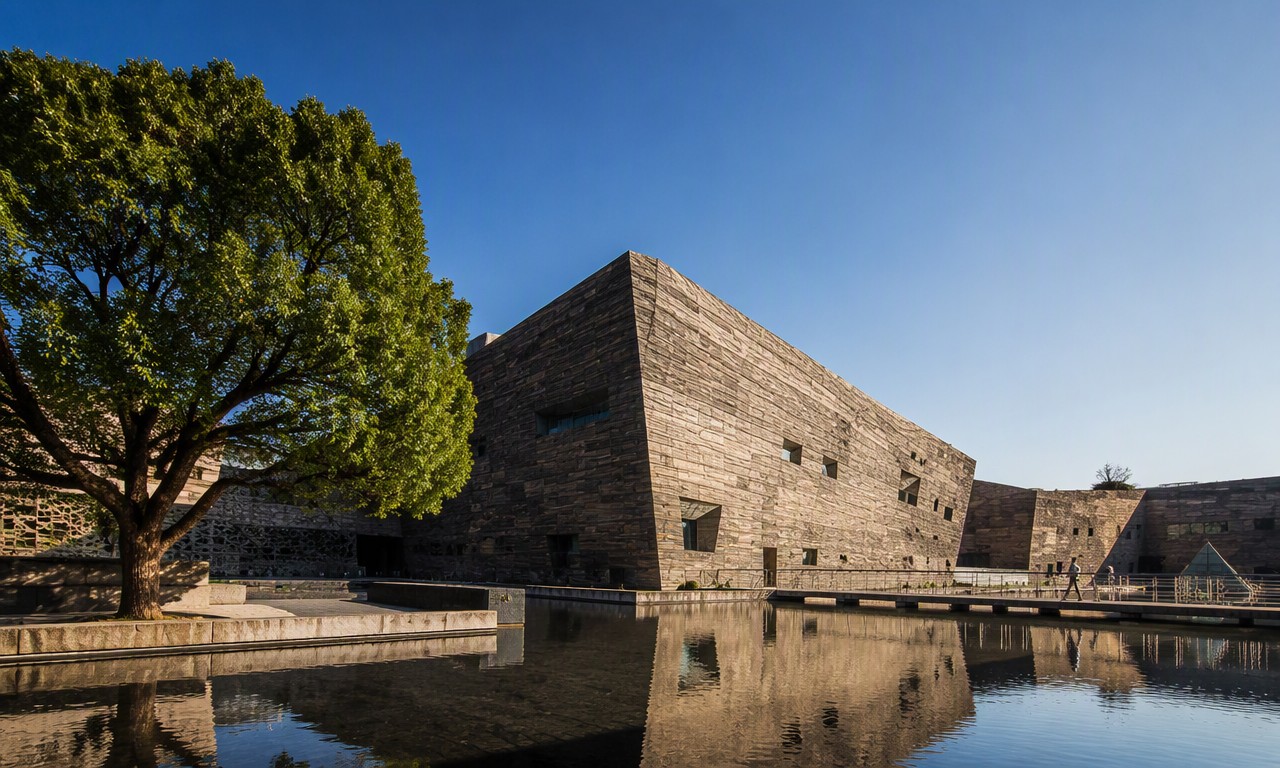
Many people use Ningbo as a transit point to Zhoushan or Xiangshan beaches, and few come specifically to see exhibitions. But if you have even a slight interest in port cities, book collecting culture, or Southern Song Dynasty stone carvings, Ningbo might be more fascinating than you imagine. This article aims to answer only one core question: Is it worthwhile for an outsider with no local connections to set aside a day or two specifically for Ningbo's cultural venues? And if visiting only once, which venues should be visited, which can be skipped, what to do with children, and which days of the week might result in being turned away?
Question 1: Are the cultural venues in Ningbo really worth making a special trip for?
My assessment is: if you've only seen those "Top 10 Must-Visit Attractions in Ningbo" lists online, it's not worth it; but if you're willing to see Ningbo as an "underrated cultural hub of eastern Zhejiang," then it is. The advantages of Ningbo's museums are their high density, solid exhibits, and clear layout; the disadvantage is their scattered nature, often requiring a 20-30 minute drive between museums. It's not like the Suzhou Museum, perfect for a quick photo op, but it feels like a place dedicated to preserving the city's memory.
If you're making a special trip here, you have to accept that "seeing culture" isn't something you'd do on the side. Tianyi Pavilion, Ningbo Museum, and Ningbo Art Museum are not adjacent to each other. Spending a whole day visiting just two is already considered very efficient. Therefore, I don't recommend coming with a "just wander around" mentality; you'll likely find it tiring. I suggest setting aside at least a full day, ideally a full day plus a half-day.
Question 2: If this is my first time visiting, which exhibits are truly must-sees?
My ranking is clear: Tianyi Pavilion, Ningbo Museum, and Ningbo Art Museum. This order isn't based on fame, but on cognitive value. Tianyi Pavilion addresses "why Ningbo became a city of books"; Ningbo Museum addresses "where Ningbo came from and what sustains it"; and Ningbo Art Museum addresses "whether Ningbo still has aesthetic expression in contemporary times." Each of the three museums covers a specific area, and together they form a complete picture.
If you only have half a day, go to Tianyi Pavilion. Don't hesitate. It's not just a garden, but also the oldest existing private library in China. The entire complex itself is a history of Ningbo's culture and institutions. The Ningbo Museum is worth seeing for its tiled walls and the exhibition logic that runs through Ningbo's history. Its collection includes many artifacts from Hemudu, Yue kiln, tea culture, and maritime trade, thoroughly explaining "Why Ningbo is Ningbo." The Ningbo Art Museum is located in the old Jiangbei Bund area. The building was converted from an old passenger ship terminal. The quality of the exhibits varies, but the permanent exhibition on the lineage of Ningbo artists is a key to understanding the aesthetic genes of the "Ningbo Gang."
Question 3: Will children be able to understand it? Will they just rush through the whole thing?
It's best to visit different sections of the Tianyi Pavilion. The Tianyi Pavilion isn't particularly suitable for younger children; the stone carvings, genealogies, and ancient printed books are rather quiet, which can be boring for kids. If you're with elementary school-aged children, I suggest limiting your time at Tianyi Pavilion to about an hour. Focus on the gardens, ponds, the stele gallery, and the famous replica of the "Lanting Stone Carving." Explain that "this used to be Fan Qin's family library," and that's sufficient; there's no need to examine every single display case in detail.
The Ningbo Museum is truly the best choice for taking children. Its folk museum features a wealth of everyday objects, reconstructed old street scenes, and models of old shops, allowing children to directly see "how people used to buy things, make pastries, and celebrate the New Year." The Ningbo Gang Museum is also a good option if time allows; its exhibits are highly narrative and suitable for upper elementary school students to understand the theme of "Ningbo people venturing out into the world." While the contemporary exhibitions at the Ningbo Art Museum may not be suitable for children, the architecture itself and the open spaces of the old Bund area prevent children from feeling cramped.
Question 4: How long should you spend visiting a museum to make the trip worthwhile?
It's recommended to spend at least two hours at Tianyi Pavilion, and no more than three hours. It's not the kind of place where you need to stay from opening to closing time; the focus is on the spatial relationships and historical layers, not the number of exhibits.
I recommend spending two and a half to three hours at the Ningbo Museum, especially for first-time visitors from out of town. Its permanent exhibitions are packed with information, and the route is long; if you only look at the exterior and one or two star exhibits, you'll miss a lot of the curatorial effort. The Ningbo Art Museum is relatively lighter; one and a half to two hours is sufficient, which, combined with a stroll along the Old Bund, makes for a perfect half-day. Don't try to visit all three museums in one day; that's just checking off a list, not truly experiencing the exhibits. Two museums a day is already a comfortable upper limit.
Question 5: Which days is the museum closed? I'm worried about making a wasted trip.
Tianyi Pavilion and Ningbo Museum are both closed on Mondays. Ningbo Art Museum is closed all day on Mondays, but it may be open on public holidays, so it's best to check the weekly announcement before you go. If Monday falls on your itinerary, a more practical alternative is to go to Yuehu and Gulou areas in the morning, and then check if any museums are temporarily open after noon, or allocate the day to open spaces like the Old Bund or Qing'an Guild Hall.
One important detail to note: many people get confused about Tianyi Pavilion's closure on Mondays. Its rule is that it's closed on Mondays; there are no exceptions like "closed in the morning, open in the afternoon." If you're only free on Mondays, don't gamble. Avoiding both the Ningbo Museum and Tianyi Pavilion on Mondays is the safest and most cost-effective strategy.
Question 6: Besides these pavilions, what else can add another layer of "Ningbo feel"?
If you have an extra half day, I would usually recommend visiting the Qing'an Guild Hall. It's small, but it's located next to the confluence of three rivers and is a tangible representation of Ningbo's commercial beliefs as a port city. Inside, there are many local Ningbo stone carvings and Mazu-related exhibits. You can see it in half an hour to forty minutes, but it can fill in the gaps in the "dock logic" that museums don't usually cover in detail.
Additionally, the Yongfeng Warehouse Relics Park is conveniently located along the way and doesn't require a special trip. It's not a museum, but rather an exposed Yuan Dynasty warehouse site. A quick glance from the side gives a direct sense of Ningbo's ancient roots in river transport and warehousing. These smaller places often truly capture the essence of Ningbo's cultural heritage. As for peripheral sites like Xuedou Mountain and the Southern Song Dynasty stone carvings at Dongqian Lake, if you only have a two- or three-day cultural itinerary, it's recommended to focus on the Southern Song Dynasty stone carvings area around Dongqian Lake and avoid trying to do too much.
Question 7: Where should I stay so as not to waste time on the road?
My answer is straightforward: stay in the old town of Haishu, close to Yuehu Lake, Drum Tower, and Tianyi Pavilion. Avoid the southern business district and I wouldn't recommend the eastern new town unless you work there. While Ningbo's cultural venues are scattered, Haishu has the highest density of cultural attractions. Tianyi Pavilion is within walking distance, and Drum Tower, Yuehu Lake, and Yongfeng Warehouse are all nearby. You can also have dinner around the City God Temple area in the evening.
The Bund and Jiangbei area are good second options, as they're close to the Ningbo Art Museum and offer pleasant evening walks along the river. However, you'll need to cross the river to reach Tianyi Pavilion and the Ningbo Museum. In terms of budget, Haishu Old Town offers a range from budget to mid-range options, from clean hostels around 100 RMB per night to boutique hotels for a few hundred RMB. It depends on whether you prioritize "being able to shop right downstairs" or "having a quiet room." Personally, I prefer staying in an alley near Yuehu Lake; a morning walk along the lake allows you to quickly immerse yourself in Ningbo's atmosphere.