
Foshan Avoidance List | Don't be fooled by travel guides: A local's revised 3-day, 2-night itinerary
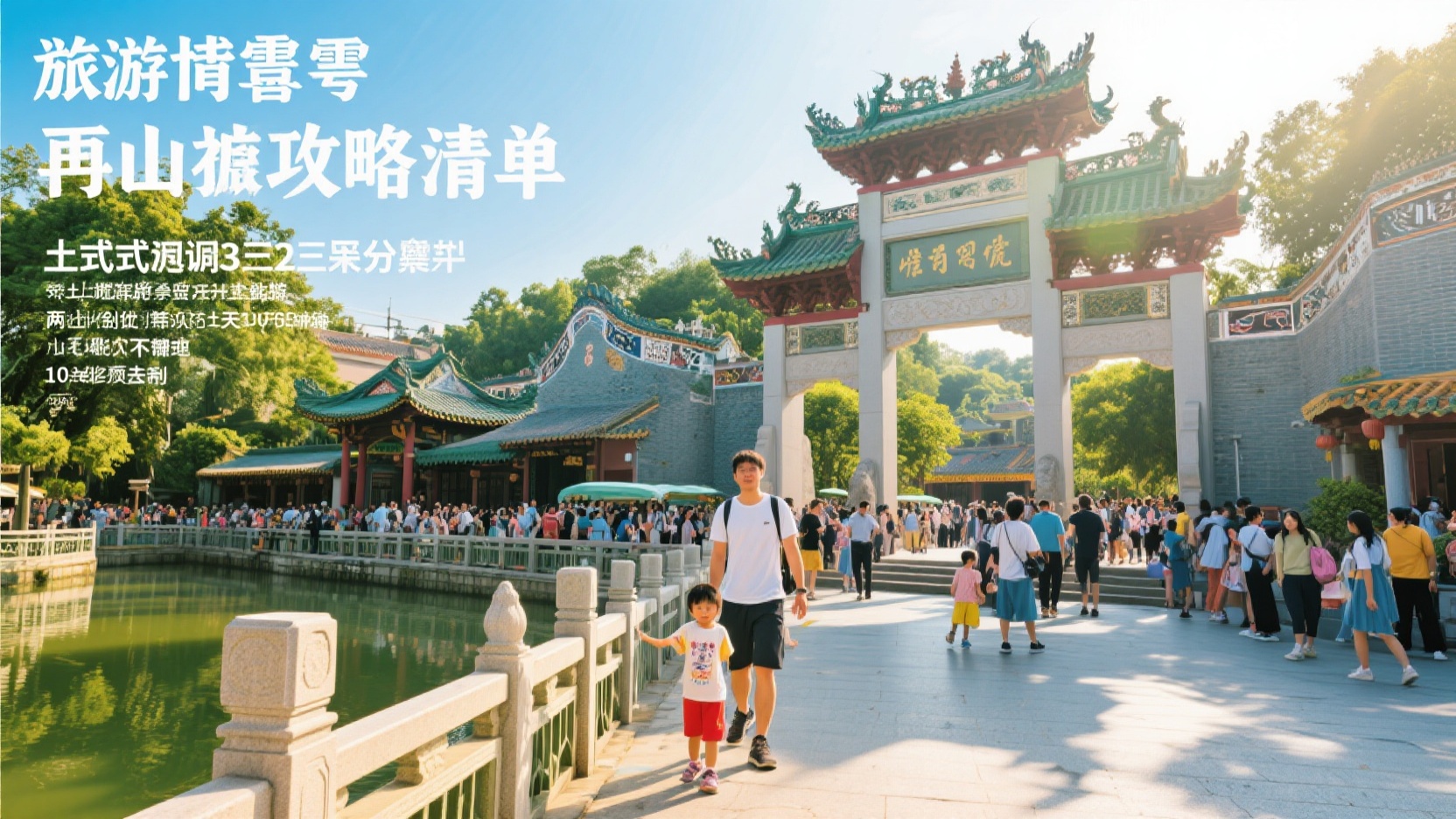
The most absurd itinerary I've ever seen in Foshan is to drive to Qinghui Garden at 9 a.m. on a Saturday, queue for two hours for double-skin milk on Huagai Road at noon, and then rush back to Chancheng to visit the Ancestral Temple in the afternoon.
Those "classic 3-day, 2-night itineraries" online treat Foshan like a small town with no commuting distance. In reality, it's common for a one-way trip between districts in Foshan to take 30 to 40 minutes. If you follow the itinerary, you'll either be stuck in traffic or waiting in line.
Why the rumored "3-day, 2-night classic itinerary" leaves you so exhausted you want a refund.
The most common itinerary is probably: Day 1: Ancestral Temple, Lingnan Tiandi, Nanfeng Ancient Kiln, Creative Industry Park; Day 2: Xiqiao Mountain, Tingyin Lake, Qinghui Garden, Huagai Road; Day 3: Fengjian Water Town, Fisherman's Wharf, Happy Coast PLUS. This route spends all the time traveling between different areas.
The Ancestral Temple and Qinghui Garden are both worth visiting, but they shouldn't be combined into one day. The Ancestral Temple is in Chancheng District, while Qinghui Garden is in Daliang, Shunde District; the drive takes 40-50 minutes during peak hours. If you go to Qinghui Garden at 9:00 AM, the parking lot is already full, and the queue to enter the garden takes at least half an hour.
Xiqiao Mountain is a "time black hole"; many people think they can see it all in half a day, but just queuing for the sightseeing bus takes up an hour. Fengjian Water Town is touted as "Little Zhouzhuang of Lingnan," but in reality, the waterways are short, parking is scarce, and a complete walk around takes less than thirty minutes.
These trendy food options that require two hours of queuing are so popular that even locals shake their heads in disapproval.
On holidays, it's common to see two-hour queues at several long-established double-skin milk shops on Huagai Road. Locals in Foshan prefer to buy double-skin milk from the neighborhood shops in the old streets and alleys of Daliang and around the market, where the queues are shorter and the skin is just as thick. It's really not worth starving yourself to the point of hypoglycemia just to check it out.
Lingnan Tiandi is a great place for taking photos, but the chain restaurants inside are overpriced and slow to serve food due to crowds. Locals usually only take friends to see the building facades, and then move to Liaoyuan Road and Kuaizi Road for proper meals, such as beef offal, wonton noodles, and sweet soup, where they can eat comfortably for a few dozen yuan per person.
Shunde's "must-eat raw fish" and "must-eat roast goose," popularized by short videos, often have queues of one or two hours. In fact, many long-established restaurants in neighboring Leliu, Chencun, and Lunjiao don't do marketing, and during mealtimes, they are filled with local accents.
Delete these spots and replace them with places frequented by natives.
Fengjian Water Town can be directly deleted and replaced with Xingtan Gulang Village or Leliu Huanglian Village. Gulang Village retains the wok-shaped houses and ancient bridges, but there are no tourist boats soliciting visitors; Huanglian Village has old ancestral halls, old wharves, and neighborhood shops frequented by locals.
The Nanfeng Ancient Kiln can be visited in half an hour, so there's no need to set aside half a day. The nearby Shiwan Doll Street and the area around the Hedang Shell Mound Site are even more worthwhile to explore, where you can watch pottery masters throwing and glazing pottery, which is more authentic than performances in tourist attractions.
Lingnan Tiandi is worth visiting, but don't make it your main destination. After leaving the Ancestral Temple, you can turn onto Yinggang Street, Tongxin Lane, and Shan Street, where the old town's living fabric is preserved. The old arcade buildings and street-side goldfish stalls are more interesting than the commercial districts.
If you only want to visit the South China Sea Guanyin statue at Xiqiao Mountain, a one- or two-hour sightseeing bus ride is sufficient. Those who prefer a slower pace of life can opt for cycling and enjoying river delicacies on Pingsha Island, or visiting the ancient bridge and banyan tree in Yanqiao Village, Jiujiang.
How exactly does the optimized "3 days 2 nights" itinerary work?
Day 1: Take your time strolling through the old town of Chancheng. In the morning, visit Tapo Temple and Yinggang Street. Have lunch on Liaoyuan Road. In the afternoon, visit the Ancestral Temple. In the evening, take a look at the outer perimeter of Lingnan Tiandi, but don't have dinner there.
Day 2: Shunde Daliang and surrounding ancient villages. Visit Qinghui Garden before it opens or after 4 PM; simply walk along Huagai Road. After noon, go to Jinbang or Jiuzhai Village for double-skin milk pudding. In the afternoon, choose Gulang Village or Huanglian Village. In the evening, return to Daliang for congee hot pot or raw fish.
Day 3: Choose a spot in the western part of the South China Sea. You can visit only Xiqiao Mountain, the South China Sea Guanyin statue, and Tingyin Lake, or go directly to Pingsha Island for cycling. Before returning, have a relaxing meal at a local farmhouse in Xiqiao or Jiujiang, which is more relaxing than the trendy restaurants in the city.
The extra day can be flexibly selected based on the target population.
Families with children can dedicate this day to Qiandeng Lake and nearby free science museums and bookstores, then enjoy the Happy Coast PLUS night show in the evening. Avoid the intense sun during the day. Shopping enthusiasts can conveniently visit Florentia Village without needing to spend a whole day there.
Experienced foodies can head to Ronggui, Leliu, and Chencun in Shunde, looking for restaurants that have been open for over a decade and are frequented only by locals. Art lovers can visit the Shunde He Art Museum or Nanhe Garden in Beijiao, and then leisurely stroll through the Shiwan Figurine Street.
Seasonally, the best time to visit Foshan is from October to February of the following year. The area around Kuaizi Road is filled with festive couplets a month before the Spring Festival, but many old shops close for three days before the festival, so it's best to avoid peak hours.
10 Things You Shouldn't Do
First, don't go to the Ancestral Temple and Qinghui Garden on weekend mornings; second, don't make Lingnan Tiandi your main dining destination; third, don't queue for two hours for double-skin milk; fourth, don't dream of visiting all the attractions in Xiqiao Mountain in one day; fifth, don't make a special trip to Fengjian Water Town.
Sixth, don't repeatedly travel back and forth between Chancheng, Shunde, and Nanhai; seventh, don't take the "Foshan Day Trip" offered by roadside vendors; eighth, don't rush around Qiandeng Lake at midday in the summer; ninth, don't blindly follow trends and buy expensive bracelets on the jade street; tenth, don't think that only Shunde in Foshan is worth eating.
In closing: Don't ask the locals if I didn't tell you.
First, the attractions in Foshan are scattered, so allow at least 40 minutes for travel between districts. Second, genuine time-honored brands often don't have fancy storefronts; if you see a queue full of people speaking with accents from other regions, you can skip it.
Third, serving double-skin milk pudding cold is a better indicator of skill. Fourth, Shunde cuisine is generally sweet, so don't expect strong flavors from Sichuan or Hunan cuisine. Fifth, many restaurants are closed or fully booked during the Canton Fair and the three days before the Spring Festival, so try to avoid peak times.