
Foshan Slow Art | Journey Through Time to Appreciate the Essence of Lingnan Culture
Foshan, nestled in the heart of the Pearl River Delta, is a city steeped in history and brimming with vitality, boasting a clear and unique cultural and artistic heritage. It is not only a city of kung fu and a ceramics capital, but also the birthplace of Cantonese opera, embodying the essence of Lingnan culture. A profound journey through humanities and arts should transcend simple sightseeing and delve into the stories and craftsmanship that have spanned millennia.
Foshan Ancestral Temple: A Living Temple of Lingnan Culture
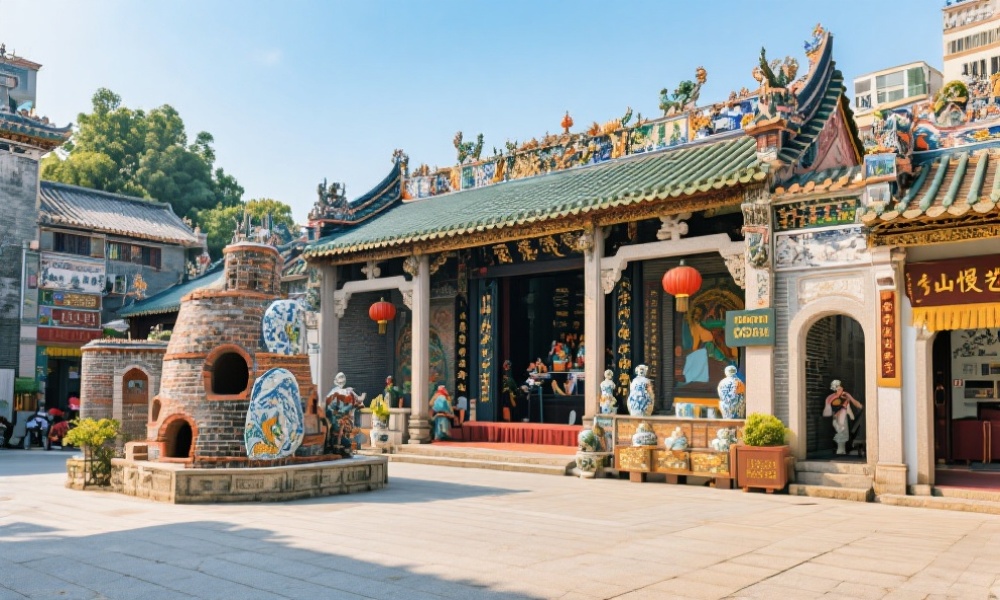
The starting point of a cultural and artistic journey through Foshan is undoubtedly the Foshan Ancestral Temple, located in the city center. This Taoist temple, originally built during the Yuanfeng era of the Northern Song Dynasty, has undergone numerous renovations and expansions, and is now a comprehensive museum integrating Ming and Qing Dynasty architectural art, Foshan's traditional culture, and folk beliefs. Its architectural complex is exquisite, especially the main buildings such as the Three Gates, the Front Hall, the Main Hall, and the Qingzhen Tower. The roof ridges are decorated with exquisite Shiwan pottery sculptures, while the walls, column bases, and doors and windows are adorned with delicate wood carvings, brick carvings, and plasterwork, all showcasing the pinnacle of Lingnan architectural craftsmanship.
The Ancestral Temple enshrines the Northern True Martial Emperor, serving as a vital spiritual anchor for the local people of Foshan. However, its cultural significance extends far beyond this. It is also a spiritual high ground for Foshan's martial arts culture, housing the Wong Fei-hung Memorial Hall and the Ip Man Hall. The Wong Fei-hung Memorial Hall details the life and martial arts contributions of this Lingnan martial arts master, recreating his legendary life of healing and upholding justice at his "Po Chi Lam" clinic through artifacts, pictures, and videos. The Ip Man Hall focuses on Ip Man, a grandmaster of Wing Chun, showcasing the unique charm of Wing Chun and its global influence. Visitors can not only learn about the martial arts origins of these two masters but also experience the profound philosophy of Foshan martial arts culture, emphasizing the balance of strength and gentleness, and the cultivation of both inner and outer strength. Furthermore, the Ancestral Temple frequently hosts lion dance performances, perfectly combining martial arts with art—an unmissable part of experiencing Foshan's intangible cultural heritage.
Nanfeng Ancient Kiln and Shiwan Ceramics: The Artistic Heritage of a Thousand-Year-Old Kiln Fire
Leaving the Ancestral Temple, we drove to Shiwan Town in Chancheng District to explore the heart of "China's Famous Ceramic Town"—Nanfeng Ancient Kiln. Here, you'll find two ancient wood-fired dragon kilns: Nanfeng Kiln and Gao Kiln. Nanfeng Kiln, built during the Zhengde period of the Ming Dynasty, boasts over 500 years of history and continues to fire kilns, earning it the title of "living fossil of ceramics." Its unique structure, built against the mountain and shaped like a giant dragon, is a testament to the wisdom of ancient kiln technology. Visitors can stroll through the ancient kiln area and experience the traditional ceramic making process firsthand, from selecting clay, shaping, carving, glazing, to the final firing—each step embodying the patience and skill of the artisans. Some studios offer pottery workshops, allowing visitors to create their own Shiwan pottery piece and deeply experience the artistic charm of their fingertips.
The Shiwan Ceramics Museum, located next to the Nanfeng Ancient Kiln, is an ideal place to systematically understand the history of Shiwan ceramic art. The museum displays exquisite Shiwan pottery from the Neolithic Age to modern times, covering various categories including figures, animals, vessels, and gardens. Through detailed textual explanations and physical exhibits, visitors can gain a deeper understanding of the artistic characteristics of Shiwan ceramics: "thick and heavy body, simple and unadorned glaze, vivid shapes, and a combination of form and spirit," especially the lifelike and vivid depictions of figures and the skillful craftsmanship in creating animal sculptures that perfectly capture both form and spirit. This is not only a place for art appreciation but also an important window into exploring the history of Chinese ceramics and the folk history of Lingnan.
Lingnan Tiandi and Cantonese Opera: A Cultural District Blending the Ancient and the Modern
A cultural and artistic journey through Foshan requires finding new insights in the fusion of the ancient and the modern. Lingnan Tiandi, a new landmark born from the redevelopment of the old city, perfectly blends traditional Lingnan architecture with modern commerce and art. It preserves classic Lingnan architectural elements such as wok-ear houses, blue brick walls, sliding doors, and Manchurian windows, making a stroll through it feel like stepping back into the streets and alleys of Foshan a century ago. However, its interior spaces have been cleverly transformed into cultural and creative shops, art galleries, specialty restaurants, and boutique hotels, providing visitors with a comfortable and stylish cultural experience. At Lingnan Tiandi, you can savor authentic Cantonese cuisine or enjoy a leisurely pace in a café, experiencing the harmonious coexistence of tradition and modernity.
Cantonese opera, a UNESCO Intangible Cultural Heritage, originated in Foshan. Although Lingnan Tiandi is not a Cantonese opera museum, its rich Lingnan cultural atmosphere and frequent cultural events allow visitors to feel the pulse of this art form. Foshan was once an important base for the "Red Boat" Cantonese opera troupes, and the Qionghua Guild Hall is considered the ancestral home of Cantonese opera performers. While the ruins of the Qionghua Guild Hall are now difficult to find, the Foshan Cantonese Opera Museum (located within the ancient architectural complex of Donghuali in the Ancestral Temple area, or with a branch in Jihua Garden) systematically showcases the origins, development, schools, roles, costumes, and music of Cantonese opera, making it an authoritative platform for understanding the essence of this art form. By viewing the museum's collection of costumes and props and listening to classic arias, visitors can appreciate the unique charm of Cantonese opera, the "Red Bean of the South," and experience its important position in Lingnan culture.
A cultural and artistic journey through Foshan is a profound dialogue about history, craftsmanship, and spirit. From the power of martial arts to the warmth of ceramics, from the melodies of Cantonese opera to the exquisite craftsmanship of architecture, this city, with its unique charm, invites every traveler to slow down, feel with their heart, and savor the profundity and breadth of Lingnan culture.