
Chengdu in Festivals | From the Water-Releasing Festival to Lacquerware Workshops, Spend Half a Day as a Local
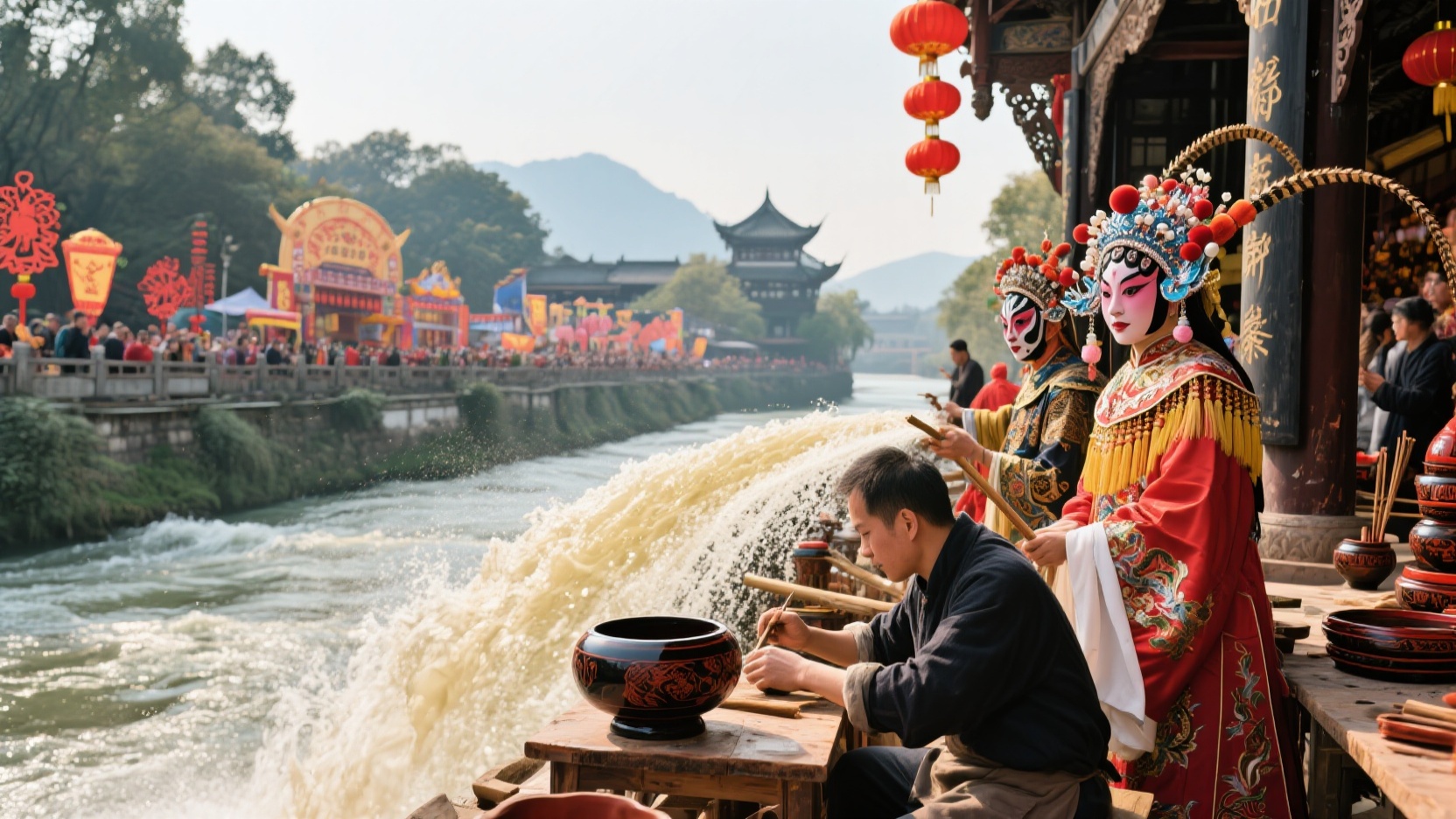
Chengdu's cultural heritage isn't static in display cases; it's scattered throughout festival rituals, market stalls, and handicraft workshops. In spring, there are grand temple fairs and water-releasing festivals; on ordinary days, there are lacquerware workshops and Sichuan opera costume experiences. Each activity allows visitors to sit down and feel like a local for half a day. Instead of spending time queuing for photos, why not dedicate half a day to a workshop or a riverside ceremony?
The common thread in these experiences is that the timing and pace of the activities are more important than the attractions themselves. It's recommended to choose one or two to participate in in depth, based on your available time, rather than rushing from one event to another.
Wuhou Temple Chengdu Grand Temple Fair: Stroll through the Intangible Cultural Heritage Market Amidst the Lantern Shadows of the Three Kingdoms Era
Every year from the Spring Festival to the Lantern Festival, the Wuhou Temple area in Chengdu enters its "Grand Temple Fair." The lantern displays mostly depict scenes from the Three Kingdoms period, such as the Oath of the Peach Garden, Liu Bei's Three Visits to the Thatched Cottage, and the Empty City Stratagem, creating a striking contrast with the ancient buildings' upturned eaves and corners when illuminated at night. While the themes of the lantern displays change slightly each year, the central theme of the Three Kingdoms remains constant. A market stretches along the streets, showcasing folk crafts such as paper cutting, sugar painting, dough figurines, eggshell painting, and palm weaving. Many stalls allow visitors to sit down and try their hand at these crafts.
Visitors can spend half an hour cutting out a silhouette of the God of Wealth or a character from the Three Kingdoms period, or coloring plaster molds for Sichuan opera masks. Locals traditionally visit the market to "visit the God of Happiness," paying homage to figures like Liu Bei, Guan Yu, and Zhang Fei, praying for a prosperous new year. After exploring the market, find an open-air stage to watch excerpts from Sichuan opera or folk performances; the festive atmosphere and rituals offer a more authentic glimpse into local life than the tourist attractions themselves.
Dujiangyan Water Release Festival: Ancient Qingming Festival Sacrifices and Water Release from the Mocha (a type of irrigation canal)
During the Qingming Festival, Dujiangyan is not just an ordinary tourist attraction, but the site of a water conservancy ceremony. The ceremony retains the core element of "cutting the weir and releasing the water." The weir is a tripod made of three round logs bound together with bamboo ropes, with pebbles filling the space between them to form a temporary embankment. After the weir workers use axes to cut the bamboo ropes securing the weir, the river water instantly bursts through the gap and surges into the inner river system. Before cutting the weir, a chief priest usually recites a sacrificial text, and drums and horns echo at the head of the canal. The entire process is swift and brief, yet it concerns the irrigation of the Chengdu Plain for the new year.
On site, weir workers in straw raincoats lined up, while ancient sacrificial rites and folk parades took place. The Water Release Festival originated from the ancient Shu people's worship of Li Bing and his son. Since the Qing Dynasty, it has been held regularly during the Qingming Festival and was listed as one of the first batch of national intangible cultural heritages in 2006. After watching the water release, walk along the Neijiang River to the Erwang Temple, where you can see inscriptions on water management steles from various dynasties and the motto "Deepen the riverbed, lower the weirs." This tradition of combining engineering repairs, seasonal sacrifices, and agricultural irrigation is the underlying logic that has allowed the Land of Abundance to continue.
Lacquerware Workshop: The Time It Takes to Polish a Piece of Chengdu Lacquerware
Chengdu lacquerware can be traced back to the Shang and Zhou dynasties, with fragments of lacquerware unearthed at the Jinsha Site. Today, this national intangible cultural heritage still uses natural lacquer, and the process involves dozens of steps, including making the base, applying the lacquer, polishing, and buffing. A representative technique, "carved silver wire polishing," involves first carving patterns on the lacquer surface, then attaching silver sheets, followed by lacquering and polishing. After completion, the patterns will have a subtle metallic sheen in the dark. As the lacquer oxidizes, it changes from milky white to dark brown, and only after polishing does it reveal a translucent luster.
In Chengdu's local lacquerware workshops, visitors can choose small lacquer trays, tea saucers, or wooden bracelets to experience the polishing and finishing process. Applying lacquer, drying, and polishing require repeated steps and cannot be completed in one go. Experienced craftsmen will explain the properties of lacquer and the reaction with urushiol, and require participants to wear gloves while handling the lacquer. As the lacquer gradually becomes warm and smooth in your hands, the "slow" pace of Chengdu lacquer art transforms from an abstract concept into a visceral experience. Rather than simply buying a craft item, sitting down and completing a step in the process allows for a deeper understanding of the time commitment behind the craft.
Sichuan Opera Costumes and Makeup: From Offstage to Stage
Sichuan Opera is not just about face-changing; costumes and makeup also constitute a complete system of roles. The python robe, the flag, and the water sleeves each have their own regulations, with different colors and patterns corresponding to different character identities. Some Sichuan Opera training centers and old courtyards in Chengdu offer costume experiences before performances, where visitors can dress up completely with the help of instructors and learn simple "cloud hands" and "posing" movements. The makeup session directly explains the language of facial makeup: red represents loyalty and bravery, black represents righteousness, and white represents treachery; face-changing is simply a dynamic extension of this color scheme.
Wearing the costume and then sitting in front of the stage to watch a performance of an excerpt reveals a significantly different perception of the percussion, stage movements, and singing. Sichuan Opera, which took shape in the late Ming and early Qing dynasties, absorbed five vocal styles: Kunqu, Gaoqiang, Huqin, Tanxi, and Dengdiao. Performed for a long time in teahouses, temple fairs, and docks, it is itself a product of Chengdu's public life. Many excerpts are selected from Gaoqiang and Tanxi repertoire, emphasizing both singing and acting. Experiencing the costume and watching a performance often provides a deeper understanding of the meaning of "no drama without skill" than simply watching.
These kinds of experiences don't need to fill your itinerary. Chengdu's festivals and folk customs are scattered throughout different seasons. Choosing activities that fit your travel time and setting aside half a day to participate will be more rewarding than trying to check off several places in one day.