
The Cultural Heritage of Chengdu | An In-Depth Exploration of Chengdu's Humanities and Arts
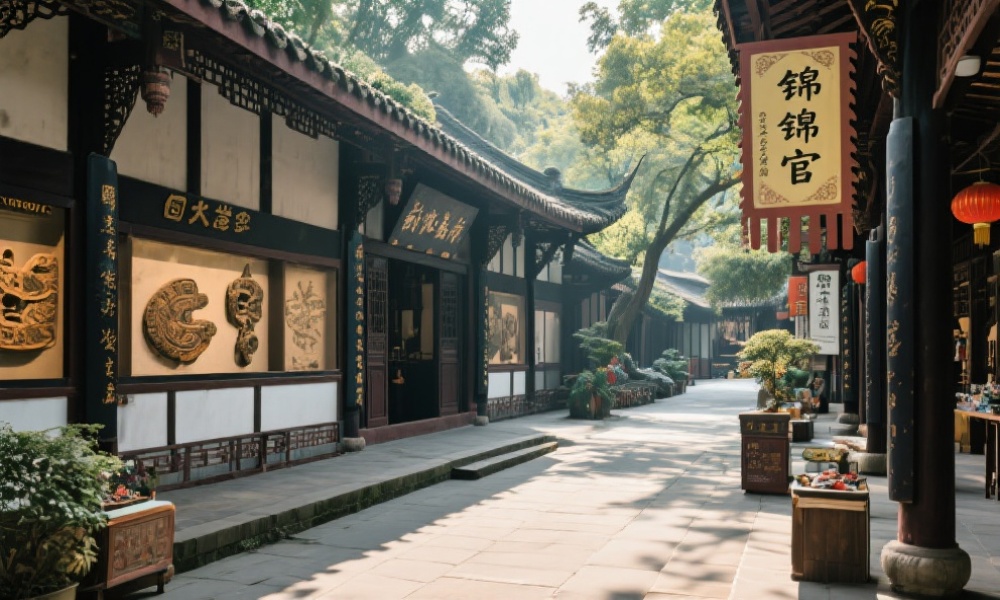
Chengdu, known as the "Land of Abundance," possesses charm far beyond the adorable pandas and spicy hot pot. As the cultural center of Southwest China, Chengdu boasts over 4,500 years of civilization and more than 2,300 years of city-building history, accumulating a profound and unique Bashu culture. This curated blog post will guide you beyond superficial sightseeing, delving into the city's humanistic fabric and artistic essence, planning an in-depth cultural and artistic journey centered on museums, historical sites, and intangible cultural heritage experiences.
The Origin of Ancient Shu: Exploring a Mysterious Civilization
Chengdu's cultural roots can be traced back to the mysterious ancient Shu civilization. To understand the city's origins, the Jinsha Site Museum is an indispensable first stop. This site, once the capital of the late Shu Kingdom, yielded a wealth of exquisite gold, jade, bronze, and stone artifacts, the most famous of which is the "Sun Bird Gold Ornament." This circular gold ornament, as thin as a cicada's wing, showcases the ancient Shu people's worship of the sun and their unique understanding of the universe through its superb craftsmanship and profound cultural connotations, and is considered a symbol of Chinese cultural heritage. The discovery of the Jinsha Site not only filled the historical gaps following the decline of the Sanxingdui civilization but also outlined a clear trajectory of the ancient Shu civilization's transition from an early agricultural society to a bronze civilization. Its unsolved mysteries continue to inspire contemplation. Visiting Jinsha is not merely about viewing artifacts, but also about engaging in a dialogue across time with our ancestors from four thousand years ago, experiencing the grandeur and mystery of the ancient Shu civilization.
The Three Kingdoms Era and the Poetic Spirit of the Tang Dynasty: Echoes of History
Stepping into the Wuhou Temple Museum , you will find yourself immersed in the epic history of the Three Kingdoms period. Wuhou Temple is the only temple in China that enshrines both a ruler and his ministers, with the Liu Bei Hall and Zhuge Liang Hall as its main structures, integrating a mausoleum and temple complex. It is not only a place to commemorate the heroes of Shu Han, but also a hall to interpret the culture of the Three Kingdoms and experience the wisdom of loyalty and righteousness. The plaques and couplets throughout the temple, such as the "Winning Hearts and Minds Couplet," are all gems, containing profound philosophical thoughts and principles of governance. The ancient pines and cypresses of Huiling Mausoleum, and the secluded paths lined with red walls, silently tell the story of historical vicissitudes. Through careful observation of the cultural relics and inscriptions, combined with guided tours, visitors can truly appreciate the political ambitions, military strategies, and interpersonal relationships of the Shu Han rulers and ministers, and understand the noble spirit of "dedicating oneself to the cause until death," a vivid embodiment of traditional Chinese values.
From the war-torn Three Kingdoms period to the poetic Tang Dynasty, the Du Fu Thatched Cottage Museum stands as another cultural landmark. This is the former residence of the great Tang Dynasty poet Du Fu during his four-year exile in Chengdu, and the source of inspiration for his more than two hundred poems. Centered around a thatched cottage, the elegant gardens and bamboo groves vividly recreate the scene of Du Fu's famous line, "My thatched cottage is broken by the autumn wind." A visit to the cottage not only allows one to trace the footsteps of the poet saint but also to gain a deeper understanding of the grand narrative and compassionate spirit of his "poetic history." Du Fu's poems written in Chengdu express his anxieties about the fate of the nation, depictions of everyday life, and praises of natural scenery. Every brick, tile, blade of grass, and tree in the cottage seems to whisper of the Tang Dynasty's decline and the unwavering character and compassion of a great poet.
Intangible Cultural Heritage in Urban Life: Experiencing the Art of Slow Living
To experience Chengdu's vibrant street culture and intangible cultural heritage, Kuanzhai Alley and Jinli Ancient Street , though commercialized, remain windows into traditional lifestyles. Kuanzhai Alley comprises three parallel old-style streets—Kuan Alley, Zhai Alley, and Jing Alley—and the courtyard houses between them, preserving architectural styles from the late Qing Dynasty and early Republic of China. Here, you can choose an old teahouse, savor covered-bowl tea, and experience traditional services like ear cleaning and face-changing performances, feeling the leisurely and comfortable "slow life" of Chengdu residents. More importantly, many intangible cultural heritage experience sites are hidden within, such as Shu embroidery workshops, silver filigree making, and bamboo weaving art. Visitors can observe the exquisite skills of artisans up close and even participate in the production process, integrating traditional culture into modern life.
Sichuan Opera is one of Chengdu's most representative intangible cultural heritages. Unlike the solemnity of Peking Opera, Sichuan Opera is renowned for its humorous performances, high-pitched and melodious singing, and unique skills such as face-changing and fire-breathing. Authentic Sichuan Opera performances can be enjoyed in many old teahouses and professional theaters in Chengdu. Watching Sichuan Opera is not only a feast for the eyes and ears but also an immersive experience of the spirit of Sichuan culture. It showcases the optimistic, open-minded, and innovative character of the Sichuan people and is an excellent way to experience the vibrant cultural charm of Chengdu.
Cultural Overview: The Essence of Sichuan Art
For a more comprehensive understanding of the culture and art of Sichuan and Chengdu, the Sichuan Provincial Museum is an ideal choice. As the largest comprehensive museum in Southwest China, it houses a rich collection including paintings by Zhang Daqian, Bashu bronzes, and ethnic artifacts, systematically showcasing Sichuan's history, art, ethnic customs, and natural landscapes. Through meticulously curated themed exhibitions, visitors can learn about the development of Sichuan from the Paleolithic era to modern times, as well as the fusion and coexistence of multiple ethnic cultures, making it a treasure trove of knowledge for deepening understanding of Chengdu's cultural background.
A cultural and artistic journey through Chengdu is a profound exploration that transcends time and space. It goes beyond a simple list of attractions, aiming to immerse visitors in ancient civilization, heroic epics, poetic dwellings, and living intangible cultural heritage. Through slow and careful travel, you will not only take home exquisite souvenirs, but also gain a deeper understanding and appreciation of this city and Chinese civilization as a whole.