
Taste of Changchun in Your Shopping Basket: 9 Local Favorites from Guangfu Road and Yongchun Market
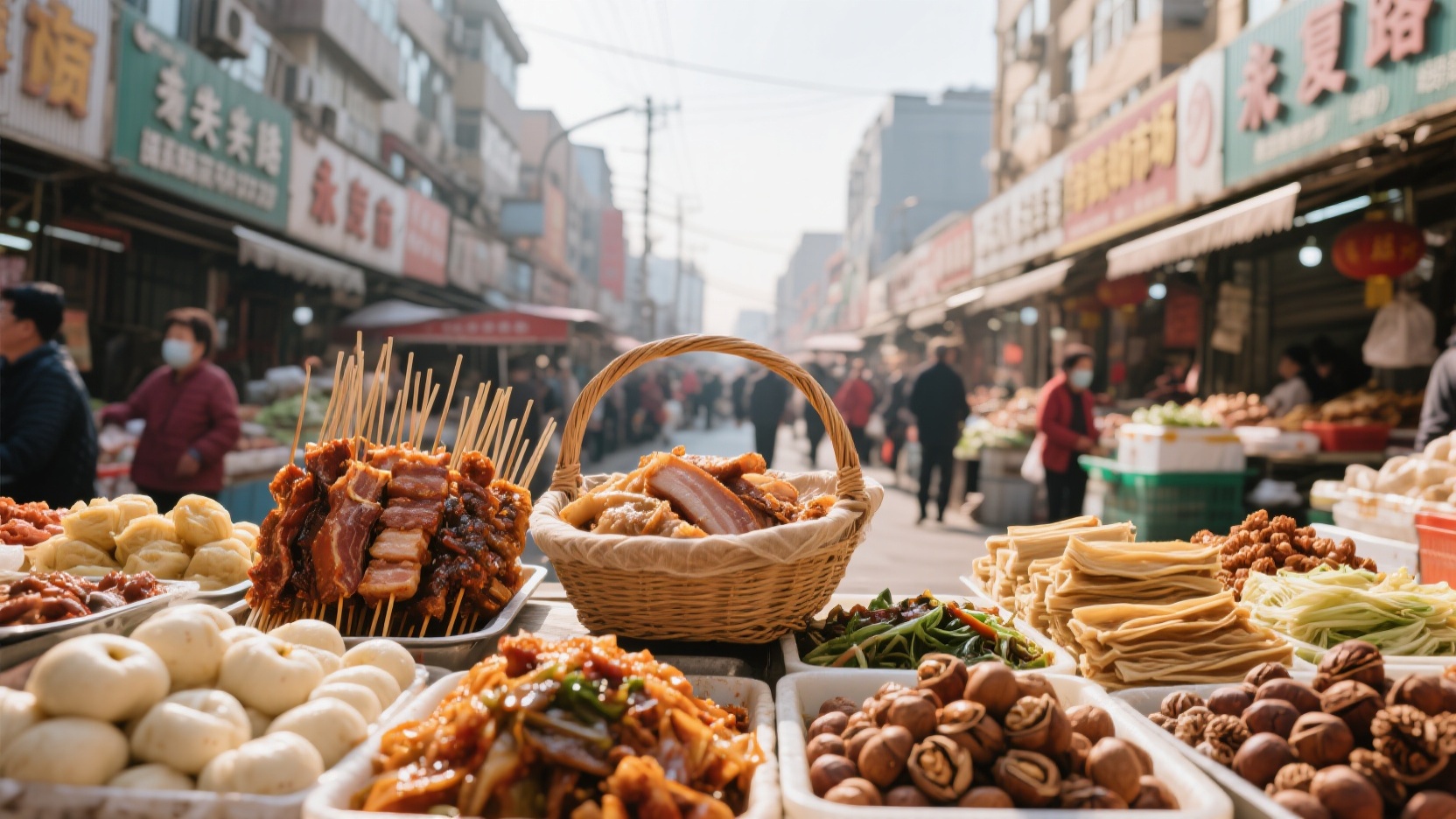
For Changchun locals, the mornings often begin with a spoonful of chicken soup and tofu skewers at the Guangfu Road Market. This largest market in the old city still retains its rough-and-ready rhythm, a blend of wholesale and retail. Meanwhile, the Yongchun Market, closer to residential areas, is like a mobile catalog of Northeastern family meals. Neither market is refined, but both hold the most reliable culinary clues in Changchun.
Visiting both markets together isn't about checking off tourist spots, but about finding those cooked foods, pickles, snacks, and seasonal fruits that are hard to replicate outside the local area. The following nine items are categorized for easy shopping as you walk. The markets are most appealing in the early morning: cooked foods are freshly cooked, pickles haven't been disturbed, and frozen pears still have the frost from the cold storage. It's recommended to set aside half a day, walking from Guangfu Road Market to Yongchun Market, browsing and buying in the order of cooked foods, snacks, pickles, and fruits, avoiding buying too much at once and affecting the taste.
Deli stall: Chicken soup tofu skewers, smoked and braised meat and dried sausage
Chicken broth tofu skewers are a hidden gem in Changchun's markets, easily overlooked. The dried tofu skewers are simmered in chicken broth for a long time, absorbing the oil and spices. After being removed, they are brushed with minced garlic and chili oil, then topped with a spoonful of hot broth. When choosing skewers, look for a clear, slightly yellow broth with a natural layer of oil on the surface. The tofu skewers should be whole and intact, with a bean flavor rather than a sour taste. Don't let them cool down; drink the broth first, then eat the skewers while they're still hot to preserve the garlic and bean flavors.
Smoked and braised meat stalls are concentrated around Guangfu Road, commonly featuring braised pork hock, braised beef, and braised chicken. Changchun-style braised meat tends to be salty and smoky, with a darker color than southern-style braised meats. When choosing, avoid overly bright red products; they should spring back when pressed and not leak water. The safest way to eat it is to slice it thinly and stuff it into a hot sesame flatbread with cucumber and scallions. No extra sauce is needed, as the sauce and meat jelly are sufficient. If you prefer a drier and more fragrant texture, you can also choose dried sausage. For dried sausage, choose those with intact casings, slightly wrinkled surfaces, and clearly defined meat pieces when cut open, preferably with a fruitwood smoky flavor. Slice and eat cold, or stir-fry with green peppers.
Korean-style food stalls: kimchi, rice cakes, and sticky rice dumplings
In Changchun's vegetable markets, Korean-style food stalls are often located next to the cooked food section. For kimchi, choose those with thick stalks, a natural orange-red color, and clear braising liquid; good kimchi is crisp to the touch and has a fermented, sour aroma that isn't pungent. At home, you can eat it directly with rice, or cut it into sections and stir-fry it with pork belly; the sourness will neutralize the oiliness.
Rice cakes and sticky rice buns are two handmade desserts you shouldn't miss. Choose rice cakes made fresh daily, coated with soybean flour; they should be soft yet elastic, and not sticky. Sticky rice buns come in two types: yellow millet flour and white rice flour. The filling is best made with red beans, which have a grainy texture and are less sweet. After buying them, freeze them. Before eating, steam them thoroughly or slice and pan-fry with a little oil until the surface is slightly browned. If you can't finish the rice cakes on the same day, seal them tightly to prevent them from drying out; do not refrigerate them overnight, otherwise they will harden.
Pickled vegetables and dried tofu: the foundation of Northeastern Chinese dining tables
The pickle stalls at Yongchun Market offer a glimpse into Changchun's culinary habits. Garlic eggplant, pickled cucumbers, ground ivy, perilla leaves, and pickled chili peppers are often displayed in basins. When choosing pickles, check if the brine is clear and free of excessive white foam; the vegetables should retain their original shape, not be mushy. Garlic eggplant is perfect with porridge, perilla leaves can be used to wrap rice, and diced pickled cucumbers stir-fried with minced meat can make a simple dinner. If buying loose pickles, it's recommended to buy small quantities of a variety, transfer them to clean containers at home, refrigerate, and consume within a week.
Dried tofu is an unsung hero of Jilin. Yushu dried tofu is commonly found in markets; it's thin, chewy, and has a strong bean aroma. When choosing it, look for a smooth surface that doesn't easily break when lifted, and it should only have a bean fragrance. The most straightforward way to eat it is rolled with scallions, cilantro, and a little egg sauce. For a more refined experience, it can be sliced and stir-fried with chili peppers, or placed under stews to absorb the sauce.
Seasonal fruits and mountain products: Buy according to the season
The fruit stalls at Changchun's vegetable markets are highly seasonal. From late autumn to winter, frozen pears and frozen persimmons are the main products. Frozen pears have a glossy black skin with natural frost, and the flesh becomes dense and creamy after thawing. When selecting them, they should feel firm to the touch, with no damage or mold on the skin. To eat them, they must be thawed in cold water until a thin layer of ice forms on the surface and the flesh softens before sucking out the juice. Hot water should never be used.
In summer and autumn, ground cherries and crabapples are available. For ground cherries, choose those with a withered yellow skin and plump, round fruit; once peeled, the fruit should be golden yellow and undamaged. Crabapples are sweet and sour, suitable for those who prefer a refreshing taste. In addition, pine nuts and hazelnuts from the Changbai Mountains are often found at dried goods stalls in the market. Choose those that are unsalted, uniform in size, and naturally cracked; salting and excessive spices often mask the stale smell. When buying mountain produce, smell it first, then taste it; avoid those with a rancid smell or excessive oiliness.
Visiting the local market is the best way to experience a city.
The wet market is the most honest stomach of a city. Tourist attractions can be replicated, but the sticky rice cakes that vendors pull out from under their quilts in the early morning, the broth that has settled for years in the pickle basins, and the ice shell that slowly forms on frozen pears in cold water—these things cannot be packaged. Visiting a Changchun wet market isn't about buying everything, but about understanding how the locals handle the seasons and local customs in a spoonful of soup, a piece of braised meat, or a handful of ground cherries. True authenticity isn't hidden on the menu, but between the scales and the plastic bags. This is why the most worthwhile souvenirs from Changchun might not be beautifully packaged local specialties, but rather a bag of freshly pressed dried tofu or a box of garlic eggplant soaked in braising liquid.