
Avoid the crowds at major paid attractions | Local testimonial: 4 days without spending money on entrance fees, here's a different way to experience Xi'an.
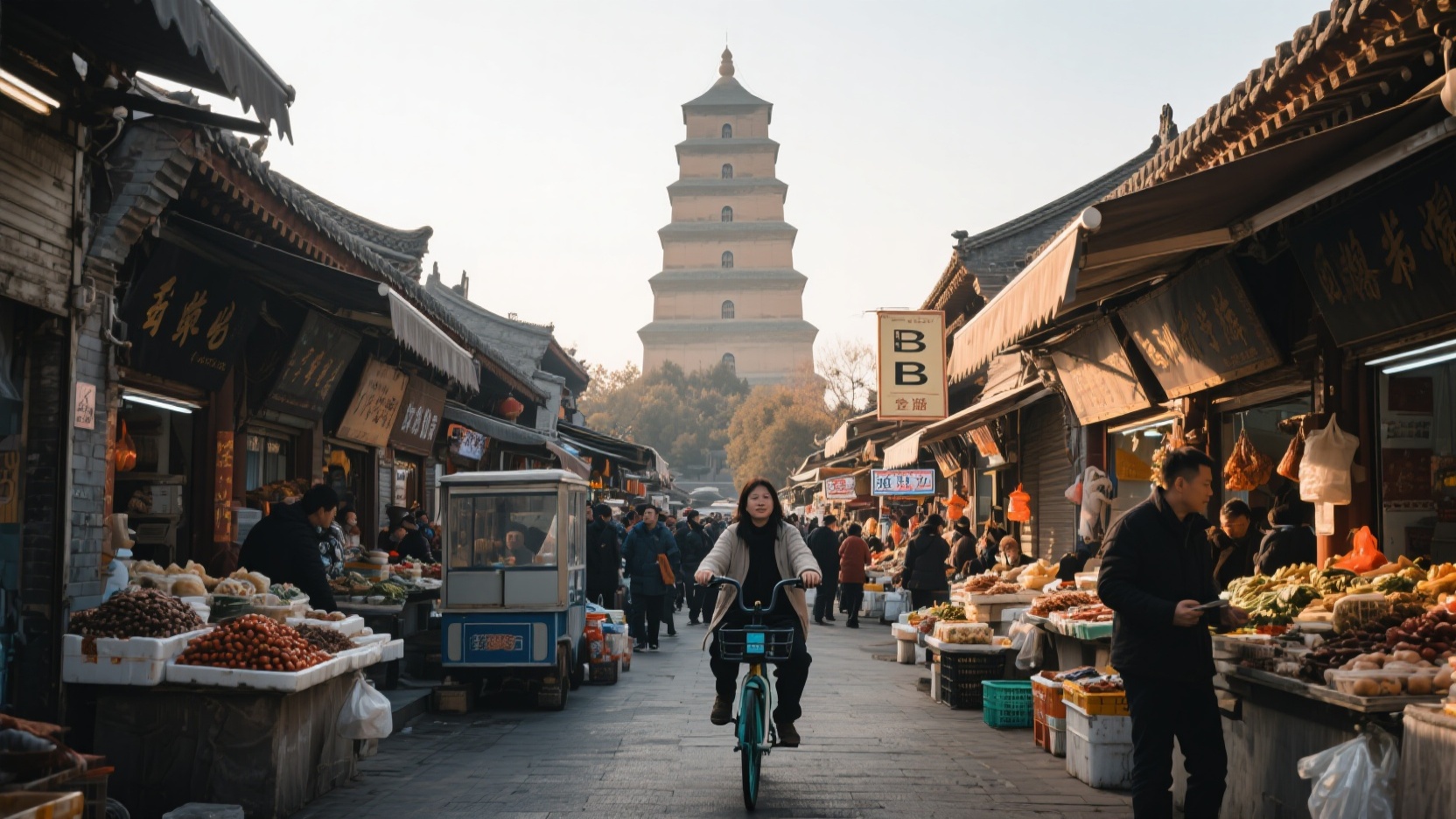
Having lived in Xi'an for six years, my biggest piece of advice isn't to insist on eating at every roujiamo (Chinese hamburger) stall, but rather to simply close the reservation pages for major tourist attractions that charge admission. You read that right, most of the things in Xi'an that are truly worth "visiting" are free, and some aren't even marked as attractions on maps.
Over the past two years, I've accompanied friends from out of town on a route that completely avoids major tourist attractions with entrance fees—no city walls, no Terracotta Warriors, and no tickets to the Tang Paradise. Before they left, they all said the same thing: "The other side of Xi'an is more like Xi'an than the other side." Below is a four-day itinerary, with a different theme each day, relying entirely on public transportation, subways, shared bikes, and walking, with zero expenditure on entrance fees.
Don't rush to buy tickets: It's time to remove the "pre-sightseeing filter" from Xi'an.
Many travel guides portray Xi'an as an ancient city built on ticket prices, as if a trip is incomplete without visiting the paid attractions. But the true living space for locals lies in the farmers' markets, old factory areas, university back alleys, and chess stalls along the city wall. The money you save on entrance fees could buy you many meals of oil-splashed noodles and countless cups of plum juice.
More importantly, free doesn't mean "no content." Xi'an's communities naturally possess a rugged and relaxed atmosphere reminiscent of old northern cities. The "street life" replicated in paid tourist attractions is alive and well in the real neighborhoods. Traveling alone offers more freedom; there's no need to wait for others or rush through events, and it's easier to immerse yourself in the local rhythm.
Day 1 | Community Farmers Market Day: Xiaonanmen Morning Market, Xicangji and Old Farmers Market
Head straight to the Xiaonanmen morning market before 7 a.m. It's not a tourist area; it's where locals buy groceries and have breakfast. You can find fried dough twists, steamed rice cakes, and fermented fish soup at roadside stalls, and you can get a full meal for just a few yuan per person. Don't take photos and risk getting a dirty look from the vendors; just buy something and eat it on the go – that's the most authentic local experience.
On Thursdays or Sundays, head to Xicang Market, a vibrant hub for flowers, birds, fish, insects, and secondhand goods in old Xi'an. Stalls selling crickets, used books, and needles and thread are crammed into narrow alleys, more bustling than any traditional folk market. In the afternoon, visit Jianguomen Old Market, a blend of a former factory market and creative cultural space; even just browsing is enjoyable without buying anything.
Day 2 | University Surrounding Area Day: Xingqing Palace, Jiaotong University Sycamore Trees and University South Road
Xingqing Palace Park is free to enter. Seeing the ruins of the Tang Dynasty Xingqing Palace and locals doing morning exercises and singing is more authentic than buying a ticket to see replica ancient buildings. Walking from the north gate of the park to the old campus of Xi'an Jiaotong University, the plane tree-lined avenue provides ample shade. Autumn and early winter are the most comfortable times to stroll alone without being rushed.
For lunch, avoid shopping malls and head to the old university area around Daxue South Road and Taibai North Road. Look for places where students line up for oil-splashed noodles, Qishan saozi noodles, and fried skewers in buns. The prices are reasonable and the portions are generous; a few dozen yuan per person will get you a very filling meal. In the afternoon, browse the used bookstores and stationery stores near the university gates. The chaotic, youthful atmosphere is free but very therapeutic.
Day 3 | Old Industrial Area Renovation Day: Dahua 1935, Banpo and the Old Steel Plant
Dahua 1935 was converted from an old textile factory, preserving its steel trusses, old factory skylights, and mottled walls. The outer street is free to enter, often frequented by local young people taking photos, and occasionally hosts free exhibitions. There are no tourist announcements here, only the silent echoes of the old industrial era.
Banpo International Art District and the Old Steel Factory Creative Park are also free to enter; they are the remnants of the former textile city and steel factory, respectively. Banpo is more open, while the Old Steel Factory is hidden within a campus—quiet, less crowded, and perfect for daydreaming. You don't need to spend any money at these places; just bring a bottle of water and you can spend an afternoon there. The photos turn out great too.
Day 4 | Old Town Alley Day: Riding shared bicycles through the city gate and through the alleys
Even without buying a city wall ticket, you can still ride a bike through the city gate. From Hanguang Gate to Wenchang Gate, shared bikes travel along Shuncheng Lane, lined with old locust trees, old door piers, and elderly people chatting loudly. In the morning, there are fewer people, so riding is less stressful, and you can stop at any convenience store to buy Bingfeng (a local soft drink).
Then wander into Tianshuijing, Bingjiaoxiang, Fenxiang, and Zhubashi. These alleys may not be famous, but they preserve the daily life of old Xi'an. You can also enter free courtyards near Xiangzi Temple and Sanxue Street; don't just focus on the Stele Forest. The entire journey costs only a few yuan, but the experience is far more comprehensive than climbing the city wall.
An extra half-day | Take the subway to 3511: A local's "free flower, bird, and fish market"
3511 is a community-style flower, bird, and fish market converted from an old towel factory. Locals can buy flowers, see fish, and play with birds—all free of charge. It's within walking distance of Metro Line 4 and is best visited in the evening, when the lights come on, creating a unique atmosphere that blends local life with industrial charm.
Here you can see another side of Xi'an: young people drinking coffee, elderly people picking out pothos plants, and children refusing to leave the aquarium. No travel guide would describe this scene, but it's more immersive than the "immersive experiences" offered by many paid tourist attractions.
In conclusion
First and foremost, the most worry-free principle for solo travel: get up early. The morning market is least crowded before 7:30 am, and the lighting is perfect for taking photos. After 8:00 am, tour groups and tourists will suddenly increase.
Second, getting a transportation card or activating a QR code for transit is more convenient than buying tickets individually. Using a combination of buses, subways, and shared bikes, cycling is faster than taking a taxi within the old city area.
Third, when it comes to dining, follow the middle school students in school uniforms and the older workers in work clothes. The shops where they line up are usually affordable and not trendy. You can't go wrong by ordering basic items without even looking.
Fourth, don't have a proper meal on the main street of the Muslim Quarter. Turn into the alley on the west side and see which locals are focused on breaking their bread without looking up. That's the place worth sitting down at.
5. Do not book any "day tours" if you are traveling alone; you can easily explore the free routes on your own. Bring a power bank and a water bottle, as many free exhibition halls and areas have water dispensers.
6. Late autumn to early winter is the most comfortable time, with fewer tourists, yellow plane trees, and bustling morning markets; in summer, avoid visiting the old factory area at noon, and in winter, wear thick socks as the old factory buildings and alleys are damp and cold.