
Ancient Charm of Chang'an: A Deep Dive into Xi'an's Culture and Art
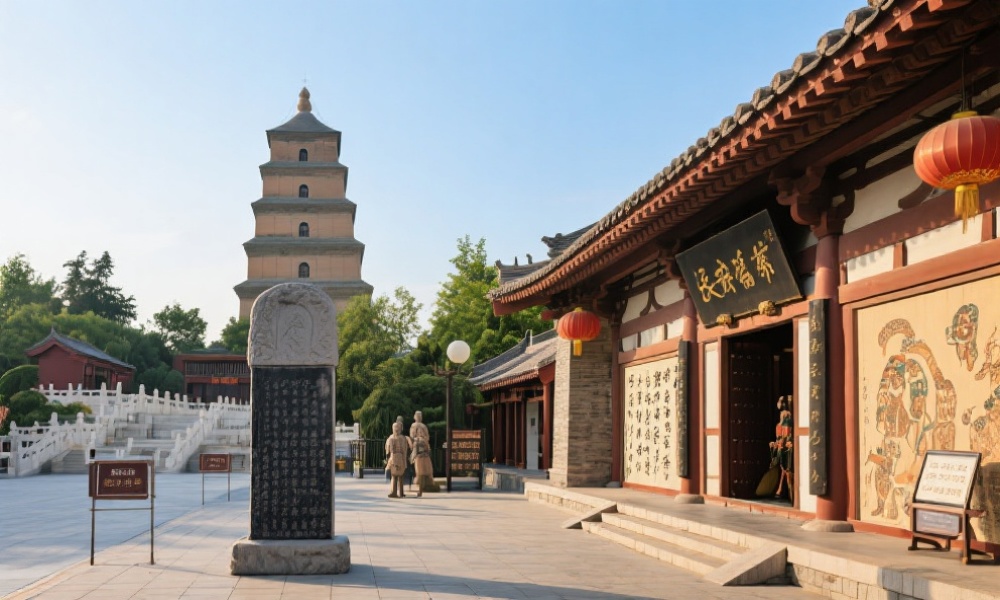
Xi'an, formerly known as Chang'an, is one of the important birthplaces of Chinese civilization, bearing the glory and heritage of thirteen dynasties. This city is not only a witness to history but also a treasure trove of Chinese culture and art. XOOTOUR aims to guide you beyond superficial sightseeing, delving into the very fabric of this ancient capital, planning an in-depth journey centered on culture and art, and exploring the resounding echoes of its golden age etched in bronzes, stone tablets, clay figurines, and the sounds of traditional opera.
The Legacy of the Tang Dynasty: A Dialogue Between Museums and Buddhist Pagodas
Embark on a cultural and artistic journey in Xi'an, with the Shaanxi History Museum as your first stop. As China's first large-scale modern national museum, it is hailed as a "treasure trove of Chinese civilization," systematically tracing the historical development of Shaanxi and the Chinese nation through its rich collection. From prehistoric stone tools, bronzes, terracotta figurines, and gold and silver artifacts from the Zhou, Qin, Han, and Tang dynasties, to exquisite Tang dynasty murals, each exhibit carries profound historical information and a unique artistic style. Here, you can not only appreciate the solemn elegance of Western Zhou bronzes and the simple yet vivid beauty of Han dynasty terracotta figurines, but also experience the luxurious brilliance of Tang dynasty gold and silver artifacts and the magnificent grandeur of mural art. It is recommended to allocate at least half a day to savor the exhibits and build a comprehensive understanding of ancient Chinese civilization and art through the stories behind them.
Afterwards, we moved to the Big Wild Goose Pagoda and Da Ci'en Temple to experience the splendor of Tang Dynasty Buddhist art. The Big Wild Goose Pagoda is where the eminent Tang Dynasty monk Xuanzang translated Buddhist scriptures, and its architecture itself embodies the exquisite craftsmanship of the Tang Dynasty. Climbing the pagoda offers panoramic views of the ancient city. Inside Da Ci'en Temple, there are not only solemn Buddhist sculptures but also traces the eastward transmission of Buddhist art, allowing us to understand its profound influence on traditional Chinese painting and sculpture. This place serves as material evidence of cultural exchange along the Silk Road and is also an artistic embodiment of the open and inclusive spirit of the Tang Dynasty.
Inside and outside the city walls: Ancient capital style and calligraphy art
In the afternoon, ascend the Xi'an City Wall , the world's largest and best-preserved ancient city wall. This Ming Dynasty military defense project not only showcases the wisdom and perseverance of the ancient people, but its magnificent scale and ingenious structural layout are themselves a frozen history of urban aesthetics. Strolling or cycling along the city wall, overlooking the ancient city streets and alleys, one can feel the interweaving of history and modernity and appreciate the unique insights of the ancients into urban planning and defense systems. The differences in landscape inside and outside the city wall also provide a unique perspective for understanding the evolution of this ancient capital.
Next, visit the Xi'an Beilin Museum , a temple of Chinese calligraphy art. The Beilin houses over ten thousand pieces of steles, epitaphs, and stone carvings dating from the Han and Wei dynasties to the Ming and Qing dynasties, with the *Kaicheng Stone Classics* and inscriptions by renowned calligraphers such as Yan Zhenqing, Liu Gongquan, and Huaisu being particularly precious. Here, you can systematically learn about the evolution of Chinese calligraphy art, appreciate the charm of different calligraphic styles, and feel the infinite allure of the lines of Chinese characters. Each stele is a frozen history, a cultural story, and a dialogue across time with ancient literati, making it an indispensable stop for a deep understanding of traditional Chinese art.
Qin and Han Dynasties: The Artistic Pinnacle of the Terracotta Army
The following day, we visited Xi'an's iconic landmark— the Emperor Qinshihuang's Mausoleum Site Museum (Terracotta Army) . As the "Eighth Wonder of the World," the Terracotta Army is not only a historical testament to Qin Shi Huang's unification of the six kingdoms but also a pinnacle of Qin Dynasty sculpture. Thousands of life-size terracotta figures, each unique in form and expression, showcase an exceptionally high level of realism. Close observation of the armor, hairstyles, facial expressions, and even the details of the weapons reveals the exquisite craftsmanship and meticulous approach of the Qin artisans. They are a comprehensive embodiment of ancient military systems, clothing culture, and sculptural art, and a symbol of the magnificent spirit and strong cohesion of the Chinese nation. It is highly recommended to hire a professional guide to gain a deeper understanding of the historical, cultural, and artistic value behind the exhibits, rather than simply rushing through the site.
Intangible Cultural Heritage Transmission: The Artistic Life in the Streets and Alleys
A cultural and artistic journey through Xi'an wouldn't be complete without experiencing intangible cultural heritage. The Gao Family Courtyard , a typical Ming and Qing dynasty architectural complex, not only serves as a window into the architectural art of Guanzhong folk houses but also offers opportunities for close encounters with traditional intangible cultural heritage. Here, you can enjoy Qinqiang opera performances, experiencing its powerful, stirring, and captivating artistic charm; you can also watch exquisite shadow puppet shows , appreciating the folk wisdom and narrative art in the interplay of light and shadow. Furthermore, around the Shuyuanmen Cultural Street, there are many shops preserving traditional handicrafts such as paper-cutting, clay sculpture, and rubbings , allowing visitors to experience them firsthand and take home a piece of the ancient capital's artistic memory. These living art forms are a vivid manifestation of history continuing in the present, truly bringing ancient culture and art to life.
A cultural and artistic journey through Xi'an is a dialogue across millennia, an exploration into the roots of Chinese civilization. XOOTOUR invites you to slow down, appreciate the atmosphere, and discover the unique and profound artistic charm of the ancient capital of Xi'an through every artifact, every inscription, and every note of opera.