
How do you choose the best food in Xi'an? I asked three different types of people.
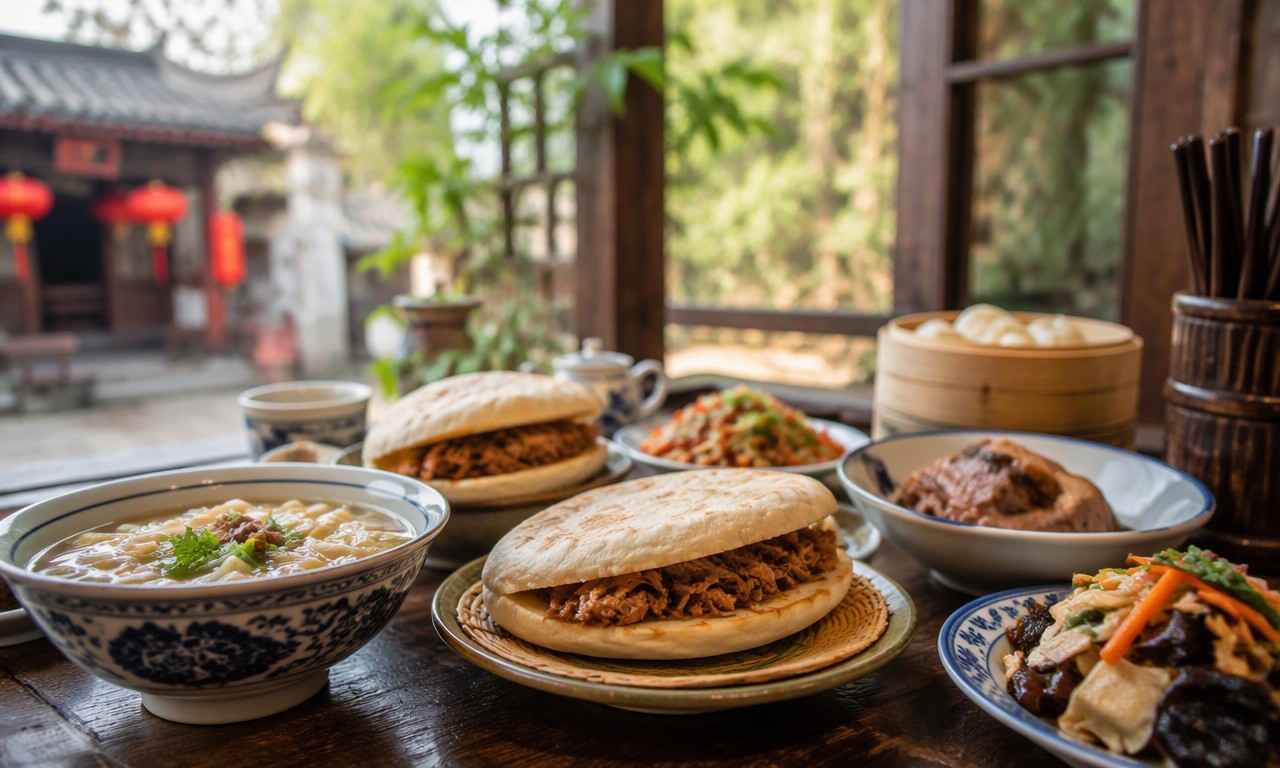
"If you only have one meal time, what should you eat in Xi'an?" This is the question I'm asked most often when documenting local culture. It's worth answering seriously because Xi'an's culinary choices are so numerous it's overwhelming: roujiamo (meat sandwiches) come in both braised pork and Lao Tongguan styles; paomo (pita bread soaked in mutton soup) has both beef and lamb versions; liangpi (cold skin noodles) comes in sesame sauce and hot and sour sauce. Choosing the wrong option isn't necessarily bad, but it's a regrettable "waste of the meal." This article is divided into three sections: number of people, number of days, and budget. Please find the section that applies to you.
Branch 1: If you only have one meal, what should you eat?
If you only have one meal left, whether you're passing through on a business trip or just stopping over, my advice is simple: go eat a bowl of "freshly made bread and freshly cooked paomo" (a type of flatbread soup). The reason is simple—this is the meal that best represents Xi'an and is impossible to replicate elsewhere. Roujiamo (Chinese hamburger) and liangpi (cold skin noodles) can be found all over the country, but the experience of paomo is complete: breaking the bread, reheating it, and eating it with sweet garlic and chili sauce. It's about the process, not just the taste.
If you're traveling alone, find a paomo (pita bread soaked in mutton soup) restaurant in the old town. Enter and ask for a regular bowl, then break the bread yourself into pieces the size of soybeans. If you're traveling with parents, I recommend choosing a restaurant with a "machine to break" option, saving time and effort. As for the budget, a restaurant costing a few dozen yuan per person is perfectly fine; there's no need to go for a high-end meal, because the "soul" of paomo lies in the soup and the bread, not the ambiance.
Branch 2: Only 1 day, how to schedule morning, noon, and evening?
The worst thing you can do on a day is to eat one meal after another, or you'll be wasting your afternoon. My suggestion is to have one dry meal, one wet meal, and one novelty meal: eat a dry meal for breakfast, a wet meal for lunch, and leave dinner for a novelty meal or to make up for any missed meals.
For breakfast, head to a residential area for a bowl of meatball hot and sour soup with a steamed bun, or a beef sandwich. Note: It's not "Hulatang" (spicy soup), it's "Hulatang" (spicy broth). The Xi'an version is beef balls, potatoes, and carrots thickened with cornstarch, while the Henan version has a sour and spicy broth base; the two are quite different. For lunch, have a bowl of noodles: oil-splashed noodles or biangbiang noodles. Find a noodle shop and see how long the line is; it's more reliable than any ranking list. If you're traveling alone in the evening, try "Xiaochao Paomo" (stir-fried steamed bun with bread), a sour and spicy version of beef or mutton paomo. Many tourists don't know about it, but locals love it in the evenings. For parents traveling with you, a lighter dinner is recommended: a bowl of sour soup dumplings. The sour soup cuts through the richness, and the dumplings are filling.
Branch 3: With 3 days, how can I eat to avoid repeating the same dishes and making any mistakes?
Three days is enough to "experience the layers of Xi'an's cuisine." I'll give you a framework to follow: Day 1: focus on "carbs," Day 2: explore "local flavors," and Day 3: explore "halal corners outside the Muslim Quarter."
On the first day, try all three: paomo (pita bread soaked in mutton soup), roujiamo (meat sandwich), and liangpi (cold skin noodles). But note: don't order them all in one meal; eat them separately, one at a time, to truly appreciate the difference. For roujiamo, choose a mix of lean and fatty meat, not just lean. Purely lean pork lacks the richness of fat and becomes dry. For liangpi, if it's summer, choose "sesame sauce liangpi." Many people think liangpi is just spicy and sour, but locals in Xi'an often prefer the version with a rich sesame sauce, which is fragrant and filling.
The next day, we explored the alleyways. In the morning, we bought a "Zenggao" (steamed glutinous rice cake) at the market entrance—a sweet treat made of layers of jujube paste and glutinous rice, meant to be eaten hot. At noon, we went to Sajinqiao, not to check out any trendy "Instagrammable" shops, but to see which locals were squatting outside eating their food. For dinner, we opted for "Spicy Garlic Lamb Blood" or a bowl of "Lamb Blood Soup with Rice Noodles"—both typical examples of Xi'an's strong flavors; only after trying them can you truly understand the depth of Xi'an's palate.
The third day is reserved for the "overlooked" dishes. For example, "Hulu Tou" (葫芦头), a type of paomo (泡馍) made with pig intestines, might deter many tourists, but connoisseurs will tell you it's another facet of Xi'an's paomo scene. Other options include "Ma Shi" (麻食) and "Hui Cai" (烩菜), suitable for parents—they're soupy, not oily or spicy, and leave a soothing feeling in the stomach. If you're traveling with children, the third day is recommended to include "Persimmon Cakes" or "Oily Tea Fried Dough Twists" (油茶麻花), sweet, chewy, and popular with kids.
Branch 4: Matching to the appropriate group of people
Eating alone : This is the most efficient way to eat. It's best to go to established restaurants and order the classic "single dishes," like paomo (pita bread soaked in mutton soup), stir-fries, and meatball hot and sour soup, trying them one by one. The biggest advantage of eating alone is the willingness to queue for a meal. I recommend places like Sajinqiao, Dapiyuan, and Dongmutoushi, where you can eat while walking. Keep the budget to a few tens of yuan per person, and three days of eating won't be expensive.
For couples : Sharing is the key strategy. Xi'an food portions are large, so ordering one serving of paomo (pita bread soaked in mutton soup), one serving of liangpi (cold skin noodles), and two roujiamo (meat sandwiches) and sharing allows you to try more dishes without wasting food. It's recommended to choose restaurants with a "street food" feel, such as barbecue stalls or plum juice stalls in night markets; the lively atmosphere is part of the date experience. A mid-range budget is sufficient; don't try to impress with the ambiance, as the essence of Xi'an cuisine isn't in the decor.
When traveling with parents , three conditions must be considered: "seating at a table, fast service, and no long queues." Choose a paomo (pita bread soaked in mutton soup) restaurant with tables, and avoid purely trendy noodle shops. In terms of flavor, prioritize "not spicy, not oily, and with plenty of soup": sour soup dumplings, braised noodles, steamed pork with rice flour, steamed rice cake, and paomo with pig's head are all suitable. For a higher budget, choose a halal restaurant with a "good environment and private rooms," where the service is more relaxed and the elderly can eat with peace of mind.
Taking care of kids : The most difficult category. Children have limited tastes and patience, so it's recommended to have a "one main meal, one snack" approach: for main meals, choose things like roujiamo (Chinese hamburger) or dumplings that kids eat quickly, and supplement with sweet snacks like zenggao (steamed glutinous rice cake), persimmon cakes, plum juice, or jinggao (steamed rice cake with mirror). Avoid taking kids to break apart steamed buns, which takes a long time, unless the child is naturally patient. Keep the budget affordable; kids eat small portions, so expensive options are a waste.
Branch 5: Matching to the budget
Affordable : You can eat well and be full for just a few dozen yuan per person; Xi'an is very generous in this regard. The best choices are old shops in alleyways, small restaurants near residential areas, and stalls at morning and night markets. The criterion is simple: if locals are sitting inside or queuing, it can't be bad.
Mid-range : Around 100 RMB per person, where you can pursue a "better experience." This includes clean and comfortable paomo (pita bread soaked in mutton soup), established halal restaurants where you can sit down and eat at your own pace, and noodle shops with excellent service and quality food. The point of this price range is that you can "eat comfortably without having to compromise," making it suitable for families with parents or first-time visitors to Xi'an.
High-end : There are two types of high-end dining in Xi'an. One is "upgraded time-honored brands," with a pleasant environment and clear heritage, suitable for banquets or anniversaries. The other is "fusion cuisine," using Shaanxi ingredients to create modern dishes. But I must remind you: high-end restaurants are often about "refinement" rather than "Xi'an flavor." If you're looking for authentic local taste, mid-range and affordable options are often more direct.
Branch Six: Add a sentence based on the season and "Is it worth it?"
In summer, enjoy liangpi (cold skin noodles), sesame sauce liangpi, and sour plum drink, paired with a side of cured beef—refreshing and not greasy. In winter, eat paomo (pita bread soaked in mutton soup), stir-fried paomo, and mutton blood soup—steaming hot and warming. Spring and autumn are the most comfortable seasons, and everything tastes delicious. Don't ask "Is Sajinqiao the best place to eat?" It's just one of the places "with a high proportion of locals and not yet completely overwhelmed by tourists." Whether to go or not depends on whether you value its reputation or its local atmosphere more. My advice: if you have limited time, go to Sajinqiao; if you have more time, explore Dapiyuan and Miaohou Street—you might be pleasantly surprised.