
Wuhan's hidden cultural corners: 8 secluded spiritual havens, from old factory bookstores to riverside cafes.
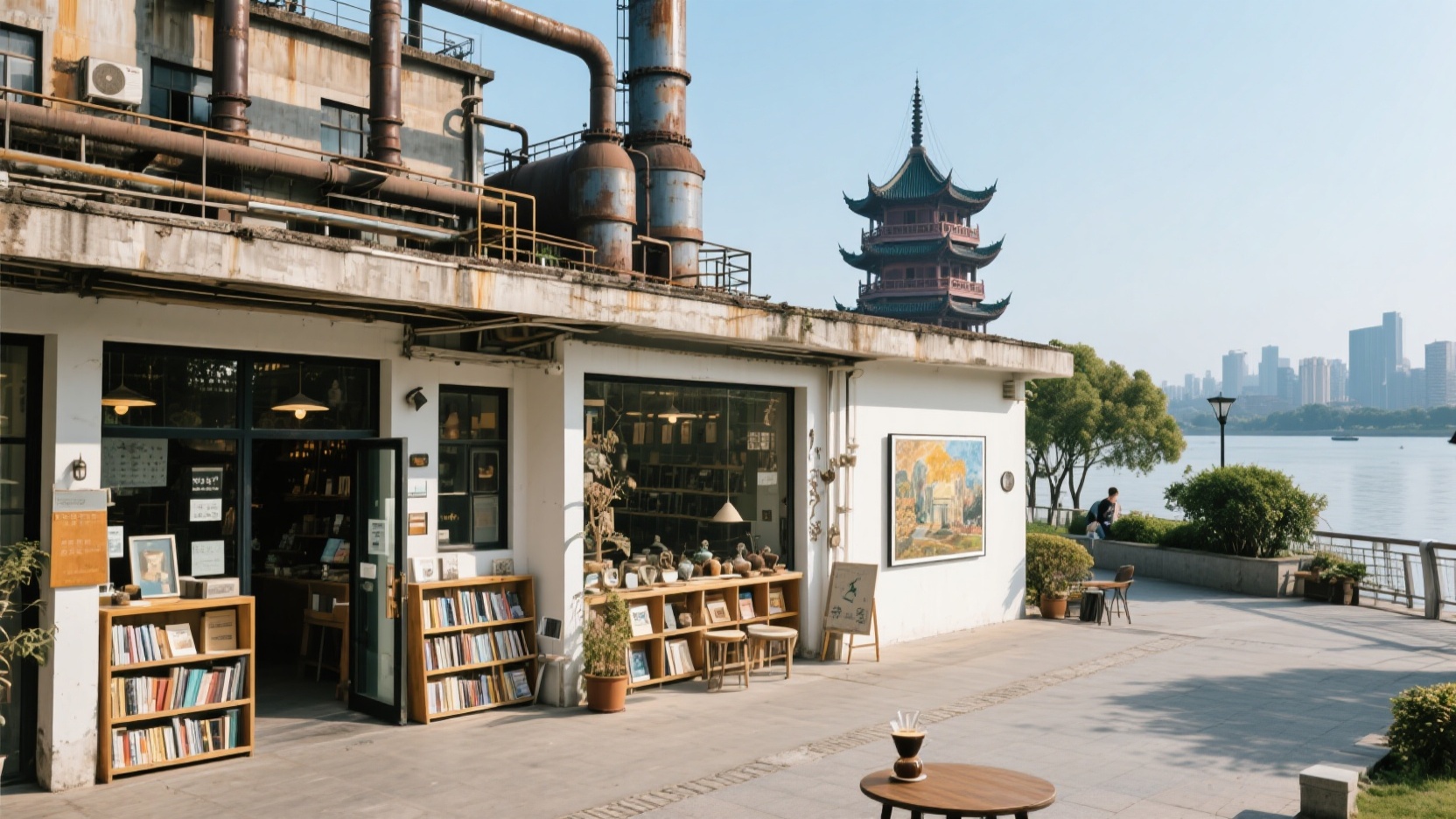
Wuhan's artistic and cultural atmosphere extends beyond the crowds at the Yellow Crane Tower and the Hubei Provincial Museum. Shifting our focus from the main Yangtze River axis to the depths of its streets and alleys, old textile factories, boiler rooms, community shops, and traditional lanes form a more hidden cultural corridor. The following eight locations are connected by a "City Niche Culture Map," ideally explored over two days on foot and short connecting routes. Each location is marked with its character, highlights, and photography suggestions.
Big House Contemporary Art Center: A Contemporary Cross-Section of the Old Jiang'an Textile Factory
The atmosphere is one of "industrial heritage and contemporary art coexisting in one space." Highlights include the exposed red brick exterior, preserved arched windows, stairwell, and rooftop riverside terrace. The exhibition primarily features contemporary paintings and installations, contrasting with the scale of the old building. For photography, it's recommended to choose around 3 or 4 pm, utilizing the west-facing oblique light to capture the contrast of light and shadow on the red brick arched windows. When taking silhouette photos of people on the riverside terrace with the Yangtze River as a backdrop, avoid overexposure caused by the strong midday sun.
Donghu Shan Art Museum: Low-intervention architecture beside a cedar forest
The atmosphere leans towards a "quiet exhibition space coexisting with the cedar forest." Highlights include the building's facade, composed of red brick, weathering steel, and mirrored glass, as well as the changing reflections of the cedar trees throughout the seasons. The museum regularly hosts small contemporary art exhibitions, with a short and restrained circulation path. For photography, it's recommended to wear clothing with low saturation colors. On foggy days or in autumn and winter, take advantage of the layered reflections of the building on the water and in the cedar forest. The entrance walkway is suitable for low-angle shots that create a sense of depth.
403 International Art Center: A Multifunctional Cultural Space Inside a Boiler Room
The atmosphere is that of an "artistic complex transformed from an old boiler room." Highlights include the high-ceilinged factory buildings, steel-framed staircases, red-brick chimneys, a small theater with regularly changing exhibitions, and a bookstore and café area that naturally encourage longer stays. For photography, it's recommended to shoot from the second-floor platform overlooking the bookshelves and stage, using the metal handrails as a foreground to enhance the industrial feel; in the afternoon, when natural light shines obliquely through the high windows, it's ideal for capturing the light and shadow lines of the steel structure.
Visual Bookstore: An art paper warehouse next to the art academy
It feels more like an "off-campus resource room for art students." The highlights are mainly foreign art books, independent magazines, art theory shelves, and small print exhibitions. The selection logic leans towards visual and design aspects. For photography, it's recommended to use vertical composition in the entrance bookshelf aisle to emphasize depth and avoid direct midday sunlight hitting the paper. Art book covers on corner displays can be used as foreground elements to create a layered and quiet reading atmosphere.
Douban Bookstore: A Discounted Bookstore for Thought Next to the College
The atmosphere is that of a "distribution center for used books in the humanities and social sciences." The highlights are the less popular academic books, old editions of translations, and handwritten recommendation cards. The space is small but the selection is dense, and you can often find out-of-print or low-priced academic books. When taking photos, it is recommended to use warm yellow lighting and the wooden bookshelves to shoot close-ups, focusing on the texture of the old pages and the handwritten labels; in low light, you can use a wide aperture to shoot the aisles of the bookshelves to avoid the cluttered feeling of the stacked areas.
Tongxingli Secondhand Shop: A Time Warehouse in Hankouli
The atmosphere is that of a "time capsule of old objects in the alleys and lanes of Lifen." The highlights are scattered among rows of old wooden cabinets, vintage glassware, old doorplates, and handmade items, making it suitable for leisurely browsing rather than a check-in-the-box experience. For photography, it is recommended to take advantage of the side lighting in the alleys in the afternoon to take half-body shots or close-ups of objects in front of old wooden doors; wide-angle lenses can easily destroy the spatial density, so it is recommended to use a medium telephoto lens to shoot details and preserve the original living texture of Lifen.
Remaining space: An independent experimental gallery in an old building
The atmosphere is that of a "small, non-profit experimental space." The highlight is the rotating installations and video works within the tiny exhibition hall, where the original wooden floors, white walls, and old building structure become part of the artworks. When taking photos, it is recommended to focus on the boundary relationship between the artworks and the space, and use a wide-angle lens to capture the entire small exhibition hall; if there are crowds of visitors, you can wait for people to enter the frame as a scale reference, which will actually create a more immersive experience.
Youxin Coffee: A community living room in the riverside park
The ambiance is that of an "everyday space where river views and community coffee coexist." Highlights include the glass-enclosed area, riverside windows, a hand-drip bar, and locally roasted beans, making it a perfect place to unwind after exploring the previous spots. For photography, it's recommended to take photos by the window before sunset, using the backlighting to capture the coffee cups and reflections on the river. At the bar area, you can photograph the barista pouring water; a shutter speed of at least 1/250 second will freeze the water flow.
Explore the spiritual corners of this city with your footsteps.