
Discovering Art in Wuhan | A Deep Dive into the Culture and Art of the River City Through Time
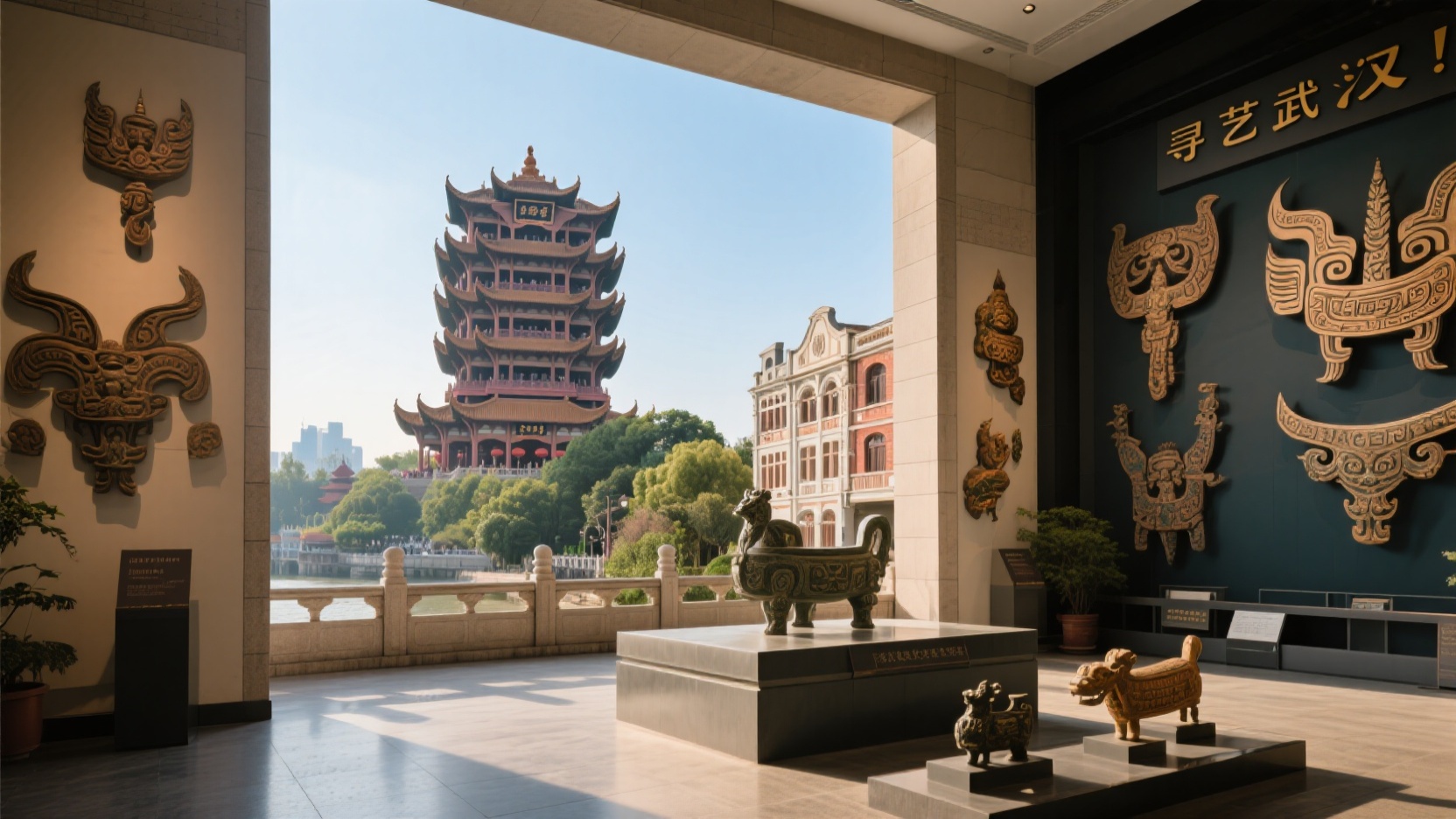
Wuhan, this megacity on the banks of the Yangtze River, is not only renowned for its unique dock culture and spicy cuisine, but also a cultural treasure trove with a profound historical heritage and diverse artistic atmosphere. From the glorious imprint of Chu culture to the fiery years of modern revolution, from the melodious rhythms of traditional opera to the flourishing development of modern art, every corner of Wuhan tells a captivating story. XOOTOUR has specially planned an in-depth cultural and artistic route to guide you beyond superficial visits and immerse you in the cultural context of this river city.
Chu Culture and Han Charm: Museums and Echoes of a Thousand Years
A cultural journey through Wuhan should begin with its origins—the Chu culture. The Hubei Provincial Museum is an ideal starting point for exploring this ancient civilization, boasting a rich collection, especially in its Chu culture section, which is among the best in the country. Stepping into the exhibition hall, you will be awestruck by the exquisite artifacts such as bronzes, lacquerware, and silk fabrics, which together depict the pioneering spirit and romantic sentiment of the Chu Kingdom, as it "blazed trails through thorns and brambles to open up the mountains and forests."
The most renowned exhibit in the museum is undoubtedly the artifacts unearthed from the Tomb of Marquis Yi of Zeng. The Bianzhong (Chime Bells) of Marquis Yi of Zeng, a massive musical instrument composed of 65 bronze bells, is not only breathtaking in its grand scale and exquisite casting craftsmanship, but also rewrites the history of world music with its five and a half octaves range and twelve semitones. Listening to the Bianzhong performance and experiencing the ancient music that transcends 2400 years is a direct way to understand the artistic achievements of Chu culture. In addition, lacquerware such as the deer-antler crane, the outer coffin, and the inner coffin, with their magnificent patterns and exquisite shapes, showcase the Chu people's unique understanding of life, death, and the divine, as well as their superb craftsmanship.
Adjacent to the museum, the Yellow Crane Tower, one of the three famous towers south of the Yangtze River, has embodied the poetic imaginations of countless literati. Cui Hao of the Tang Dynasty, with his famous line "The ancients have ridden the yellow crane away, leaving only the Yellow Crane Tower behind," made it famous throughout the ages. Li Bai also left behind the timeless lines, "My old friend bids farewell to the Yellow Crane Tower in the west, heading down to Yangzhou in the misty, flowery third month." Climbing the Yellow Crane Tower offers not only panoramic views of the Yangtze River and the three towns of Wuhan, but also a profound appreciation for its rich cultural heritage. Each floor seems to whisper history, and each mural depicts a legend, reminding visitors that this place was once the cradle of poetry and literature.
Revolutionary Torrent: Modern Events and Architectural Memories
The modern history of Wuhan is a microcosm of the awakening and struggle of the Chinese nation. The Wuchang Uprising Gate and the Wuchang Uprising Memorial Hall (Red Building) are core landmarks for tracing this historical process. On October 10, 1911, the Xinhai Revolution broke out here, overthrowing the Qing Dynasty and ushering in a new era in Chinese history. As the office of the Hubei Military Government at the time, the Red Building, with its unique red brick architectural style, remains solemn and dignified after a century of weathering the storms of time. The precious historical materials, pictures, and artifacts displayed in the museum vividly recreate that magnificent revolutionary journey, allowing visitors to deeply understand the great significance of the Xinhai Revolution and its profound impact on China's modernization.
Afterwards, move to the Hankou Concession area to experience another side of its modern charm. From the Jianghan Customs House to the Pinghe Packing Factory, from Shanghai Road to Lihuangpi Road, this area boasts a diverse collection of buildings from England, France, Germany, Russia, Japan, and other countries. Baroque, Gothic, Neoclassical, Art Deco, and other architectural styles intertwine, forming a unique "museum of international architecture." Strolling through it feels like stepping back into an early 20th-century international metropolis, each old building bearing witness to a history of cultural exchange, conflict, and fusion between China and the West. Today, some of these old buildings have been revitalized into art spaces, cafes, or boutique hotels, retaining their historical charm while exuding modern vitality—ideal places to experience the urban cultural fabric of Wuhan.
The Wuhan Yangtze River Bridge, spanning the Yangtze River, is not only the first road-rail bridge built across the Yangtze River after the founding of the People's Republic of China, but also a transportation hub connecting the three towns of Wuhan and linking the north and south. It symbolizes the achievements of China's industrial construction and the spirit of national self-reliance. Standing at the bridgehead, looking up at this engineering marvel that "bridges north and south, turning a natural barrier into a thoroughfare," and feeling its magnificent momentum, is also a direct experience of China's modern development process.
Inheriting the Artistic Heritage: Contemporary Art and the New Look of Intangible Cultural Heritage
The development of art in Wuhan is not confined to history. The Hubei Museum of Art is an important platform for showcasing contemporary art in Hubei and even across the country. The museum regularly hosts various art exhibitions, covering a wide range of forms including oil painting, traditional Chinese painting, sculpture, and installation art, reflecting the thoughts and explorations of contemporary artists. A visit to the Hubei Museum of Art allows one to understand the latest developments in Chinese contemporary art and experience how art engages with society and expresses the spirit of the times.
In terms of intangible cultural heritage, Han Opera is one of the most representative traditional art forms in Wuhan and even Hubei Province. With a history of over 200 years, Han Opera is one of the origins of Peking Opera and is known as the "Chu Tune." Its singing is high-pitched and passionate, its performances are delicate and expressive, and its repertoire is rich and diverse. Although the pace of modern life is fast, Han Opera continues to strive for inheritance and innovation. If you have the opportunity, watching a Han Opera performance and experiencing its unique artistic charm is an invaluable experience for gaining a deeper understanding of Jingchu culture. In addition, traditional handicrafts such as Wuhan paper-cutting and Han embroidery also showcase the ingenuity of the people of Wuhan with their exquisite skills and unique aesthetics.
A cultural and artistic journey through Wuhan is a dialogue spanning millennia. From the profound ancient Chu culture to the turbulent modern era and the innovations of contemporary art, this city, with its unique charm, awaits every visitor to savor it. XOOTOUR encourages you to slow down, feel with your heart, and make every stop a profound cultural experience.