
Oujiang River tides change over two days | Wenzhou weekend pop-up: high-density attractions in the city center and time-saving routes in the suburbs
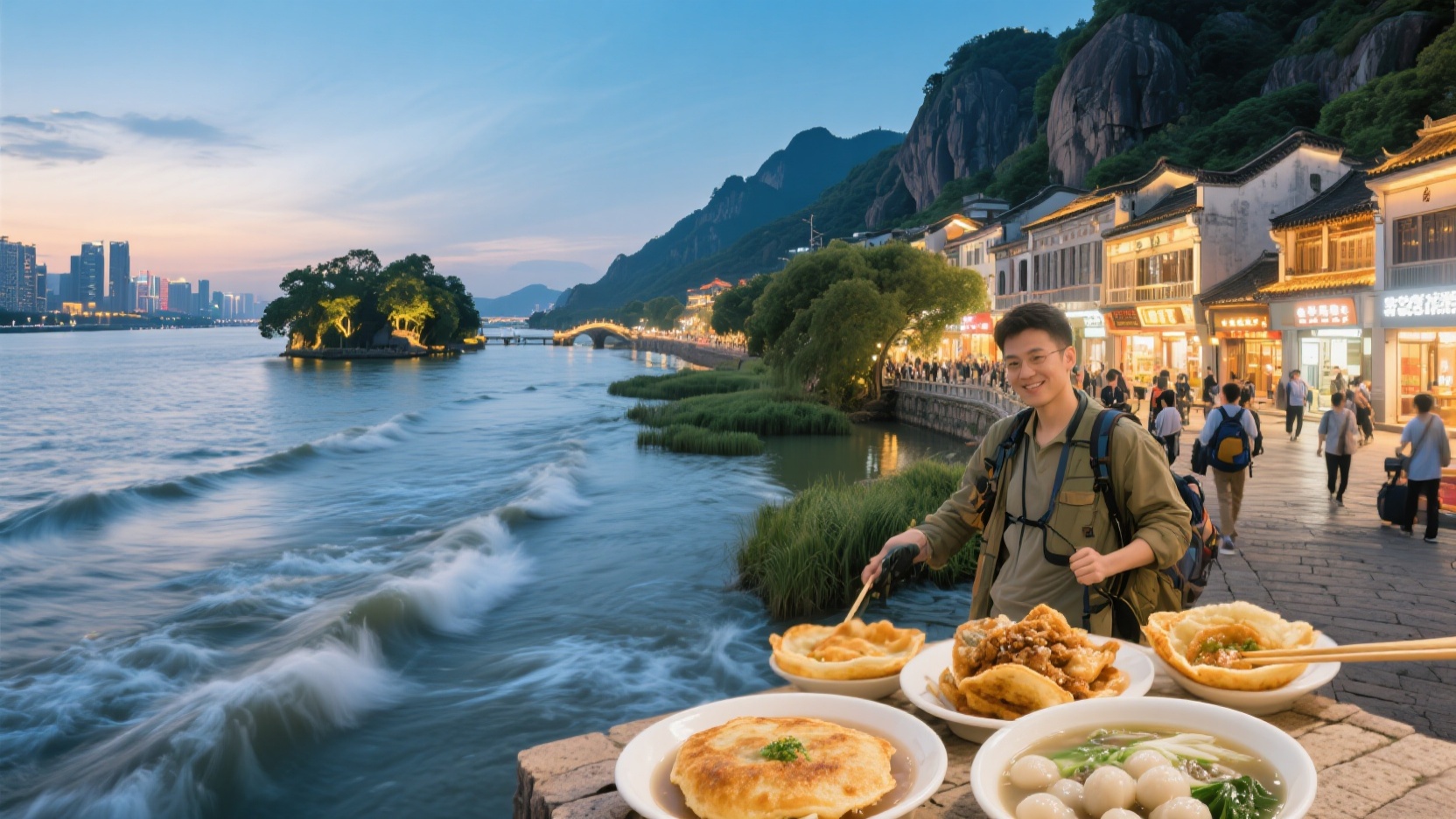
Wenzhou's main urban area isn't large, but the "Jiangxinyu-Wumajie-Nantang" main axis inherently possesses efficient connectivity, coupled with a short-distance mountain route in the suburbs, perfectly forming the framework for a two-day, one-night weekend getaway. The following itinerary avoids excessive steps, minimizing queuing and traffic waste, making it suitable for young tourists arriving Friday evening or Saturday morning and returning Sunday evening.
Day 1: High-density connections within the city center, from Jiangxin Island to Nantang
Head straight to Jiangxinyu Ferry Terminal early in the morning; catching the first ferry is the most crucial decision of the day. As the "Island of Poetry in China," the East Pagoda, West Pagoda, Song Garden, and Haoran Tower on the island are all suitable for a quick visit, ideally within two hours. The area below the East Pagoda offers a view of the river and city skyline in one frame, making it the first worthwhile spot to stop at upon arrival. For Jiangxin Temple, a quick glance at the repeated characters "云朝朝朝朝朝朝朝朝散" (clouds rise and fall, morning after morning) is sufficient; there's no need to go inside. Afterwards, walk or cycle through the Wuma Street and Shamao River area. Lunch can be enjoyed on the go: crispy on the outside and fresh on the inside lantern cakes, clear and chewy fish ball soup, and a bowl of pork offal noodles or Changren wontons. Finish with almond jelly. If you're worried about long queues at popular stalls, take a number first and then buy other items from nearby stalls to avoid the midday wait.
In the afternoon, take a circular route along Gongyuan Road—Wuma Street—Shamao River—Mochi Park, focusing on the Republican-era arcade buildings, old-brand storefronts, the Southern Opera Museum, and Zhu Ziqing's former residence. The advantage of this route is that you almost never have to turn back. Wuma Street and Shamao River have a high density of food stalls, so you can adjust your order if you see long queues. Before evening, move on to Nantang Scenic Street, first enjoying a bowl of fish soup or fish cakes. After dark, stroll along the river. The bridges, lights, and water of Nantang all capture the scene, making the night view even more memorable than the daytime view. It's recommended to allow at least forty minutes for the riverside promenade after it's lit up; the riverside pavilions and arched bridges are the best spots for photos.
Day 2: Light hike in the nearby Daluo Mountain, with a stop at Sanyang Wetland along the way.
The next morning, we'll spend the morning in the suburbs. From the city, we'll take a bus to either the Shizhu or Yaoxi entrance of Daluo Mountain, choosing the Longji section for a light hike, about two hours and thirty minutes round trip. The Shizhu entrance is gentler, while the Yaoxi entrance has more steps; choose according to your fitness level. This section doesn't involve much climbing, but the granite ridge lines are stunning, and on a clear day, you can even see the boundary between the city and the sea. After descending the mountain, we'll have lunch in the tea plantation area, enjoying simple local dishes or continuing to replenish our energy with Wenzhou snacks.
In the afternoon, return towards the city center, stopping along the way for a bike ride or walk in the Sanyang Wetland. The waterways, boardwalks, and wetland plants are perfect for a slower pace. If you're more interested in the old streets, you can replace this time with a visit to Wutian Old Street, where the old bridges and handicraft shops are quieter than in the main urban area. Finish the trip before evening, just in time to catch your return bus. If you don't want to walk, you can switch to the in-depth old town route: Shuomen Street—Chengxi Christian Church—Qiaolou—Xia Nai's Former Residence—Riverside Greenway, which can also be completed in about half a day.
Tip 1: Transportation Saving Card
Activate your Wenzhou public transportation QR code on your mobile phone in advance. It can be used on city buses and subways, and offers discounts on transfers on some lines. The distance from Wuma Street to Nantang is not far, and shared bikes are more time-saving and convenient than taking a taxi. It's not recommended to take taxis the entire way to Daluo Mountain. Take a bus to Chashan area first, then share a ride or cycle for a short distance to avoid return traffic. Be sure to keep your Jiangxinyu ferry return ticket, as it may require secondary verification at certain times.
Tip 2: Packing List
For a two-day, one-night trip, carry only one backpack: non-slip hiking shoes or good-grip sneakers, a lightweight jacket (it can be windy by the river), a power bank, a raincoat or folding umbrella, sunscreen, a water bottle, your ID card, a small amount of cash, and a change of clothes. If you plan to hike Daluo Mountain, don't wear flat canvas shoes, as the stone paths can be slippery after rain. In summer, also bring mosquito repellent, as there are many mosquitoes near the water in Nantang and Sanyang Wetlands.
Tip 3: Avoiding pitfalls when queuing
On weekends, the crowds at Jiangxinyu Ferry Terminal are concentrated after 9:00 AM. Taking the earliest ferry or going on a weekday is the safest option. Popular snacks on Wuma Street are relatively easy to queue for between 1:00 and 2:00 PM. Don't wait at noon. For the Nantang Night Cruise, it is recommended to check the schedule on the online platform in advance during the evening peak and arrive 15 minutes early. There are fewer vehicles at the entrance of Longji Slope of Daluo Mountain before 10:00 AM. The later it gets, the harder it is to find a parking space and the more likely it is to be congested.