
Wenzhou's Spiritual Corners | 7 Niche Cultural Explorations: From Old Factories to Independent Bookstores
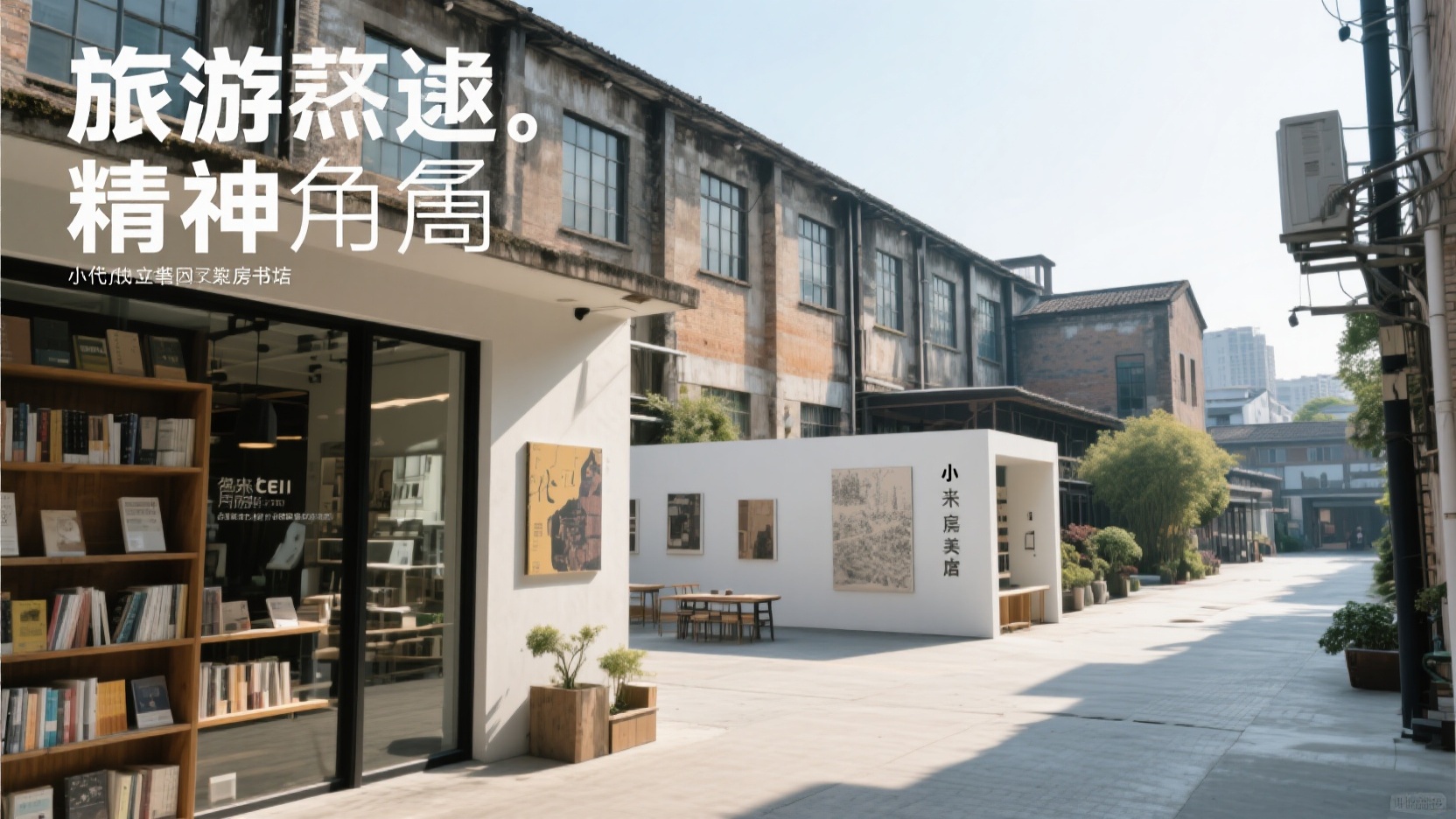
Wenzhou's cultural fabric is not only etched into the fame of Yandang Mountain and Jiangxin Island, but also grows in the brickwork of renovated old factories and the spines of books in independent bookstores. Avoiding the crowds, from the old city alleys to the Oujiang River wharf, these seven niche cultural spaces form a spiritual map of the city from a young perspective.
Free Bookstore: Locally Selected Books in an Old House
Hidden in the cobblestone alleys of the old town, this independent bookstore is a converted traditional wooden house, preserving its courtyard, wooden staircase, and old doors. The selection focuses on humanities and social sciences, local culture, and independent publishing, rather than bestseller lists. Highlights include the structural features of the building itself, occasional small-scale exhibitions, and manuscripts by local authors. The second-floor window seats offer views of the courtyard. Photography tips: Shoot from below at the courtyard, looking up at the wooden beams and sky; use natural light to take portraits at the stairwell corners, avoiding the midday sun overhead.
Xiaobafang: A Slow-Paced Community Nestled Inside Red-Brick Factory Buildings
This creative and cultural district, transformed from a cluster of old industrial buildings, retains its faded red brick walls and wrought iron components at the entrance. Inside, you'll find community cafes, boutiques, secondhand goods stores, and small exhibition spaces, offering a relaxed atmosphere perfect for aimless wandering. Highlights include the high ceilings of the factory buildings, the juxtaposition of old and new materials, and the barista's pour-over coffee counter. Occasionally, there are craft markets on weekends. Photography tips: capture depth and perspective under the red brick archways, or utilize the oblique light from the factory skylights to photograph still life.
Mifangcei: Warehouse Aesthetics at Oujiang Wharf
The renovation project of the old wharf warehouse complex along the Oujiang River retains its industrial feel with its rough cement walls and high windows. The interior is divided into a bookstore, restaurant, and art exhibition space. Highlights include a viewing corridor transformed from the riverside loading and unloading platform, occasional contemporary art exhibitions, and historical slogans on the building facades. The old loading and unloading platform has been preserved as public seating. Photography tips: In the evening, take advantage of the contrast between the reflection on the river and the warm lights of the warehouses, or take backlit silhouette photos under the high windows.
Era Art Museum: A Contemporary Slice of the Nantang River
Nestled on the banks of the Nantang River, this private contemporary art museum boasts a simple architectural form and its permanent exhibitions focus on experimental works by local and international artists. Compared to large public museums, the exhibitions here are more youthful and the curatorial language is sharper. Highlights include the mixed presentation of installations, videos, and paintings. Photography tips: Take photos of people interacting with the artworks in front of the white exhibition walls, but please follow the museum's photography guidelines and avoid using flash.
Boshan Art Museum: A Traditional Shift in Private Collections
This private art space focuses on traditional calligraphy, painting, and scholar's objects. Its collection is organized around works by modern and contemporary Wenzhou calligraphers and painters, with regularly changing themes. The space has a tranquil atmosphere, offering a contrast to the hustle and bustle of Nantang Street. The highlights are the handscrolls, album leaves, and seal carvings, which can be viewed up close. Photography tips: utilize the reflections in the display cases to create depth, or capture the interplay of natural and artificial light within the exhibition hall.
Garden 1956: Design Park of an Old Machine Tool Factory
This cultural and creative park, transformed from an old machine tool factory, preserves industrial relics such as train tracks and cast iron components as landscape installations. The park primarily features independent design studios, small galleries, and handicraft workshops, with a relatively mild commercial atmosphere. Highlights include the rooftop and corridors converted from the old factory structure, and the semi-open workspaces in the studios. Photography tips: Take photos where the cast iron components are juxtaposed with greenery, or use the rooftop railings to capture a panoramic view of the park.
Dongou Think Tank: A Youthful Scene in a Creative Cluster
The creative industry cluster near Xueyuan Road is comprised of several converted old factory buildings, housing independent galleries, design firms, and niche cafes. The galleries showcase and sell works by local young artists, while the cafes often serve as venues for small sharing sessions. The highlight is the sense of community created by the mix of old and new tenants, and the coexistence of graffiti and old factory logos. Photography tips: Take pictures of people in the reflection of the glass at the gallery entrance, or capture the everyday light and shadow in the cafe's outdoor seating area.
From independent bookstores to cultural and creative parks built on old factory sites, these spaces collectively constitute an understated yet continuously growing part of Wenzhou's cultural life. They don't vie for landmark status, but rather provide breathing space for the city. Explore the spiritual corners of this city on foot.