
Taizhou Slow Travel Without Tired Feet | Blogger's Personal Experience Traveling with Parents for 5 Days 4 Nights: Avoiding Common Pitfalls: Elevator, Toilet, and Hospital All Marked + Packing Checkli
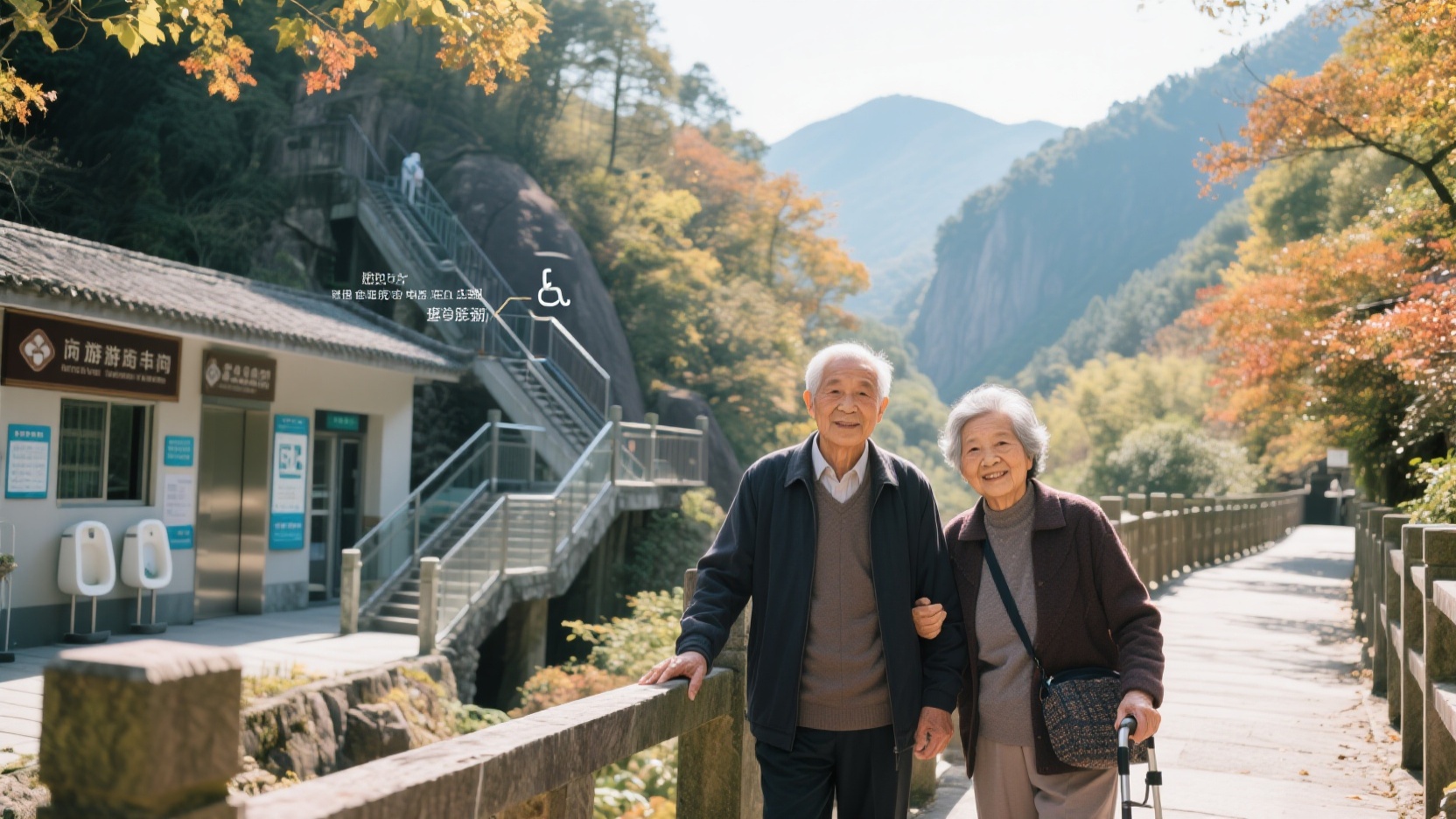
Before taking my parents to Taizhou, I had just returned from a disastrous trip to a certain trendy city – walking 20,000 steps a day, taking the subway, and climbing hills, my mom was already clamoring to go home on the third day. This time in Taizhou, for 5 days and 4 nights, I set strict rules for myself: no more than two key locations per day, a 2-hour lunch break without fail, and for every accommodation to have elevators, accessible pathways, toilet density, and a distance to a level-two or higher hospital. As it turns out, Taizhou is indeed an underrated destination for leisurely travel among the elderly in the Yangtze River Delta.
Why does Taizhou allow parents to walk at a slow pace?
Most of the scenic spots in Taizhou's main urban area, Linhai, and Tiantai are on flat terrain. The ancient cities, old streets, and temples are primarily paved with stone slabs or smooth cement, with very few continuous steep slopes. Taking Taizhou Prefectural City in Linhai as an example, the section from Xingshan Gate to Chaotian Gate can be walked along the base of the city wall without needing to climb the tower. An elderly person walking round trip is about 1.2 kilometers, and will encounter at least three public restrooms along the way. Haimen Old Street in Jiaojiang is less than 800 meters long, with arcades on both sides providing shade and shelter from the rain, and wheelchairs can be pushed relatively easily.
Another key point is the proximity to medical facilities. When choosing a hotel, I only considered two areas: a 10-minute walk to the hotel for a midday rest and a 20-minute drive to a hospital at or above the secondary level. Taizhou Municipal Hospital, Linhai First People's Hospital, and Tiantai County People's Hospital are all located in the core area of the city, which gives senior citizens peace of mind.
Five days and four nights daily schedule: 2-hour lunch break, write down the itinerary.
Day 1: No long-distance travel is planned after arriving in Jiaojiang. In the afternoon, we will only visit Haimen Old Street or the Civic Square, with a walking distance of no more than 1.5 kilometers on flat ground. Toilets in the old street are spaced approximately 300 meters apart, with ramps at the entrances and exits. The steps in front of the shops on both sides are high, but you can walk on the flat path in the middle. After a 2-hour rest at the hotel, a 20-minute stroll along the riverside park in the evening is recommended. Choose a mid-range chain hotel with an elevator; avoid guesthouses in the old town without elevators.
Day 2: Morning visit to Taizhou Ancient City in Linhai. Walk only the greenway outside the city wall from Xingshan Gate to Chaotian Gate, avoiding the steps as some watchtowers lack accessible elevators. This section is approximately 1.2 kilometers long, with two accessible restrooms along the greenway. Ziyang Street is adjacent to the city wall; have Taizhou snacks for lunch there, as there are many restrooms along the street. Return to the hotel for lunch and rest by 2 PM. No further activities are planned for the evening.
Day 3: Choose one of two options. If your parents are still able to walk and enjoy old architecture, visit Xianju Potan Ancient Town. The main street is about 800 meters long, with slight elevation differences on the stone-paved road but no steep steps. The visitor center offers wheelchair rentals and accessible toilets. If they have knee problems or are sensitive to cold, choose a rooftop hot spring resort. Be sure to choose a hotel with an indoor elevator and an accessible walkway connecting the guest rooms to the hot spring area, and avoid hot spring pools with too many outdoor steps. Both options should be completed before 3 PM for a rest.
Day 4: Guoqing Temple, Tiantai. The area around the temple and the mountain gate is flat and shaded by ancient trees. No hiking is planned; we will only walk the flat path from the mountain gate to the Sui Pagoda, about 1 kilometer round trip. Some halls inside the temple have high thresholds, but you can detour via the accessible ramps on the side. Tiantai County People's Hospital is about a 15-minute drive from the scenic area, which puts our minds at ease. We returned to the hotel for a midday rest and took a walk in a small park near the hotel in the evening.
Day 5: Wake up naturally, stroll leisurely around the green spaces or farmers' market near the hotel, avoiding physical exertion with younger people. Double-check the packing list and medications before returning home.
Day 3: Ancient Town/Hot Spring - Which to Choose? Don't Make the Decision for Your Parents Based on Your Own Preferences.
I brought my parents this time, and we chose an ancient town for the third day. However, I noticed that my father was a bit nervous about the cobblestone streets. Even though there were only slight elevation differences, he still walked slowly. In retrospect, for an elderly person who has had knee surgery, a hot spring would be a more stable choice, because the indoor passageways are flat, and you can sit down and rest at any time. The hot spring can also relieve muscle fatigue.
Prerequisites for choosing an ancient town: Parents must be able to walk 1 kilometer continuously without getting tired and have no balance problems. Prerequisites for choosing a hot spring: The hotel must have an elevator, there should be no open-air steps from the room to the hot spring area, and the changing area must have handrails and non-slip mats. Both should be confirmed by phone in advance; don't just rely on promotional pictures.
Real-world testing of silver-haired individuals: Distance to elevators, restrooms, and hospitals is more important than scenery.
Many scenic spots in Taizhou have visitor centers with accessible pathways and wheelchair rentals, but some sections of the ancient city wall and temples lack elevator access. When traveling with parents, it's better to forgo "climbing to check off landmarks" and choose a flat area. Established neighborhoods like Ziyang Street and Haimen Old Street have a high density of restrooms, typically every 200-300 meters, and these often include accessible or third-gender restrooms.
Regarding accommodation, I only stayed in hotels with elevators and breakfast throughout my trip, and I made "distance from the nearest level-two or above hospital by car" a strict selection criterion. Taizhou city is not large, and the drive between Jiaojiang, Linhai, and Tiantai is about 1 hour. Don't book hotels in resorts far from the city center for convenience, otherwise it will be inconvenient to seek medical treatment at night.
Blogger's Summary and Practical Tips: 20 Items for Seniors' Travel Packing Checklist + 5 Types of Commonly Used Medications
During this 5-day, 4-night trip to Taizhou, my parents never complained of being tired; their two-hour naps at the hotel were crucial. The essence of senior citizen travel isn't about how many attractions you visit, but about having a "safe space to retreat to" every day. Finally, here's a packing list and medication reminders; I recommend saving it.
Packing list (20 items): 1. Folding trekking poles; 2. Lightweight, non-slip shoes; 3. Knee pads; 4. Wide-brimmed sun hat; 5. Thin down or fleece jacket; 6. Folding seat cushion; 7. Thermos; 8. Commonly used medications in individual containers; 9. Electronic blood pressure monitor; 10. Thermometer; 11. Disinfecting wipes; 12. Disposable toilet seat covers; 13. Non-slip slippers; 14. Raincoat; 15. Diapers or lightweight urine bags; 16. Photocopies of the elderly person's ID card and medical insurance card; 17. Emergency contact card; 18. Small packages of snacks; 19. Power bank; 20. Wheelchair or walking aid. Five categories of commonly used medications to remember: 1. Blood pressure medication and emergency heart medication – always carry them; 2. Blood sugar medication and blood glucose meter – avoid traveling to tourist attractions on an empty stomach; 3. Joint pain relief patches and liniment; 4. Cold and fever medication and gastrointestinal medication; 5. Allergy medication and motion sickness medication. Pack all medications separately, labeled for morning and evening and after meals, and do not mix them in your suitcase.
The best seasons for senior citizens to leisurely travel in Taizhou are spring and autumn, avoiding the plum rain season and the height of summer. Check off each item on this list before you take your parents on their trip; it's more useful than any travel guide.