
Taizhou Arts and Culture Walk Map | Escape the crowds and explore old factories, secondhand bookstores, and community cafes
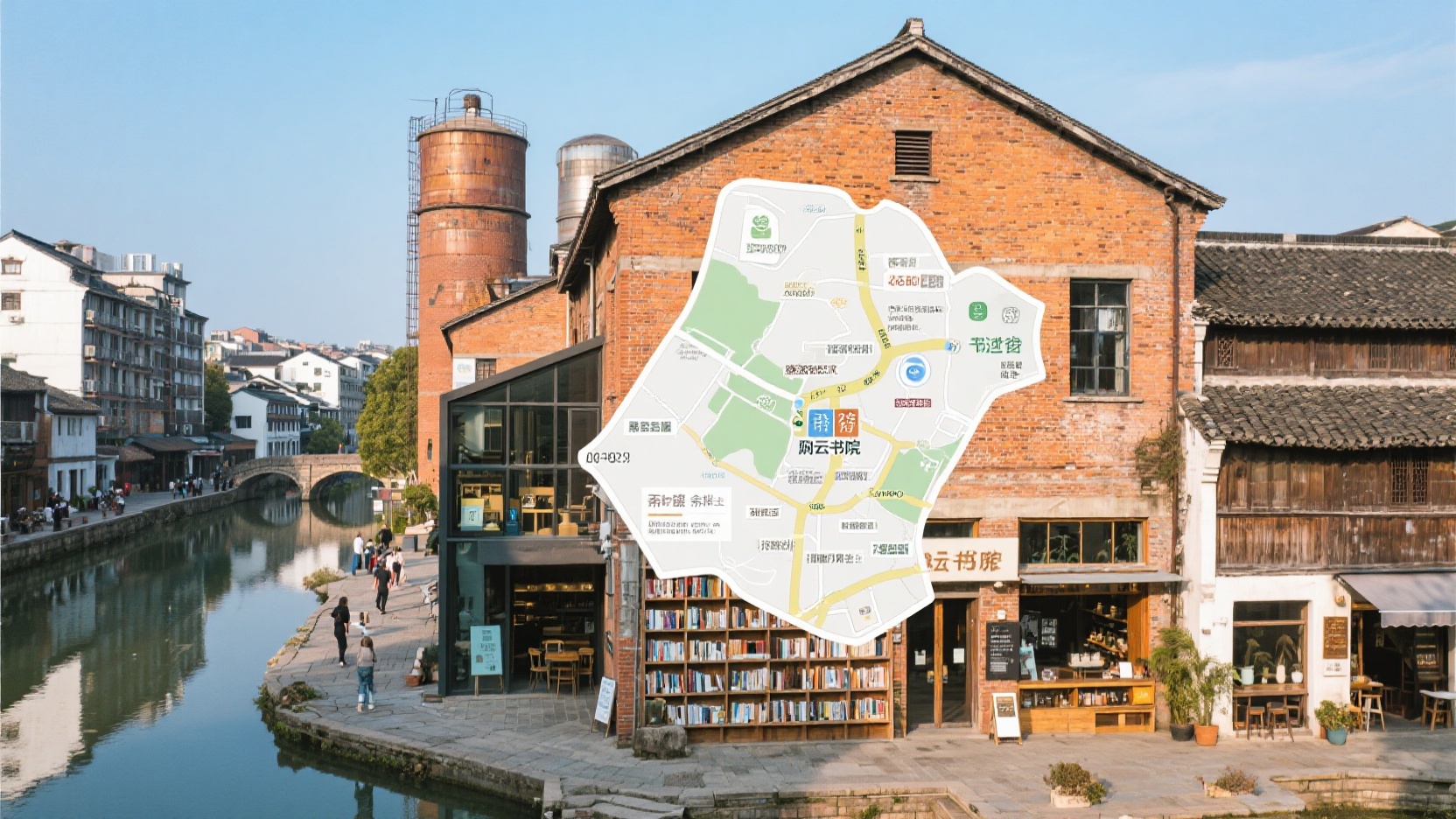
Taizhou's lesser-known cultural spots aren't on the main tourist routes, but rather in the red-brick industrial park converted from an old grain depot, independent bookstores deep within the ancient city, and the white-roofed academy along the Yongning River. This route spans Jiaojiang, Huangyan, and Linhai, and is best explored at a leisurely pace over half a day to a full day; the order can be adjusted according to your personal preferences.
Jiaojiang Old Grain Workshop Cultural and Creative Park
The area is a mixed-use cultural and creative cluster transformed from an old factory building, formerly a grain warehouse, with its red brick walls, old sloping roofs, and steel-framed corridors well preserved. The focus isn't on any single shop, but on the entire park: graffiti-covered facades, architect studios, small design shops, and occasional weekend markets, perfect for leisurely strolls. For photography, the afternoon is recommended, as the red brick walls offer excellent light and shadow effects; the old grain warehouse's iron gate and the second-floor corridor are photogenic spots, and wearing solid colors will help you blend into the industrial background.
Taizhou Contemporary Art Museum
Located within the Laoliangfang Industrial Park, this is one of the few privately-run contemporary art spaces in Taizhou. The space, converted from an old granary, features high ceilings, with white walls and original wooden beams creating a calming atmosphere. The main attractions are local experimental art and group exhibitions of young artists. The exhibition density is low, with ample white space, perfect for leisurely browsing of the exhibition labels. For photography, it's recommended to utilize the skylights and staircase structure; the large backgrounds of the exhibition halls are more photogenic than taking pictures with the artworks. The sidelight at 3 PM will cast shadows from the old wooden beams onto the white walls.
Duoyun Academy Huangyan Store
With a more design-oriented feel, this white geometric building sits on the banks of the Yongning River. The entrance features a water feature and floor-to-ceiling windows that allow ample natural light into the reading area. Highlights include a section dedicated to Taizhou local culture, a selection of architecture and art books, and riverside reading seats. The selection leans more towards serious and design-focused topics than typical tourist bookstores. For photography, it's recommended to capture the building's reflection from the outside. The spiral staircase and seats by the high windows are popular spots, especially in the softer light of early morning or evening.
Looking at the Book Garden Again
Hidden deep within the ancient city of Linhai, this bookstore, converted from an old house, exudes an independent atmosphere focused on humanities and social sciences. The selection leans towards literature, history, and local chronicles, with a comprehensive selection of Taizhou publications. Small sharing sessions are frequently held in the small space on the second floor. The highlight lies in the scale of the old house and the logical organization of the bookshelves; the relationship between the reader and the books is prioritized over the spatial design. For photography, it's recommended to utilize the light from the courtyard, the wooden windows, and a corner of the desks to avoid disturbing readers; close-ups of the old desk lamp and open pages are perfect for low-light shots.
Yu Fengli Study
Converted from an old pawnshop by the sea, it's more like a combination of a small secondhand warehouse and a study. The space retains the old wooden staircase, counter, and atrium, displaying old receipts, old furniture, and local artifacts. The highlights are the building's original pawnshop structure and the corners where old items and books are mixed together; around a corner, you might see a row of local chronicles next to an old-fashioned clock. For photography, it's recommended to shoot from above the atrium, at the corner of the old wooden staircase, and close-ups of old objects to better convey the sense of time; the overhead lighting in the atrium is prone to overexposure, so consider reducing the exposure by half a stop.
18RESERVA Cafe
This community-style boutique coffee shop enjoys considerable popularity in the Linhai Old Town area, with its in-house roasting being its main selling point. The storefront is small, its industrial style contrasting sharply with the old town's streets. The highlights are the pour-over coffee menu and the interactive bar area; the takeaway cups are also great for taking photos, and the baristas clearly express the flavors of the beans. For photography, it's recommended to sit on a high stool by the window or on the street corner near the entrance, where the latte art and shop sign are enhanced by backlighting. The bar area is suitable for photographing the pour-over process, but you need to ask the barista's permission first.
Huangyanqiao Street
An old street near the Wudong Bridge has gradually become home to handicraft studios, teahouses, and secondhand bookstores in recent years. The commercial atmosphere is low, but the local life is strong. The focus isn't on any particular shop, but on the scale of the old town created by the bridge, the river, and the old houses. The wooden doors along the street, the clothes drying in the sun, and the half-hidden courtyards all contribute to the authentic atmosphere of daily life. For photography, it's recommended to shoot from the Wudong Bridge towards the depths of the street. On rainy days, the reflections on the stone pavement create more depth than on sunny days; the evening reflections on the river also add contour lighting to the old bridge.
The common thread running through these locations is their small size—not large in space, not crowded, but dense with detail. Instead of rushing to tourist attractions or chasing crowds, these spaces in Taizhou are perfect for leisurely strolls and exploration. Discover the city's spirit on foot.