
Dragon City Weekend Flash Mob | Two Days and One Night: Connecting Taiyuan's Ancient Architecture, Noodles, and the Nighttime Scenery of the Fen River
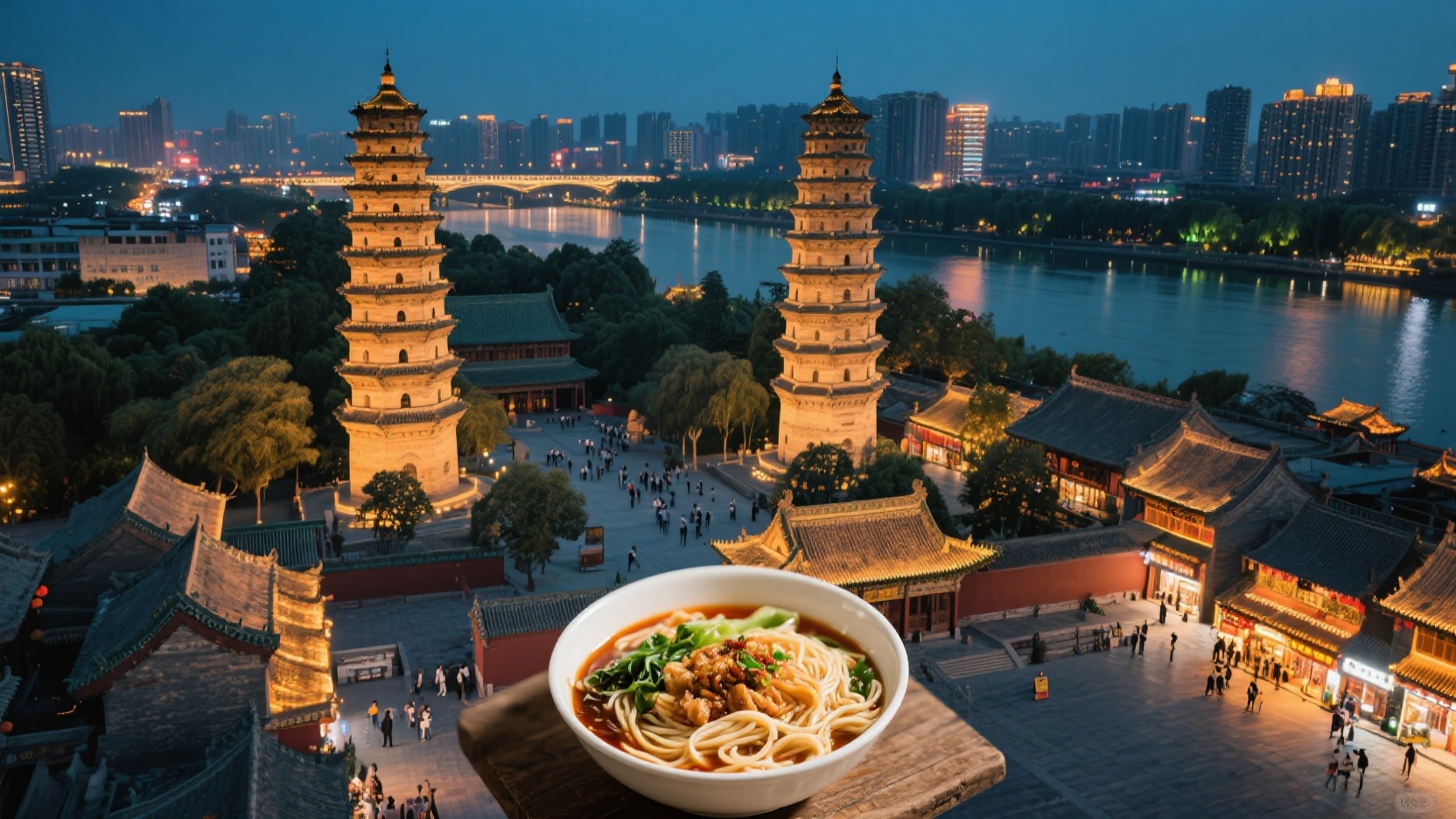
Taiyuan's advantage lies not in the number of "must-see attractions," but in the density of "ancient architecture, noodles, and everyday life." Two days and one night are enough to create a high-concentration itinerary: the first day stays in the city center, stringing together museums, the Twin Pagodas, old town delicacies, and the night view of the Fen River; the second day starts with a trip to Jinci Temple in the morning, and the afternoon returns to the old town to wrap things up, a pace that is compact but not rushed.
Day 1: Shanxi Museum—Food Street—Yongzuo Temple—Bell Tower Street—Fenhe River Night Ride
Our first stop this morning is the Shanxi Museum. Advance reservations via official channels are required. Arrive at the security checkpoint ten minutes before opening. Once inside, head straight to the second floor's "The Hegemony of the Jin State" and "Melting Pot of Nationalities" exhibition halls. Focus on the Jin Marquis Bird-Shaped Zun, the Houma Covenant, the Northern Dynasties murals, and the stone sarcophagus of Yu Hong's tomb. The third floor's Northern Dynasties mural tomb passage and the fourth floor's Porcelain Garden can be visited quickly, but the entire visit should be limited to two to two and a half hours to avoid crowding later. After leaving the museum, take a shared bicycle or a two-stop bus ride to the Food Street or Liuxiang area for lunch. Choose less crowded shops for dishes like braised pork, knife-cut noodles, oat noodles, and sweet and sour meatballs; don't be fixated on trendy spots. Taiyuan noodles are generously portioned, so it's recommended to order only small portions to save room for later snacks.
In the afternoon, visit the Twin Pagodas of Yongzuo Temple. The Ming Dynasty twin pagodas of Yongzuo Temple are a symbol of Taiyuan city. The red walls and ancient bricks of the pagoda courtyard are even more photogenic in the afternoon light. The path to the pagodas is narrow, so you don't need to climb both pagodas; choosing just one is sufficient, and traveling light is more convenient. Afterwards, walk or cycle to the Bell Tower Street and Drum Tower Street area. This renovated old street mixes traditional shops with new ones. You can buy small quantities of local specialties like Laoshuku Yuanxiao (glutinous rice balls), Renyili steamed dumplings, and Shuanghecheng pastries to eat while walking. In the evening, stroll to the south entrance of Liuxiang to observe the bustling crowds. The illuminated Bell Tower Street has even more character than during the day.
After dark, cycle or walk along the Fenhe River scenic area trails. The section from Yingze Bridge to the South Inner Ring Bridge offers a wide view, allowing you to capture the city skyline reflected in the Fenhe River. There is a viewing platform on the south side of Yingze Bridge where you can stop for five minutes to take night photos. Shared bicycles are the most time-efficient way to enjoy the night view; please note that the cycling path and walking path are separate, and do not ride onto the riverside trail.
Day 2: Half-day at Jinci Temple – End of day at the old city temples
Be sure to arrive early the next day. Depart for Jinci before 7:30 AM; public transportation or a taxi is fine. Arriving early will help you avoid tour groups and study tours. Jinci Park is free to enter, but the core Jinci Museum is the main attraction. Upon entering, first see the Water Mirror Terrace, then cross the Fish Pond Flying Bridge to the Holy Mother Hall. The Fish Pond Flying Bridge is a cross-shaped stone bridge, a unique example of ancient Chinese architecture. The eight wooden dragon-carved pillars in front of the Holy Mother Hall and the Song Dynasty painted clay statues of maidens inside are worth taking your time to appreciate. The Nanlao Spring, Zhou Cypress, Tang Shuyu Temple, and Offering Hall form a complete, non-detour route, taking about three hours in total. Try to leave the park before noon.
In the afternoon, return to the old town and you can choose one of two options: First, the route from Chongshan Temple to the Confucian Temple to Chunyang Palace is quiet and compact. The Great Compassion Hall of Chongshan Temple, the glazed tiles of the Confucian Temple, and the Nine Palaces and Eight Trigrams Courtyard of Chunyang Palace are all relatively small, making it a good way to wrap things up. Second, visit the Shanxi Merchants Museum to see the former site of the Governor's Mansion, which is suitable for those interested in modern urban history. If your return train ticket is late, it's recommended to leave the Shanxi Merchants Museum for last, as it's closer to the train station.
Transportation Saving Card
Taiyuan Metro Line 2 runs north-south, connecting the railway station, Zhonglou Street, and Changfeng Street. Public transportation is available via QR code scanning, and there's an express bus line to Jinci Temple. Shared bicycles cover the old city, suitable for short-distance connections. High-speed rail to Taiyuan South Station offers direct metro access to the city center; however, allow more time for the airport. For short trips within the city, prioritize a combination of public transport and cycling, which is more time-efficient than repeatedly taking taxis and allows you to explore the streets and alleys.
Packing list
A 20-liter backpack is sufficient for a two-day, one-night trip: ID card, power bank, water bottle, sunscreen, bucket hat, a pair of soft-soled sneakers, and a light jacket. Taiyuan experiences significant temperature differences between day and night, and it's windy when cycling along the Fen River at night; an extra windproof jacket is more practical than an extra layer of clothing. A small zoom camera is acceptable, but flash is not allowed inside museums.
Avoiding pitfalls while queuing
The Shanxi Museum and Jinci Museum require advance reservations and are closed on Mondays; check opening days before planning your trip. Established restaurants are busiest between 12:00 PM and 1:00 PM and between 6:30 PM and 7:30 PM; staggering your visit by half an hour will save you a lot of waiting time. Bell Tower Street is very crowded at night; for popular snacks, you can get some to go and queue at the next restaurant as you walk. Yongzuo Temple's twin pagodas are best photographed with the sun shining in the morning and against the light in the afternoon. If you prioritize photography, you can schedule your visit to the twin pagodas in the morning, but this will compete with the museum's time slot. This route prioritizes the experience; you can take more photos along the Fen River.