
Avoid paid attractions in Shenzhen | A local's four-day experience: explore the markets, universities, and old industrial areas – that's the real Shenzhen!
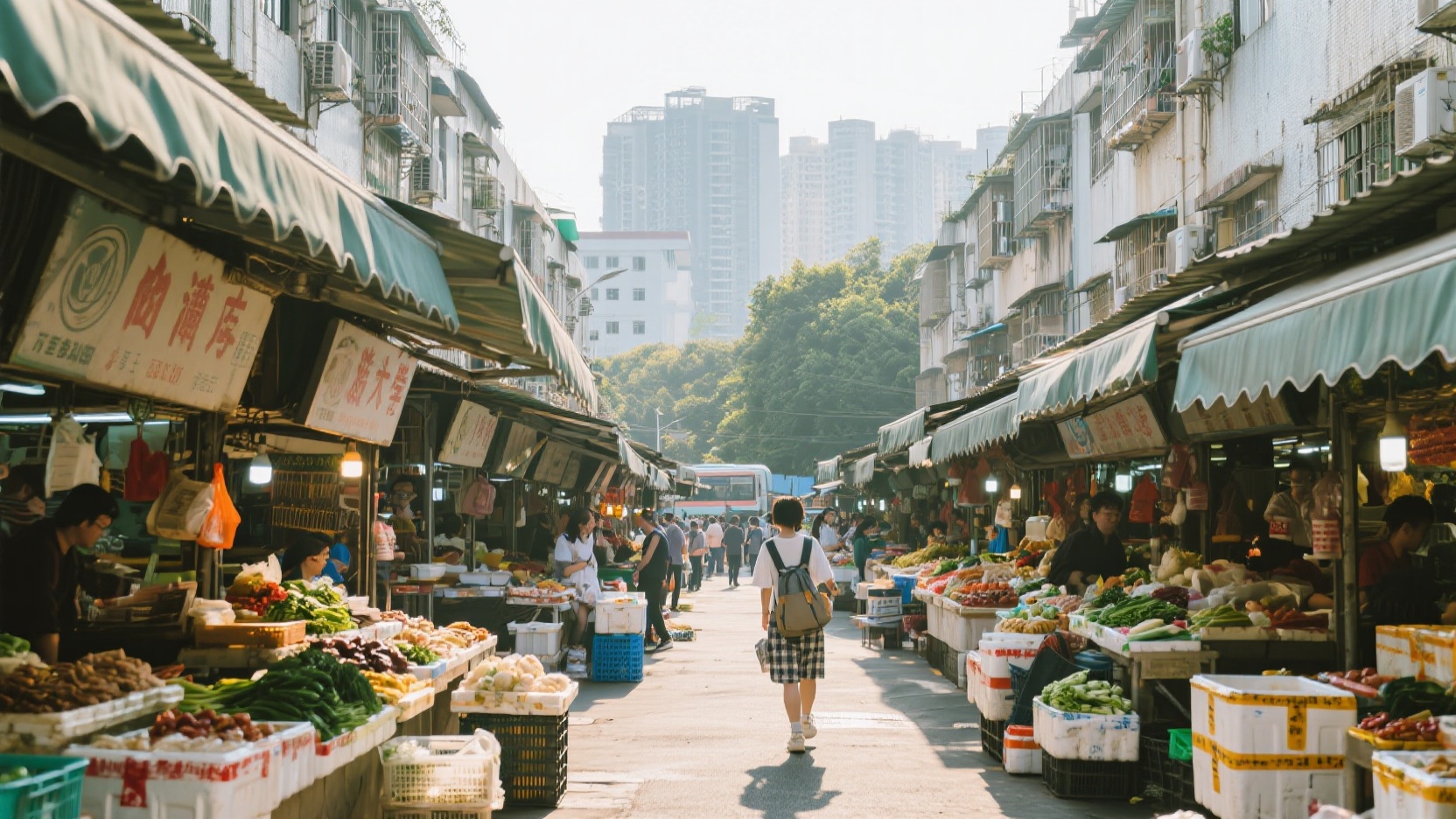
Paying a ticket to see the miniature Eiffel Tower at Window of the World is the first thing I advise all my friends against doing. The longer I live in Shenzhen, the more I realize that locals generally don't recommend those major tourist attractions that charge admission. The real, authentic experience of life is found in places that don't require tickets.
This four-day itinerary avoids all major tourist attractions with paid admission fees, relying solely on the subway, buses, and shared bikes each day. The themes are: community farmers' markets, areas around universities, redeveloped old industrial zones, and old city alleyways. No entrance fees are paid, meals cost only a few tens of yuan per person, and the biggest expenses are transportation and food. It's perfect for a solo, leisurely trip.
Day 1 | Community Market Day: Early Rising at Shekou Market and Breakfast in Urban Villages
Exiting Dongjiaotou Station on Metro Line 2, it's just a few minutes' walk to Shekou Market. This isn't a tourist hotspot; the ground is slippery, rubber boots and styrofoam boxes are piled up in the aisles, and the seafood stall aunties will directly call you "pretty girl" or "handsome guy." Most fishmongers get their fish in the early morning, so they're freshest in the morning. Even if you don't buy seafood, you can still experience the last remaining taste of Shenzhen's fishing port.
The surrounding old Shekou area has many Chaozhou-style noodle soup shops and roast meat stalls, where a breakfast for just a few dozen yuan per person is quite filling. Sitting on a plastic stool and eating a bowl of pork offal noodle soup while listening to the uncle next to you talk about which boat returned late last night is more in line with local life than queuing at a tourist attraction. If you have a small appetite, remember to order a small portion, as the portion is usually quite large.
In the afternoon, there's no need to travel too far. Take the bus to Futian Agricultural Wholesale Market to see how this giant wholesale market operates. Dried goods, fruits, and cooked foods are clearly separated, and you have to be good at sampling, not just lucky. If you want to buy souvenirs, it's more affordable here than in shopping districts, but don't buy too much if you're alone, as it's heavy to carry.
Day 2 | University Surroundings Day: Guimiao New Village and the "Student Stomachs" of the University Town
While reservations might be required at Shenzhen University, the nearby Guimiao New Village is completely open. This area was once known as the "back canteen" for Shenzhen University students, with various dessert shops, braised pork knuckle rice restaurants, and offal stalls hidden among the closely packed buildings. Walking in alone, you're unlikely to encounter any disappointments, as students vote with their feet – anything unpalatable has long been eliminated.
From Guimiao New Village, take a bus or bike to Shenzhen University Town. The graduate schools of Tsinghua University, Peking University, and Harbin Institute of Technology share a lake and library. The campuses don't have strong walls; the greenways are quiet and free, making for pleasant walks. Don't force your way into the canteens that aren't open to the public. There are many affordable food options around University Town, with lunch costing only a few tens of yuan per person.
The focus of this day isn't visiting prestigious universities, but rather observing how young people in Shenzhen live a fulfilling life on a very limited budget. In the afternoon, you can spend a long time by the lake in the University Town, watching egrets, or browse books in a nearby bookstore—no purchases required, and no rushing around.
Day 3 | Old Industrial Area Renovation Day: OCT Creative Park and Nanhai E-Cool
OCT Creative Park, converted from an old factory, is free to enter. Graffiti walls, old-fashioned ramps, and exhibition posters are mixed together, and the market and independent bookstores are perfect for leisurely strolls. There are more stalls on weekends, but you don't necessarily have to buy anything. The photos are more stylish than in a shopping mall, and the restrooms are free and easy to use.
After you're done shopping, you can take the subway towards Shekou and then transfer to a shared bike to Nanhai E-Cool. This place, also converted from an old factory, is much less crowded, and there are often cats outside the cafes and studios. There are no toll booths, so you can easily relax and unwind for a long time without being chased by vendors trying to sell you things.
If you have enough energy, you can ride around the outskirts of the Shekou Value Factory; it's more wild there, but don't ride too late. For dinner, go back to Shekou Old Street and find a tea restaurant full of locals. You can eat roast meat rice or wonton noodles for a few dozen yuan per person, which is more affordable than chain restaurants.
Day 4 | Old Town Alleys Day: Outskirts of Nantou Ancient City and Luohu Urban Villages
The main street of Nantou Ancient City is becoming increasingly commercialized, but don't just walk along it. Turning into the side alleys from the city gate, you can see authentic old residential areas, small shrines, and clotheslines. It's free, of course, but don't disturb the residents, and don't get your camera too close.
In the afternoon, take the subway to Huangbeiling or Xiangxi Village in Luohu District. This is an urban village in old Luohu, where closely packed buildings, ancestral halls, and Hong Kong-style tea restaurants are crammed together. Walking alone isn't dangerous, just be careful not to point your phone directly at people's faces, and don't ride shared bicycles in narrow alleys.
If you have more time, go to the outskirts of the old town of Hubei Village to see the boundary between the old village and the high-rise buildings; the contrast is more breathtaking than any paid viewing platform. You can have dinner in Xiangxi Village; wonton noodles or roast goose rice will cost only a few dozen yuan per person. After dinner, take the subway.
Full travel expense report | Using only public transportation (bus and subway), saving money by not rushing to attractions.
I used the subway and buses for the entire four-day trip, only riding shared bikes for short distances. Shenzhen's subway system is very dense, with stations in most old urban areas and surrounding urban villages, making it easy to walk into residential areas. You can ride by scanning a QR code with your phone; there's no need to buy a physical card.
I explored each area at a leisurely pace, keeping my daily transportation costs very low. By not rushing to tourist attractions, I avoided getting stuck in traffic from taxis. The subway closes before 11 PM, and there are still buses and late-night food stalls near urban villages. As long as you know the last subway time, you're unlikely to get stuck in remote areas.
In closing | 6 tips for playing solo without making mistakes
First, don't wear white shoes into the market. The floors of Shekou Market and Futian Agricultural Wholesale Market are slippery all year round. Wearing old, non-slip shoes is the safest option; otherwise, your shoe soles will smell even fishier than the seafood stalls after a day's wear.
Secondly, avoid walking around urban villages at midday in the summer. It's very hot in Shenzhen from 10 am to 4 pm, so use university libraries, indoor spaces in creative parks, and bookstores as free places to escape the heat. Stroll through the alleys in the evening.
Thirdly, shared bikes should be stopped at the village entrance. The alleys in the urban village are narrow, so walking in is safer and you won't get warned by local uncles.
Fourthly, public buses are better for observing Shenzhen than subways. On regular buses or double-decker buses, choose a window seat; after just a few stops, you can see the transition of an area from old to new.
Fifthly, dining out during off-peak hours is more important than visiting tourist attractions during off-peak hours. Students and office workers can sit down before leaving class or get off work to avoid queuing, and many established restaurants become quieter after 1:30 PM.
Article 6: Use the money saved on entrance fees to buy a meal. For just a few dozen yuan per person, you can eat a decent meal in Shekou or Xiangxi Village. Don't go to chain stores; the locals' stomachs are more reliable than ratings.