
Artistic Heritage | Shenzhen: A Cultural Journey from Ancient City to Creative Capital
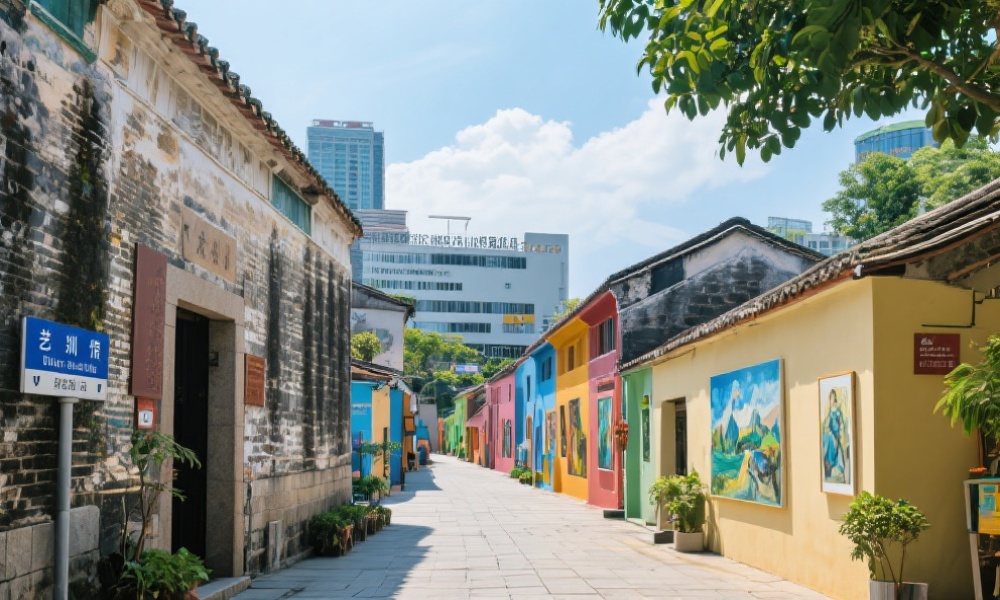
Shenzhen, a modern metropolis renowned for its innovation and speed, often has its profound cultural heritage and diverse art scene overshadowed by its economic achievements. However, a deeper exploration reveals that Shenzhen is not only a testing ground for cutting-edge technology but also a city with a thousand-year-old historical lineage and vibrant artistic energy. This article will guide you on an in-depth cultural and artistic journey, encouraging visitors to slow down and experience the cultural pulse of Shenzhen from ancient times to the present.
First stop: Nantou Ancient City – A living testament to a thousand-year-old cultural heritage.
Shenzhen's history did not begin with the reform and opening up, but can be traced back to the Jin Dynasty more than 1,700 years ago. Nantou Ancient City, as the starting point of Shenzhen's urban history, was once the seat of Dongguan County, Bao'an County, and Xin'an County, and its jurisdiction at one point included Hong Kong. It is not only the "historical root" of Shenzhen, but also an important historical and cultural landmark in the Guangdong-Hong Kong-Macao Greater Bay Area.
Strolling through Nantou Ancient City, one finds a harmonious blend of ancient city walls, archways, and government office ruins with modern creative shops, cafes, and art spaces. It's more than just a collection of historical sites; it's a vibrant cultural district brimming with life. Visitors can explore the Xin'an County Government Museum to learn about ancient administrative systems and local governance; visit the Guandi Temple and Wen Tianxiang Ancestral Hall to feel the spiritual power of historical figures; or discover hidden intangible cultural heritage workshops in the ancient city's alleys, such as making Cantonese herbal tea and traditional pastries, experiencing the charm of Lingnan traditional culture firsthand. The ancient city's renovation, while preserving its historical character, has also injected new business models, making it a revitalized historical example and showcasing Shenzhen's respect for and innovation in urban renewal.
Second stop: Shenzhen Museum (History and Folk Customs Museum) – A systematic review of urban memories
Leaving Nantou Ancient City and heading to the Shenzhen Museum of History and Folklore in Futian District is an excellent choice for a systematic study and enrichment of Shenzhen's history and culture. Through a wealth of artifacts, photographs, and multimedia displays, the museum comprehensively traces the long development of the Shenzhen area from prehistoric times, the Qin and Han dynasties, the Sui, Tang, Song, and Yuan dynasties, the Ming and Qing dynasties, to modern times.
Here, visitors can see Neolithic stone tools, Han Dynasty pottery, Song and Yuan Dynasty porcelain, and Ming and Qing Dynasty coastal defense artifacts, outlining the evolution of Shenzhen as a coastal fishing and salt-producing area, an important node on the Maritime Silk Road, and a vital border town. Particularly noteworthy are the special exhibitions on the Qing Dynasty's maritime ban and evacuation policies, the resistance against the British, and Hakka and Cantonese cultures, all of which profoundly influenced Shenzhen's social structure and folk customs. The museum not only recounts historical events but also, through the recreation of everyday objects, clothing, and architectural models, allows visitors to gain a more direct understanding of the lifestyles and traditions of Shenzhen's original inhabitants, and to comprehend the origins of the city's diverse culture.
Third stop: Dafen Oil Painting Village – A unique phenomenon in the art industry
Shenzhen's art scene is not only traditional, but also features unique modern industrial practices. Dafen Oil Painting Village, an art community located in Longgang District, is one of the world's largest production bases for commercial oil paintings. It was established in the late 1980s, and has gradually developed from initial processing of supplied materials into a distinctive cultural industry cluster integrating oil painting creation, production, and sales.
Stepping into Dafen, one is overwhelmed by the dense array of galleries, art shops, and studios. Here, you'll find skilled painters copying world-renowned masterpieces, as well as original artists diligently creating their own works. The significance of Dafen Oil Painting Village lies not only in creating a vast art market but also in nurturing tens of thousands of painting talents, bringing art into ordinary people's lives in a more accessible way. Visitors can admire oil paintings of different styles, interact with artists, and even commission their own paintings, experiencing firsthand the vitality and controversies brought about by the industrialization of art, and reflecting on the complex relationship between art and commerce, originality and reproduction.
Fourth stop: OCT-LOFT Creative Culture Park – Artistic Rebirth in an Old Factory
From the industrial art shift of Dafen Oil Painting Village, OCT Creative Culture Park represents another kind of art ecosystem in Shenzhen—urban renewal and creative design. Originally old factories in the eastern industrial zone, it has been carefully renovated and planned, and is now a comprehensive cultural park integrating art, design, culture, and leisure.
OCT-LOFT is a hub for independent designer studios, art galleries, specialty bookstores, cafes, restaurants, and creative markets. The buildings retain the rugged beauty of industrial heritage while incorporating modern design elements, creating a unique spatial atmosphere. It regularly hosts art exhibitions, design salons, music performances, and cultural events, serving as an incubator and showcase for contemporary art and cutting-edge design in Shenzhen. Strolling through the park, one can not only appreciate the latest artworks and design concepts but also experience Shenzhen's embrace of creativity and individuality. It demonstrates how Shenzhen transforms abandoned industrial spaces into vibrant cultural landmarks, serving as a vivid example of enhancing the city's soft power.
Fifth stop: Guan Shanyue Art Museum – The Modern Inheritance of the Lingnan School of Painting
As Shenzhen's first national-level art museum named after an individual, the Guan Shanyue Art Museum serves as an important window into understanding the Lingnan School of painting and its modern development. Guan Shanyue was a master of 20th-century Chinese painting, whose works blended Chinese and Western styles, creating a unique aesthetic.
The art museum not only collects and displays representative works by Mr. Guan Shanyue, but also regularly hosts special exhibitions of outstanding artists from home and abroad, covering various art forms such as Chinese painting, oil painting, printmaking, and sculpture. A visit to the Guan Shanyue Art Museum allows visitors to gain a deeper understanding of the Lingnan School's artistic philosophy of "eclecticism between Chinese and Western art, and integration of ancient and modern styles," and to experience the exploration and innovation of Chinese painting in the process of modernization. It is not only a temple of art appreciation but also a platform for cultural exchange, continuously promoting the development of art in Shenzhen and even nationwide through a series of high-quality exhibitions and academic activities. It marks a significant milestone in Shenzhen's cultural and artistic journey, connecting tradition and modernity, and showcasing the city's determination and achievements in cultivating the arts.
A cultural and artistic journey through Shenzhen is a dialogue across time. It begins with the millennia-old cultural heritage of Nantou Ancient City, proceeds systematically through museums, explores the industrial innovation of Dafen Oil Painting Village, witnesses the urban revitalization of OCT Creative Culture Park, and finally culminates in a profound appreciation of art at the Guan Shanyue Art Museum. Each stop offers a deeper understanding of the city's multifaceted nature, and each exploration will refresh your preconceived notions of Shenzhen.