
The Flavors of Shenzhen in the Markets: From Shekou to Dongmen Old Market, a Guide to 10 Must-Have Cooked Foods, Pickles, and Seasonal Delicacies
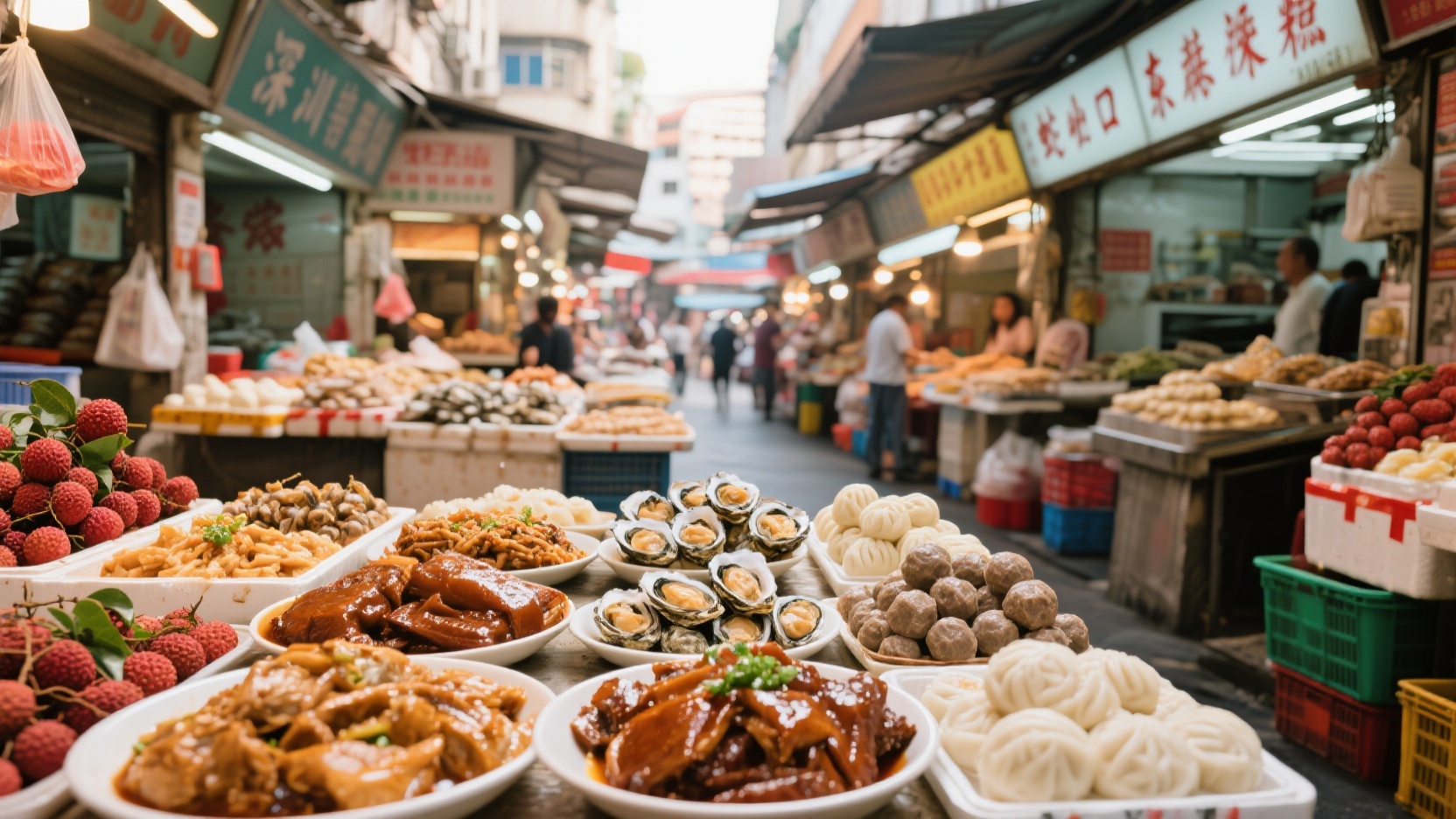
To determine if a city still retains its indigenous character, you don't need to look at commercial districts; just head straight to its longest-opening wet market. Shenzhen is often labeled a "food desert," but Shekou Market and Dongmen Old Market offer a different perspective: one is near the sea, brimming with Chaoshan flavor, where fishing boats return to port and braised food stalls open early in the morning; the other is the old Luohu area, a mix of Hakka and Cantonese residents, where longtime neighbors stroll among the rice cakes and roasted meats with their baskets in hand. Neither market relies on trendy signs; their success depends on the basic skills of browsing, selecting, and tasting at the stalls. Below, we've compiled 10 local gems worth taking home, categorized into four groups: cooked vegetables, dried goods and pickles, handmade snacks, and seasonal fruits.
Cooked food stall: braised dishes, fish rice, salt-baked chicken, Longjiang pig's trotters
In the early morning, the Chaoshan-style braised food stalls at Shekou Market begin their business, with goose meat, duck wings, pig ears, and dried tofu soaking in a dark broth. When choosing a braised goose, look for a glossy, intact skin and a leg that feels springy to the touch. Ask the vendor to cut it in half and serve with a braised egg. Once home, don't pour too much broth over it; rice or congee is the best way to balance the savory flavor. Freshness is indicated by the broth: a clear broth with spices floating and sinking is usually more stable than a cloudy one. Next to the braised food stalls, the "fish rice" stall serves cooked and cooled sea fish, commonly mackerel, croaker, and yellow croaker. Fish with clear, protruding eyes and firm bodies are fresher; dip them in Puning bean paste or serve with congee to bring out their natural flavor. For Hakka salt-baked chicken, choose chickens with slightly yellow skin and firm, tender meat. After tearing the chicken apart, don't throw away the bones; adding winter melon to make a soup is a common Hakka practice. For a stronger flavor, you can add some minced ginger and salt, then drizzle with hot oil to make a dipping sauce. Longjiang pig's feet at Dongmen Old Market always have long queues. Choose those with intact skin and meat, a bright red color from the braising liquid, and meat that can be easily pierced with chopsticks but doesn't fall apart. They are soft, tender, and not greasy. They are even more refreshing when served with pickled cabbage and mustard greens.
Dried seafood and pickles: Shajing dried oysters, dried shrimp and scallops, pickled mustard greens
Shenzhen's most representative dried goods are Shajing dried oysters. Good dried oysters are translucent amber in color, with a natural salt frost on the surface, and have a seafood aroma that is not pungent. Soaking them in warm water for 20 minutes before cooking porridge, and adding them to the pot along with the soaking water, will enhance the flavor. If you see traditional oyster sauce at the stall, choose one that is dark brown in color and clings slowly to the spoon; it will bring out the wok hei (wok aroma) without needing to add other seasonings. Dried shrimp and scallops can be bought in small quantities; those that are whole, dry, and not sticky are of more consistent quality. A small handful can be added to steamed eggs or braised winter melon to enhance the flavor. It's good to buy a jar or two of Chaoshan pickled vegetables, preserved vegetables, and olive vegetables from the pickle stalls: choose preserved vegetables with tender leaves and even saltiness; they can be used in fish soup or served with white porridge. For olive vegetables, look at their oiliness; those that are too dry lack aroma and are suitable for mixing with noodles or stir-frying with green beans. Pickled vegetables are most commonly found in green mango, jicama, and radish strips; those that are sour and crisp without being overly salty are better.
Handmade dim sum and meatballs: Kueh (rice cakes) should be eaten hot, and beef balls need to be cooked properly.
The handmade rice cake stalls around the Dongmen Old Market often sell red peach cakes, rat-shell cakes, and radish cakes. Red peach cakes are colored with glutinous rice flour and red yeast rice, and filled with glutinous rice, mushrooms, and dried shrimp. Choose cakes with a slightly charred bottom and a soft outer skin. Pan-fry them at home with a little oil until both sides are golden brown, then serve with satay sauce or chili sauce. Rat-shell cakes are darker in color and have a sweeter filling of mung bean paste or peanuts; they're best steamed until soft and ready to eat. For beef balls, choose those with a rough surface that springs back when pressed; those with obvious hand marks are more reliable. Don't boil them over high heat; simmer for 8 minutes in gently boiling water. Add chopped celery and fried garlic to the bottom of the bowl; they're flavorful even without sauce. Beef tendon balls are chewier and are best sliced and stir-fried with kale or used in noodle soup.
Seasonal Fruits and Pickled Fruits: Nanshan Lychee, Wampee, and Licorice Fruit
In summer, the Shekou and Dongmen markets offer a variety of fruits, including Nanshan lychees, longans, and wampee. For lychees, choose those with noticeably prickly skin and leaves still attached to the stem. Refrigerate them for two hours after purchase before peeling to concentrate the sweetness. If the flesh is translucent, the seed is small, and the flesh is thick, you can't go wrong. For longans, choose those with dry, springy shells; the flesh will be crisp and sweet after peeling. For wampee, choose those with yellowish-brown skin, plump berries, and short stems. Eat them directly or pickle them in salt water for a digestive and appetite-stimulating effect. Next to the fruit stalls, there are often "licorice fruit" stands, where green mangoes, guavas, and mandarins are mixed with licorice juice and plum powder. When choosing, check the freshness of the fruit's surface; avoid those that have been soaked for too long. Green mangoes should be firm yet crisp, and guavas should have soft, fragrant white flesh.
Exploring the local markets is the best way to experience a city. The seafood and Chaoshan delicacies of Shekou Market, along with the Hakka rice cakes, roasted meats, and pickles of Dongmen Old Market, form the authentic foundation of Shenzhen's daily meals. No need to follow touristy guides to trendy restaurants; simply follow the locals carrying their baskets, sample a wampee, smell the dried oysters, and watch the vendor expertly chop half a braised goose – this is closer to life than any travel guide. Next time you're in Shenzhen, dedicate a morning to the local market.