
A 4km stroll through Shenzhen's ancient markets | A list of pitfalls to avoid in old villages on Bao'an West Coast (personally tested by the blogger three times - autumn/winter afternoon version)
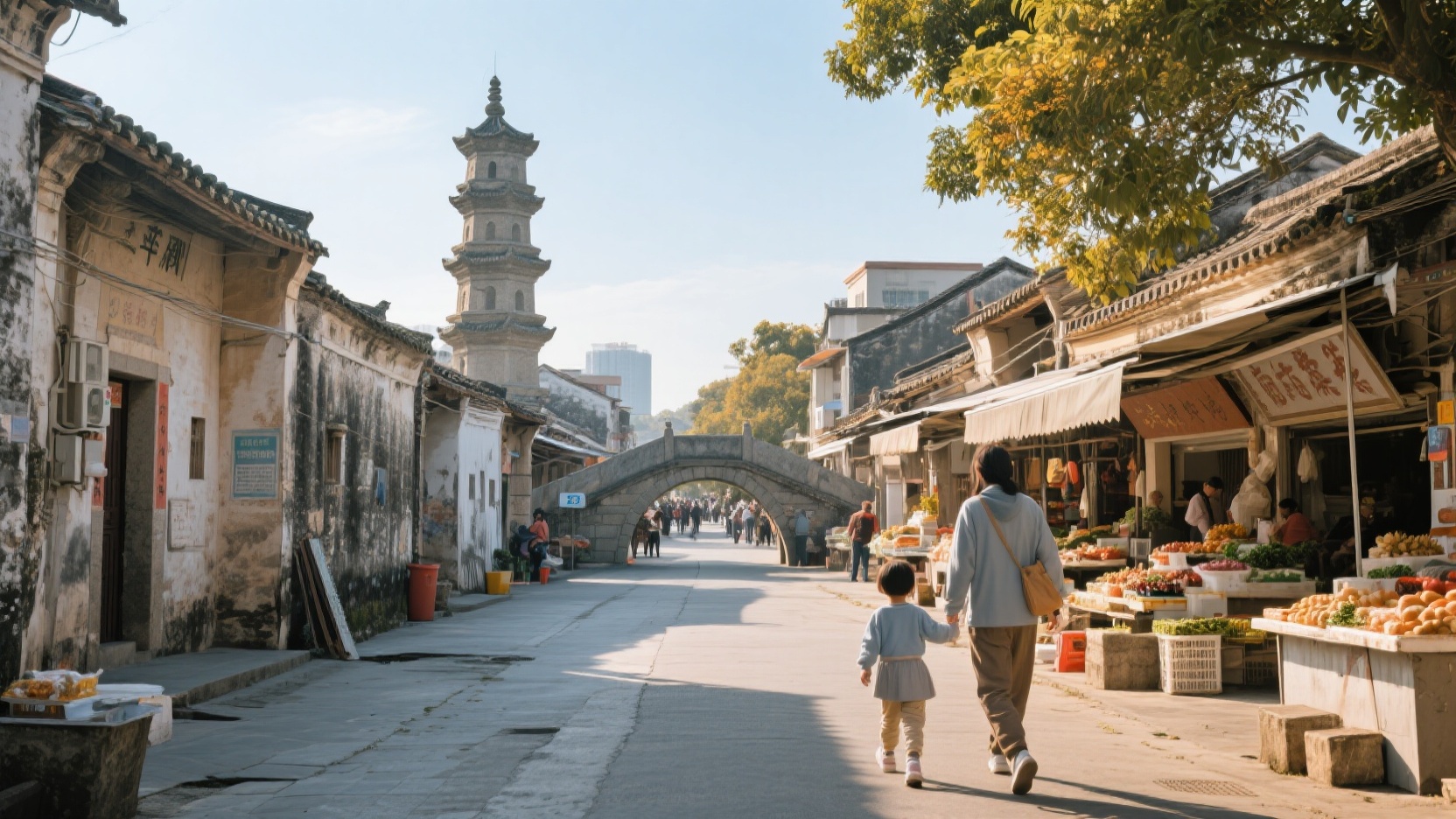
The first time I tried to find Shajing Ancient Market using navigation, I circled the traffic of electric bikes on Shajing Street three times, almost knocking my phone holder into the Longjin Canal. Later I realized that this route wasn't suitable for driving; it was only suitable for parking near Shajing Old Street and walking step by step from the Song Dynasty Pagoda to the Qing Dynasty Stone Bridge.
Starting point: Longjin Stone Pagoda and Xinyang Old Village – First, see Shenzhen's most underrated Song and Ming Dynasty surface relics.
Starting from the intersection of Shajing Old Street and Xinyang Old Village, don't rush to turn into the main alley. The Longjin Stone Pagoda is nestled among residential buildings, half-hidden by incense smoke and tree shade. It's about a 300-meter walk, a 4-minute walk. Camera position: Stand under the eaves of the oyster shell wall diagonally opposite the stone pagoda, and use a telephoto lens to compress the pagoda and the tiled roofs of the old houses behind it. You can capture a rare "Song Dynasty pagoda + Cantonese row house" scene in the same frame. Why it's worth stopping for 5 minutes: The Longjin Stone Pagoda is one of the oldest existing above-ground buildings in Shenzhen. The pagoda is so small that it can be overlooked, but upon closer inspection, you can discover weathered lotus patterns and inscriptions about suppressing water, which firmly anchor the water system memory of the place name "Shajing" at the alley entrance.
Continuing north along the stone-paved road of Xinyang Old Village for about 400 meters (5 minutes), ancestral halls and oyster shell walls begin to appear densely. This is not a tourist area; there are no signs, only elderly people sitting on stone doorsteps listening to Cantonese opera. Camera position: Position the camera close to the ground in front of the Chen Clan Ancestral Hall, using the door couplets and stone drums as the foreground, and wait for a neighbor riding by on an electric bike to enter the frame. Why it's worth stopping for 5 minutes: Oyster shell walls are not uncommon in Shenzhen, but the old houses here still retain the market layout of "front shop, back warehouse," with the oyster shells on the walls arranged densely, feeling even rougher than reefs.
Longjinyong and Shajing Old Street Market – the damp, bustling alleyways are the true essence of local life.
From Xinyang Old Village, turn back to Longjin Canal and walk south along the narrow waterfront alley for about 500 meters, a 7-minute walk. Longjin Canal used to be a waterway for transporting oysters and rice, and old houses with arcades and stilted buildings still exist on both banks. Camera position: Stand on the small stone bridge and shoot over the reflection in the water, pressing the shutter when the sunlight makes the water surface shimmer like shattered silver. Why it's worth stopping for 5 minutes: The waterways here are extremely narrow, with clotheslines on both sides almost touching. The smell of the waterways mixes with the aromas of incense and food, bringing it closer to the physical memory of Shenzhen's early markets than any artsy neighborhood.
Walk another 350 meters, or 4 minutes, and you'll find yourself on the outskirts of the Shajing Old Street Market. Don't just photograph the stalls; stand at the east alley entrance of the market and capture the old "Old Street Market" sign and the pyramid-shaped piles of dried oysters in the same frame. Why is it worth stopping for 5 minutes? Shajing locals are particular about "winter oysters, summer sun-drying." You'll often see elderly people using bamboo sieves to dry small dried oysters in the corners of the market. This scene of street-corner labor is one of the most consistent sights on Shenzhen's west coast. The light is best after 10 am, and some stalls close in the afternoon, so it's recommended to start your trip in the morning.
Side Route A: Turn towards Qingping Ancient Market – a Republican-era section of Yongxing Bridge and the old granary.
Cross the road from the south entrance of Shajing Old Street Market and walk west along Xinsha Road for about 1.1 kilometers, a 15-minute walk, to Qingping Ancient Market. This route passes along the edge of an industrial area where old and new are merging. You can rest at the entrance of Xinqiao River Greenway along the way. Camera position: Once you arrive at Qingping Ancient Market, don't go onto the bridge yet. Crouch down on the east bank of Yongxing Bridge and use the bridge arch and the old granary dome as a backdrop. Why it's worth stopping for 5 minutes: Yongxing Bridge is one of the few Qing Dynasty stone arch bridges in Shenzhen. The stone slabs on the bridge surface are worn with grooves, and walking across it gives you a sense of the important transportation role that connected the old and new markets. The cultural and creative space converted from the old granary often has exhibitions on weekends, which you can check out, but it's not recommended to queue up to enter the shops just for taking photos.
This branch line is about 2.2 kilometers round trip. If you don't have enough stamina, you can just walk to the bridge and turn back. Camera position two: Under the iron staircase behind the granary, use a wide-angle lens to capture the arc of the granary and the old phoenix tree in the same frame, which is suitable for low-angle side lighting at four o'clock in the afternoon.
Side Trip B: Delving into Xuegang Community and Pocket Park – Oyster Shell Walls, Old Trees, and a Community Temple
Back at Shajing Old Street Market, if you're not in a rush to wrap things up, you can turn into Xuegang Community from the small road on the north side of the market, about 400 meters (6 minutes). Here you'll find a cluster of old, fenced-off houses and several century-old banyan trees. A small community temple is constantly filled with the smoke of incense, and next to it is a pocket park where locals play chess in the afternoon. Suggested camera angles: Use a stone bench under the banyan trees as a foreground to capture a snapshot as a game of chess ends, or photograph the porcelain carvings on the roof of the small temple. Why it's worth stopping for 5 minutes: This area is almost devoid of tourists; old walls, tree roots, and clothes drying in the sun create a unique "slow-paced community" rarely seen in Shenzhen. If you're traveling with children or elderly people, this section is safer than the main road.
Branch line B doesn't require venturing too far; just walk to the swings in the community pocket park and return. It's about 800 meters round trip, taking about 10 minutes. If you encounter a dessert cart near the pocket park, you can buy a bowl and sit down to rest; the price ranges from a few dollars to a dozen dollars.
Closing: Walk back to the starting point along Shajing Street—evening light and the shops of the ancient market.
Turning back from Xuegang Community onto Shajing Street, walk slowly north along the main street for about 700 meters, a 10-minute walk, and you'll return to the vicinity of Longjin Stone Pagoda. Between 5 and 6 pm, the arcades on both sides of Shajing Street are bathed in a warm yellow glow from the setting sun, and the flow of electric bikes increases—this is the most cinematic time of day for the ancient market. Camera position: Standing on the street corner safety island, use a slow shutter speed to create lines from the bike lights, with the arcades and Longjin Stone Pagoda in the background. Why it's worth stopping for 5 minutes: During the day, the ancient market is a specimen gazed upon by tourists; it truly "comes alive" in the evening, with commuters leaving get off work, students leaving school, and vegetable vendors packing up their stalls moving in the same frame.
If you'd like to grab a bite before you go, there are several coffee and dessert shops in old houses near Longjin Stone Pagoda. The prices are reasonable, making them a good place to rest. You won't find any of these chain shops that look the same. The owners will often give you directions and tell you which section of the oyster shell wall looks best when it's lit up at night.
Blogger's Summary + Practical Tips Checklist
Summary: This is a 4-kilometer Citywalk loop through ancient markets, starting at Shajing Ancient Market and connecting Xinyang Old Village, Longjin Canal, and Shajing Old Street Market. It then branches off into two routes: Qingping Ancient Market and Xuegang Community. Compared to Nantou Ancient City and OCT Creative Park, it's more rustic and unspoiled, suitable for those wanting to see Shenzhen's "prehistory." A 3.5-hour time limit is recommended, starting before 10 AM to avoid the afternoon sun.
Tips: 1. If driving, park in the public parking lot near Shajing Old Street; avoid driving into the narrow alleys inside the ancient market. 2. Wear non-slip shoes, as the stone slabs along the banks of the Longjin Canal are damp year-round. 3. Qingping Ancient Market is crowded on weekends; if you want to take photos of the empty bridge, try to go on a weekday morning. 4. You can look at dried oysters at the market, but it's not recommended to buy in bulk, as the quality of loose seafood varies. 5. Autumn and winter are the best seasons; in summer, there may be unpleasant odors and thunderstorms in the afternoon.