
Ningbo Flavors in 24 Hours | A Local Menu from Morning Noodle Knots to Late-Night Seafood Noodles
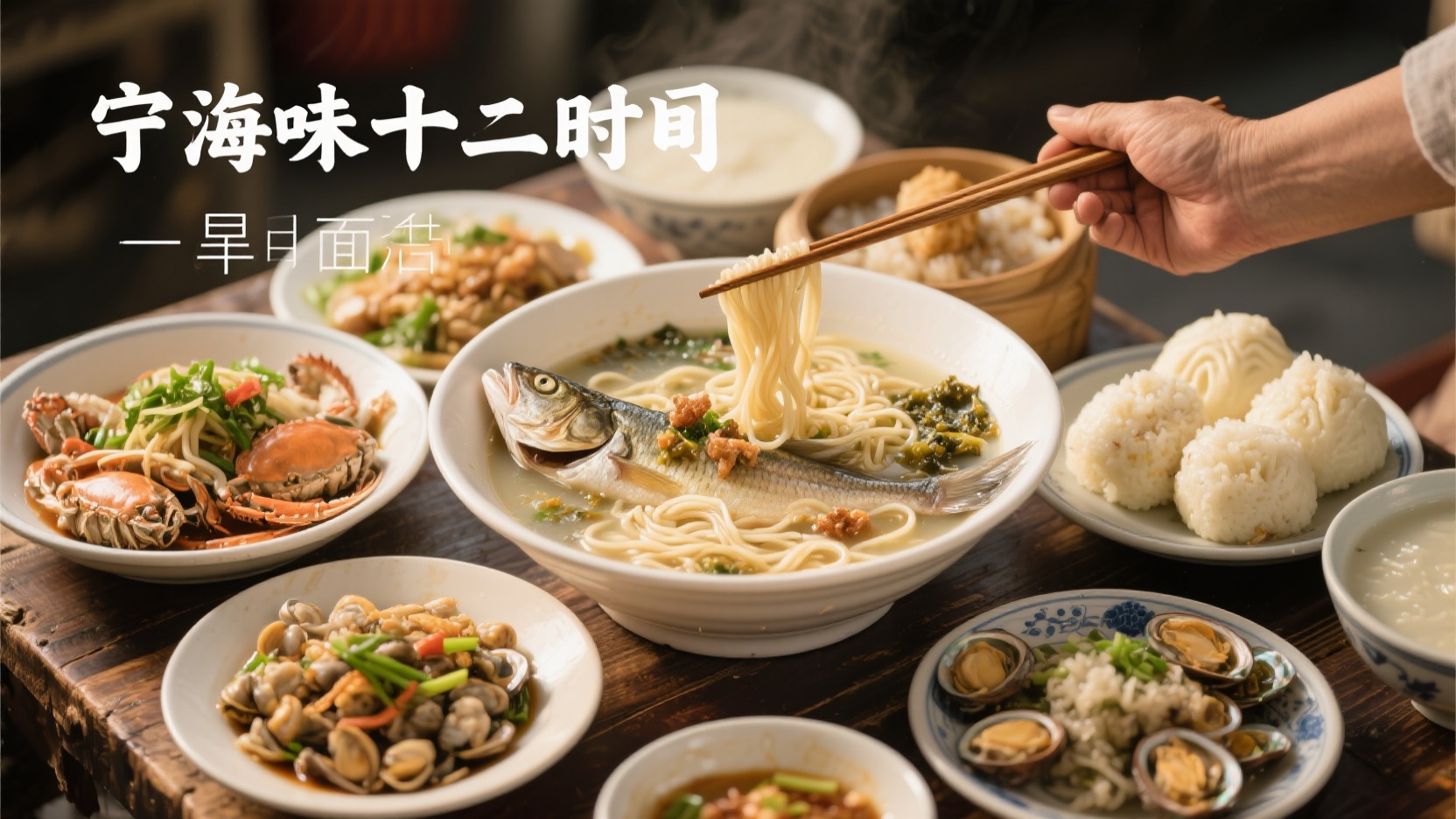
A day in Ningbo begins at six in the morning at a noodle shop. This port city is by the sea, but the breakfast table isn't just about seafood; more often it's a combination of bean curd, carbohydrates, and a bowl of hot soup. To truly understand the everyday flavors of Ningbo, follow the locals' schedule and eat your way through the night.
Early morning: noodles with savory soy milk, and glutinous rice balls to carry me through half the morning.
Mianjie noodles are a unique breakfast concept in Ningbo. Thin bean curd sheets wrap seasoned minced pork, tied into a small pillow shape, and cooked with fried tofu and vegetables before being poured over alkaline noodles. The broth is made by simmering pork bones and chicken carcasses for a long time, resulting in a clear yet flavorful soup. The mianjie has a smooth outer skin, a firm and juicy filling, and chewy noodles. Served with a side of pan-fried dumplings or potstickers, it's the most comforting way for locals to start their day before work. In the past, mianjie were often made and cooked fresh at small stalls near the market, offering a sense of freshness and quality.
Salty soy milk and glutinous rice balls often appear together. Ningbo salty soy milk is made by pouring soy sauce, dried shrimp, seaweed, and fried dough stick crumbs into boiling hot soy milk, causing it to instantly coagulate into a flocculent consistency, resulting in a savory and piping hot treat. Glutinous rice balls, on the other hand, are made by spreading steamed glutinous rice on a cheesecloth, sprinkling it with powdered sugar, or adding fried dough sticks, pickled vegetables, and pork floss, then shaping it into a firm ball. One is liquid, the other dry; one is savory and smooth, the other chewy and firm—a combination that's the most filling before going to school or work, reflecting the simple need for calories in a port city.
Lunch: Yellow croaker soup with pickled mustard greens and taro soup with pork cracklings – a savory and slightly salty base.
In a local eatery, braised yellow croaker with pickled mustard greens is a must-order. The large yellow croaker from the East China Sea is cleaned, lightly pan-fried on both sides, then mixed with locally grown pickled mustard greens and bamboo shoots. Hot water is poured in and brought to a boil over high heat until the broth turns milky white. The fish meat is tender and juicy, resembling garlic cloves; the pickled mustard greens are crisp and slightly sour; the bamboo shoots are sweet; and the broth is a perfect blend of salty and savory. Back when yellow croaker was just a common seafood, this dish was a presentable main course for both entertaining guests and everyday meals in Ningbo, establishing the "harmonious combination of savory and salty" as the core flavor of Ningbo cuisine.
Taro and pork crackling soup is another example of understated elegance. Fenghua taro is steamed, then coarsely mashed to retain its texture, and cooked with pork cracklings left over from rendering lard. It's then seasoned with soy sauce and chopped scallions. The taro is smooth and slightly sandy, while the pork cracklings are crispy, and the rich aroma of lard and soy sauce permeates the soup. Many locals eat it with white rice, finding satisfaction in just one bowl. This dish is a microcosm of Ningbo people's thrift and ingenuity, transforming scraps into a perfect accompaniment to rice; an empty bowl is the greatest respect one can show for it.
Afternoon Tea: The Pleasant Moments of Ash Juice Dumplings and Rice Buns
At three o'clock in the afternoon, the pastry shops in the old town will serve up lye glutinous rice balls. Traditionally, they were made with alkaline water filtered from rice straw ash, but now edible alkaline water is often used instead. This is mixed with glutinous rice flour and brown sugar, shaped into small balls, and steamed. The finished product is a translucent, tea-brown color, chewy and not sticky, with a very faint alkaline aroma and a subtle sweetness. Lye glutinous rice balls were once a snack during breaks in the busy farming season in rural Ningbo, but now they have become a traditional snack on the tea tables of the elderly, making time seem to slow down as they eat them.
Rice buns are another representative of fermented snacks. Made by grinding indica or japonica rice into a paste, adding a small amount of starter, and allowing it to ferment naturally, then steaming it until it blooms like a flower. They have a slightly sour taste with a sweet aftertaste, a soft, sponge-like texture, and a thin crust at the bottom. People in Ningbo often enjoy them with a cup of green tea as an afternoon snack. This ingenuity in utilizing rice fermentation reflects the Ningbo people's meticulous understanding of rice products; the balance of sour and sweet is just right to relieve afternoon drowsiness.
Late at night: The logic behind seafood noodles and scallion oil clams at a food stall
In Ningbo late at night, noodle shops and food stalls are even more bustling than during the day. Seafood noodles are a staple of late-night dining, with diners choosing their own seafood at the open counter: shrimp, small white crabs, razor clams, clams, and ribbonfish pieces—a choice for every budget. The noodles are cooked with the seafood in a broth made from fish bones, finished with a spoonful of lard and a handful of pickled mustard greens. The noodles soak up the seafood broth, the seafood is tender and smooth, and the soup is incredibly flavorful. Drivers finishing their shifts in the early morning and nurses finishing their night shifts often end their day with a bowl of noodles, leaving them feeling warm and cozy.
Scallion-oil clams are a popular social snack at food stalls. The clams have shells as thin as melon seeds. After blanching, they are quickly removed, topped with a thick layer of chopped scallions, drizzled with hot peanut oil to release their aroma, and then drizzled with steamed fish soy sauce. When you eat them, you suck the shell and meat apart, the clam meat is sweet, and the aroma of scallion oil explodes in your mouth. A plate of clams with ice-cold beer is a common pastime on summer nights in Ningbo. It doesn't fill you up, but it's perfect for keeping conversation flowing—a true "poetic sight" in late-night eateries.
From the morning's simple noodles to the midday yellow croaker with pickled mustard greens, and the late-night seafood noodles with clams, a day in Ningbo is strung together by these seemingly ordinary yet meticulously prepared foods. From the streets to the alleys, experience the city through its cuisine in a single day.