
A leisurely stroll through Ningbo's old town | A hidden gem of a 3-hour route through Haishu District (with 2 side roads included)
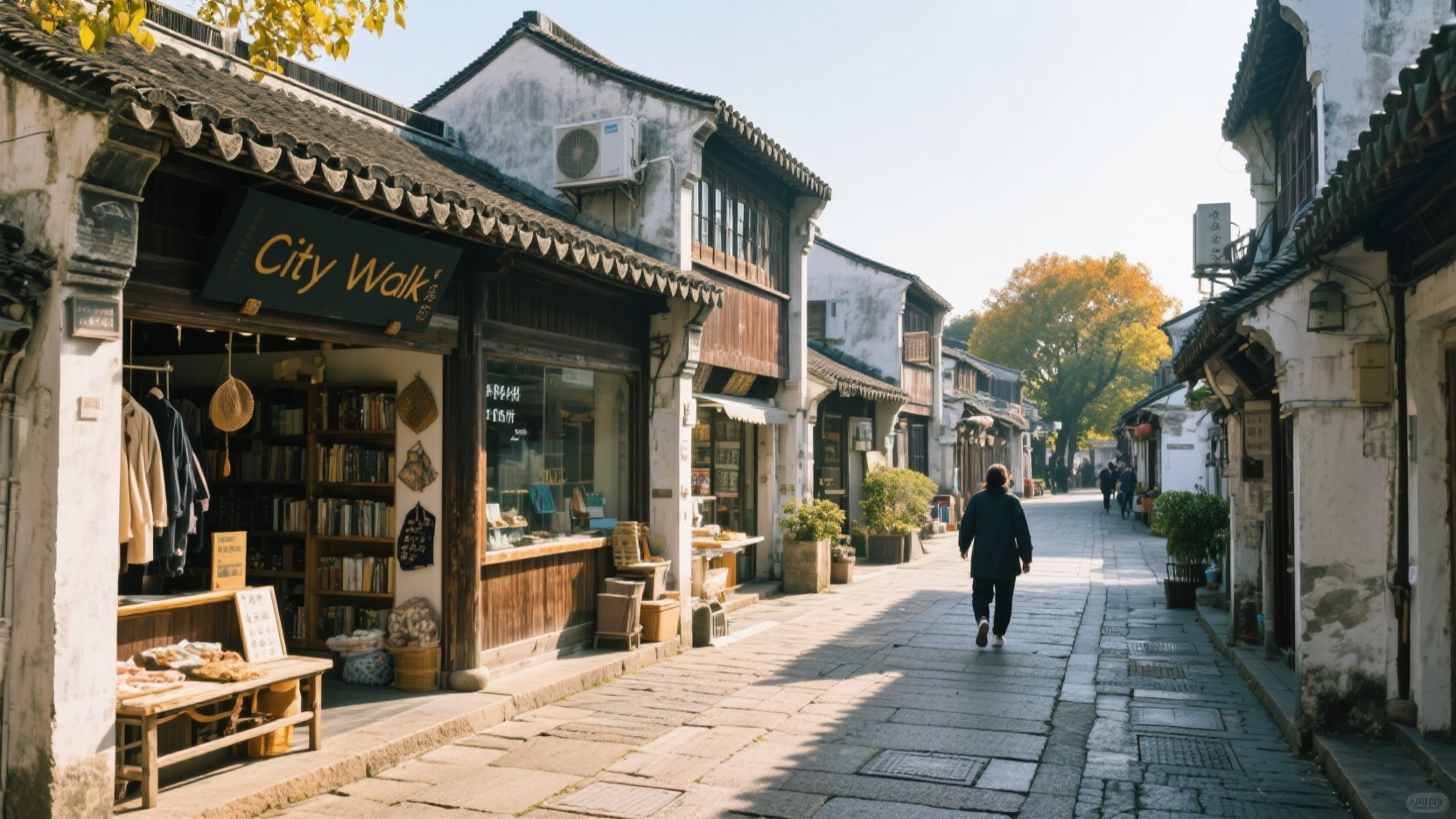
This is the 17th alley I've walked through in Ningbo, but it's the first route that made me get up early and repeatedly retrace my steps for three consecutive days. On my first visit to Ningbo, like most people, I headed straight for Tianyi Pavilion, Gulou Main Street, and the Old Bund, only to be swept along by the crowds and barely get a glimpse of the old city's fabric. Later, I deliberately avoided all the "must-see" spots recommended by navigation apps, instead venturing into the oldest streets of Haishu District from Gulou Metro Station, creating a roughly 4.2-kilometer-long, winding, meandering route: half of it consists of Ming and Qing dynasty courtyards yet to be renovated, and the other half is lined with independent bookstores, vinyl record shops, and community cafes genuinely run by young people. The following is presented in walking order, with each segment's duration indicated and two branching paths included.
1. Xiushui Street - Yongshou Street: First walk along a section of the Ming and Qing Dynasty architecture that is not featured in performances (0-30 minutes, approximately 1.2 kilometers).
After exiting from Exit H of Gulou Metro Station, do not enter the Gulou City Gate; turn left directly into Xiushui Street. Separated from the main street by only a wall, it feels as if time has folded it. Ferns grow at the base of the blue brick wall, and the brick carvings of "Auspicious Purple Qi Comes from the East" can still be discerned on the lintels of the old houses. The blogger's camera position: crouching low at the intersection of Xiushui Street and Daqiao Street, using a wide-angle lens to capture the fragmented blue brick wall and the modern high-rises in the distance in the same frame—a striking contrast between old and new, very much in Ningbo.
Why it's worth stopping for 5 minutes: The Ming and Qing dynasty courtyards around Xiushui Street aren't uniformly painted; the characters on the stone gates, the rusty door knockers, and the blue cloth shirts drying in the sun are all traces of real life, not staged scenery. It's about a 20-minute walk to the entrance of Yongshou Street; this section is almost deserted, and even the sound of camera shutters will seem abrupt.
This section of the road is mostly paved with bluestone slabs. In the early morning, tricycles carrying garbage pass by, so it's advisable to pull over and let them pass. After turning right onto Yongshou Street, you can slow down. Occasionally, the sound of Yue opera can be heard coming from the cracks in the doors of the old houses, which is much more authentic than the background music in tourist attractions.
2. Back gate of Hutong Street Market: The market is closer to the heart of Ningbo than the food street (30-50 minutes, about 0.8 kilometers).
Turning back from Yongshou Street to Hutong Street, I circled around to the back entrance of Gulou Market. There were no signs here, but from 7:30 to 9:30 in the morning, electric bikes, fried dough stick stalls, and Ningbo aunties picking crabs formed a flowing, bustling street scene. The blogger's camera position: standing next to the electric bike shed at the back entrance of the market, using a telephoto lens to capture the steam rising the moment a vendor opens a styrofoam box.
Why it's worth stopping for 5 minutes: This is the only place in the old town where people still loudly haggle in their local dialect. The aromas of salted vegetables, dried yellow croaker, and lye-juice dumplings mingle together, creating a more authentic experience than any imitation antique food street. You can buy a bag of rice buns or lye-juice dumplings to eat on the go; it only costs a few yuan per person and won't fill you up.
If you come across a stall selling pickled crabs, you can just take a picture without asking the price, and remember to nod to acknowledge it after you're done. The trash cans and styrofoam boxes at the back gate of the market aren't dirty or messy; they represent the earliest form of order in Ningbo people's day.
3. Xiaowen Street Branch Line: The turning radius of old houses and independent bookstores from the Republican era (50-90 minutes, about 1.2 kilometers, branch line A)
Cross Zhongshan West Road from Hutong Street and enter Xiaowen Street. This street is lined with rows of Republican-era buildings and old locust trees, their shadows falling on the walls like ripples on water. The blogger's camera angle: Find a half-open old wooden door, use the bookstore entrance frame as the foreground, and photograph the warm-lit bookshelves inside.
Why it's worth stopping for 5 minutes: The independent bookstores on Xiaowen Street don't have tourist-oriented selections; you can find old maps of Ningbo, oral histories of Haishu Old Town, and local photography collections. The bookstore owners are usually unobtrusive, so you can sit down and browse at your own pace.
Tip for Branch Route A: If you don't want to take the main route, you can turn right into Wuhan Lane in the middle of Xiaowen Street and walk along the Yaojiang River promenade to Jiefang Bridge. This route is about 1.5 kilometers longer, and the osmanthus blossoms are very fragrant in autumn. This branch route is suitable for those who want to take photos of the river view, but you will miss the quiet section of Yuehu Lake.
IV. Pocket Park in Yuehu Baokui Lane: Five free spots in the old town for relaxing (90-120 minutes, approximately 0.9 km)
From the south entrance of Xiaowen Street, cross Zhenming Road to enter the west bank of Yuehu Lake, then circle around to Baokui Lane, avoiding the cruise ship dock. Near Baokui Lane is the former site of the Goryeo Embassy; the stone archway and Yuehu Bridge form a natural framed view. The blogger's camera position: standing inside the stone archway and shooting outwards, capturing the bridge, the water, and a ginkgo tree simultaneously in the frame.
Why it's worth stopping for 5 minutes: This is the breathing space of the old town. Most tourists gather on the east bank, while the west bank is only frequented by local elderly people playing chess and listening to birdsong. It's recommended to sit on the stone benches by the lake for a full 5 minutes, listening to the sound of the wind rustling through the metasequoia trees—a more immersive experience of Ningbo's rhythm than rushing around.
The five pocket parks on the west bank of Moon Lake are only a few dozen meters apart, each with a different seating angle. When the afternoon sun shines obliquely from the west, the reflection on the water will illuminate the tree roots, making it a perfect spot for taking low-angle still photos.
5. Yanyue Street - Zhenming Road Branch Line: A final turnaround point for vinyl records, vintage clothing, and coffee shops (120-150 minutes, approximately 1 kilometer, Branch Line B)
Walk along Yanyue Street from the west bank of Yuehu Lake and turn onto Zhenming Road. The storefronts along this stretch are all quite understated, with vintage clothing stores, vinyl record shops, and community cafes tucked away beneath old residential buildings. The blogger's camera angles: the cafe's outdoor window faces the flow of electric scooters on the old street, allowing for a slow shutter speed to capture the contrast between movement and stillness; the vinyl record shop's listening area offers a good opportunity to capture the silhouette of the turning record player against the light.
Why it's worth stopping for 5 minutes: This isn't a trendy street; the selection leans towards a classic aesthetic, you can freely flip through the vinyl records, and many vintage items are one-of-a-kind. The owners won't initiate conversation, but if you ask about a particular old Ningbo record, they might rummage through the back room and pull out even more.
Tip for Branch Route B: If you're short on time, you can head directly along Yanyue Street to Changchun Road, which is about 4.2 kilometers long. If you enter Zhenming Road after 1 PM, most shops will just be opening. This branch route is more suitable for a leisurely finish after afternoon tea.
I walked about 4.2 kilometers along the main route, plus about 5 kilometers along the two branch routes. It would take three to four hours to walk slowly, making it suitable for a solo weekend trip or a half-day trip if you don't want to rush to see the sights. The charm of Ningbo's old town doesn't lie in any famous tourist attractions, but in the old gate towers that suddenly appear around the corners of the streets and alleys, the steam rising from the back door of the market, and an old map in a bookstore.
Practical Tips: 1. Use the restroom before exiting from Exit H of Gulou Metro Station, as public restrooms are scarce along the way; 2. Some courtyards in Xiushui Street are still under renovation, so do not open doors or disturb residents; 3. The area around the market is most vibrant before 10:00 AM, so it is recommended to arrive around 8:00 AM; 4. Independent bookstores, vinyl record stores, and vintage clothing stores mostly open in the afternoon, so it is safer to schedule branch line B in the afternoon; 5. The cobblestone streets in the old city are uneven, so wear soft-soled shoes and avoid carrying a suitcase.