
Ningbo: Between Old Factories and Book Pages | Eight Niche Art Spaces Connecting the City's Spiritual Corners
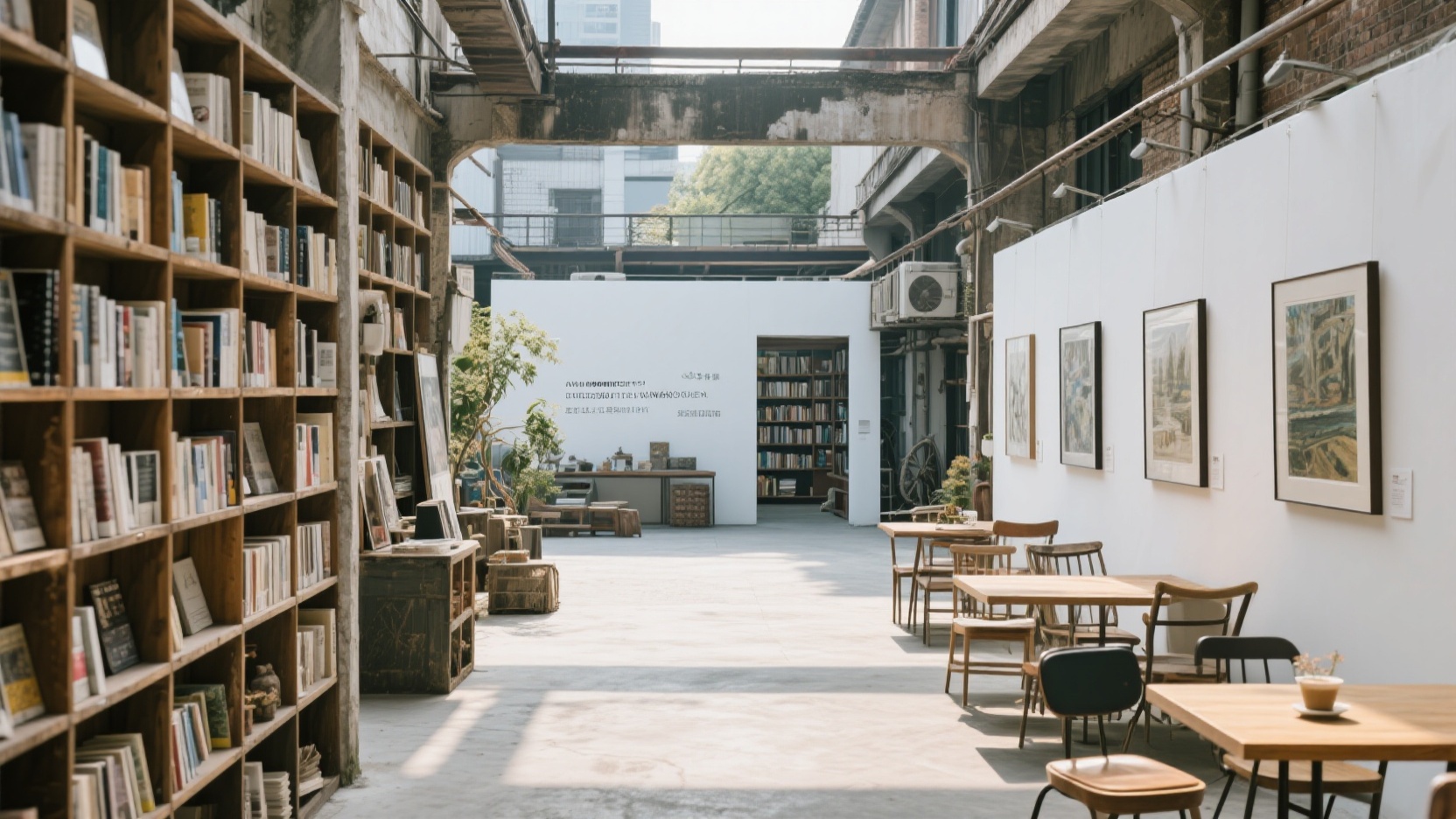
Ningbo's cultural and artistic landscape is not limited to Tianyi Pavilion, the Old Bund, and the Ningbo Museum. For travelers seeking to avoid crowds and delve deeper into the city's fabric, the independent spaces scattered throughout old factories, communities, and parks are even more worthwhile. The following eight locations are roughly grouped by region and can be combined according to transportation accessibility.
Fake Magazine Library: An Underground Stronghold of Visual Narrative
The atmosphere is calm and restrained, with a focus on photography books and independent publications, particularly those related to visual culture, photographic archives, and local creations. The regularly changing photography book wall within the small space is the main attraction, more suitable for browsing than for taking photos. Photography tips: Use the soft afternoon light by the window, utilize the depth of the bookshelves for framing compositions, and turn off the flash to avoid disturbing the reader.
White Art Museum: A white box deep in the park
The building emphasizes geometry and negative space, making it more eye-catching than the exhibition itself. Its white volume and relationship with the water create a unique scene within Yinzhou Park. The permanent contemporary art exhibition is relatively small, ideally requiring about half an hour to fully appreciate. Photography tips: the reflection in the facade and the spiral lines of the staircase are the best subjects for photos; a cloudy day with fewer people results in a cleaner background.
Basement Study: Prioritizing Reading in a Sunken Space
This is an introverted independent bookstore with an entrance slightly below street level and limited seating. The selection leans towards humanities and social sciences, poetry, and local history of Ningbo, making it more suitable for quiet browsing than social media check-ins. The highlights are the owner's handwritten recommendations and the corner dedicated to local literature. Photography tips: the bar seating under warm yellow lighting creates a tranquil atmosphere, and the sunken steps at the entrance add a sense of depth; use a medium to long telephoto lens for compression.
Jihe Plaza Old Goods Warehouse: Urban Memories in an Old Factory
Converted from an old school campus and factory building, this warehouse is filled with ship timber, wooden lattice windows, enamelware, and old furniture left over from the demolition of Ningbo's old city. The mix is eclectic yet harmonious. The highlight is the traces of urban life behind each item, making it a great place to browse smaller pieces or learn about local customs. Photography tips: Use side lighting to enhance the wood grain and enamel textures; avoid wide-angle shots that can make the space feel cramped.
IPN Fishing Vessel Factory: The Industrial Backbone Along the Yongjiang River
Formerly the Ningbo Fishing Vessel Factory, its overhead cranes, cement pillars, and steel structures have been preserved, serving as a backdrop for performances and markets. Quiet during the day, it becomes more vibrant at night, frequently hosting irregular performances and temporary exhibitions. The highlight is the combination of industrial heritage and river views. Photography tips: Shoot the factory's outline and the river surface during the evening blue hour; shooting from below the walls inside creates more visual tension than shooting at eye level.
WAS Art Center: Youthful Expression on White Walls
Hidden within a renovated old factory complex, the space is small but the exhibits change frequently, primarily featuring contemporary art by young artists. The atmosphere leans towards the minimalist style of international galleries, with clean layouts that allow for close-up viewing of the artworks and materials. Photography tips: Take close-up shots of installations against the white walls; standing to one side of the wall can increase the sense of scale; avoid taking photos of glass reflections.
Community cafes: vantage points for observing the daily life of the neighborhood
Ningbo boasts a high density of community coffee shops, exemplified by db coffee. Choosing a small street-facing shop and ordering a hand-drip or espresso allows you to observe local life. The appeal isn't in the ambiance, but in the consistent quality of the coffee and the proximity to a window. Photography tip: utilize natural window light, place your coffee cup on the windowsill, and blur the background with street figures and tree shadows for a more everyday feel.
Du'ao Art Museum: Transformation of an Old Grain Depot in a Valley
If time permits, head west to Zhangshui Town in Haishu District. The Du'ao Art Museum, converted from an old grain depot, blends seamlessly into the valley, with a limited and restrained exhibition. The highlights are the relationship between the architecture and the natural terrain, and the interplay of light on the walls at different times of day. Photography tips: Take photos from a distance showing the building alongside the mountain; once inside, look for angles where light and shadow intersect, avoiding harsh midday light.
Explore the spiritual corners of this city with your footsteps.