
A leisurely trip to Nantong with parents | Blogger's personal experience: 5-day, 4-night itinerary with no stairs to climb; elevators, lunch breaks, and hospital checklist + packing list for seniors.
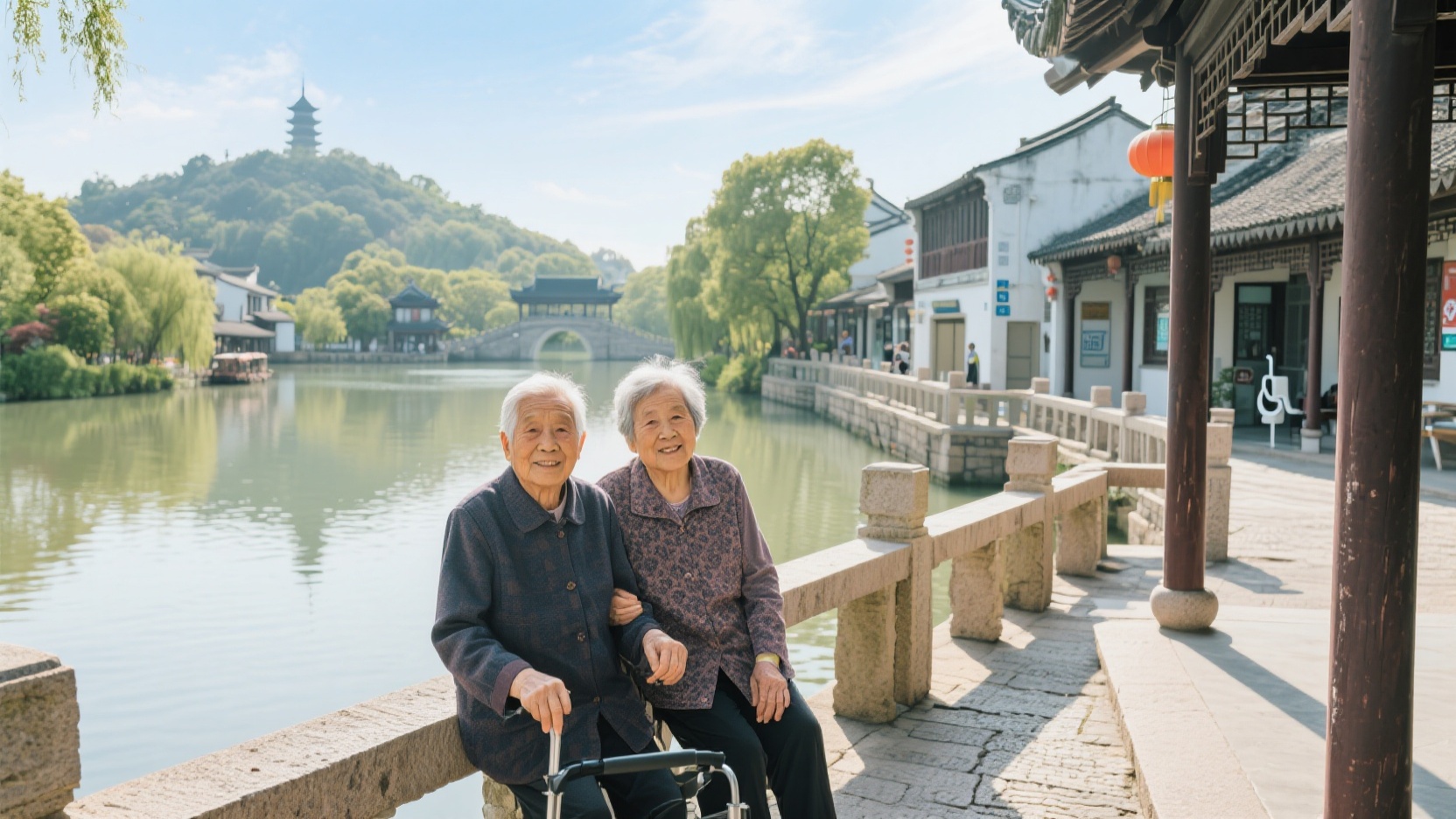
I took my parents to Nantong for five nights. Before we left, I checked all the attractions based on factors like "how much walking is required, whether there's an elevator, and how far is it from a hospital." This route doesn't follow popular photo spots; it only addresses three things: less climbing stairs, less needing to hold your pee, and uninterrupted lunch breaks.
I. Accommodation and Day 1: Staying by the Haohe River, walking only on flat ground and not rushing to see attractions.
Nantong's old town isn't very big, so for families with elderly members, the areas around the Haohe River or South Street are the best choices. Hotels must have elevators, and ideally, the bathrooms should have separate shower and toilet areas. The hotel I stayed at this time was about 800 meters from the Haohe River Greenway and about a 15-minute drive from the top-tier hospital in the old town, which was essential for a good night's sleep every night.
The first day's itinerary only includes the Haohe River. Walk slowly from the hotel to the riverbank, choosing the gentle south bank path for about half an hour before sitting down; avoid a long walk around the entire river. The Haohe River cruise is senior-friendly; there are benches at the dock, and you can sit inside the cabin to enjoy the views of both banks, which is less strenuous on the knees than walking along the river. Return to the hotel before 11:30 AM, have lunch nearby, and return to your room promptly at noon for a two-hour nap. Then, go out again at 3 PM to find a teahouse along the river to sit in until evening.
The accessible pathways on this route aren't perfect, but the main walkway is smooth and the toilets are spaced appropriately. My principle is: whenever we pass a visitor center or teahouse, I go in to use the toilet first, without waiting for the elderly to call out.
Day 2: Take your time exploring the indoor exhibits of Nantong Museum. Prioritize elevators and restrooms over exhibits.
The next morning, I visited the Nantong Museum, which is quite friendly to senior citizens: the indoor exhibition halls have elevators and accessible ramps, and there are restrooms on every floor. The outdoor gardens are shady with plenty of benches. My route was to only visit the main exhibition halls and the adjacent garden paths, keeping the total walking distance under two kilometers, and taking a break every half hour.
The museum's indoor air conditioning or heating is quite strong, so please bring an extra light jacket for your parents. Wheelchair access can be obtained near the information desk; some exhibition halls have single-level entrances, eliminating the need to climb stairs. We'll return to the hotel for a two-hour lunch break as usual. There are no sightseeing planned for the afternoon; we'll only stop at a nearby pharmacy or supermarket to stock up on supplies.
There's not much to worry about in terms of proximity to hospitals at level two or above. Medical resources are concentrated in the old town, and there are signs pointing to hospitals on the way back to the hotel from this route. The journey is generally within fifteen to twenty minutes.
Day 3: Choose either Tangzha Ancient Town or Rugao Hot Springs. A midday rest is still mandatory.
On the third day, plan a visit to a key destination. Avoid spending the morning in an ancient town and the afternoon at a hot spring; it's too strenuous for older people. If you're relatively mobile and enjoy a nostalgic trip, go to Tangzha Ancient Town; if you want complete relaxation but are sensitive to cold, go to Rugao Hot Springs. Choose one.
My personal experience in avoiding pitfalls at Tangzha Ancient Town: Only walk the middle section of the main street, keeping the one-way distance under 1.5 kilometers. Avoid turning into the old alleys, as the stone-paved roads, though smooth, have unevenly distributed restrooms. First, go to the visitor center to find out the location of accessible restrooms before starting your exploration. The nearby secondary hospital is about a 20-minute drive away; although not far, try to avoid having your parents hold their urine or climb old buildings.
The Rugao hot spring tour is perfect for truly slowing down. Choose a hot spring with indoor pools, and the changing area should ideally have benches and non-slip mats. Elderly people should not soak for more than fifteen minutes at a time, and warm water should be readily available nearby. Hot spring resorts usually have medical rooms, but it still takes about an hour to drive back to Nantong city, so finish before 2 pm, return to your accommodation for a two-hour nap, and then have dinner.
Days 4 and 5: At Langshan, we'll use a shuttle bus instead of hiking; at Siyuan Garden, we'll only travel along the main road.
On the fourth day, we went to Langshan Mountain, but didn't climb to the summit. Langshan has quite a few steps, so we took our parents directly to the halfway point by shuttle bus or shuttle vehicle, then walked slowly along the railings for a short distance before turning back. There are accessible restrooms at the visitor center at the foot of the mountain, and the main entrance is less than 500 meters from the waiting area. It's about a 25-minute drive to a top-tier hospital in the city. If our parents experience palpitations or shortness of breath, we immediately descend without hesitation.
On the fifth day, we only visited Sik Yuen Garden. The main path is gentle, with dense shade and plenty of benches, so we could rest after walking for about half an hour. We didn't need to walk the entire garden; we chose a loop route near the main gate, which took about an hour. Before checking out at noon, we let our parents lie down for another half hour to avoid the peak travel season on our return trip in the afternoon.
V. Blogger's Summary and 20-Item Packet List for Seniors + 5 Categories of Commonly Used Medications Reminder
My biggest takeaway from five days and four nights: Nantong is suitable for a slow trip with parents, provided you shift your focus from "visiting attractions" to "living the life." Plan only one or two key destinations each day, return to the hotel around noon for a two-hour nap, and then head out again after 3 pm; prioritize accommodations with elevators and close to hospitals; prioritize indoor attractions, those on flat ground, and with plenty of restrooms.
Packing List: 1. Folding cane; 2. Non-slip soft-soled shoes; 3. Commonly used medicine containers; 4. First aid card with medical history and emergency contact information; 5. Portable stool; 6. Thermos cup; 7. Knee pads; 8. Sun hat and umbrella; 9. Spare adult incontinence pad; 10. Wet toilet paper; 11. Disposable slippers; 12. Spare batteries for reading glasses and hearing aids; 13. Portable blood pressure monitor; 14. Night light; 15. Anti-lost contact card; 16. Light wheelchair or local rental instructions; 17. Hand warmers or cooling patches; 18. Sugar-free biscuits and nuts; 19. Tissues and disinfectant wipes; 20. Copies of medical insurance card and ID card.
Five categories of commonly used medications: First, antihypertensive, hypoglycemic, and cardiovascular medications, with original packaging and prescriptions; second, gastrointestinal medications, such as montmorillonite powder and probiotics; third, cold, fever, and pain relievers; fourth, external medications, such as adhesive bandages, iodine swabs, and plasters; and fifth, antihistamines and motion sickness medications. All medications should be carried with you in your baggage, not checked in.