
A Slow-Paced 7-Day Itinerary in Nantong: A 7-Day, 6-Night In-Depth Guide, Choose Between Nearby Ancient Towns and Hot Spring Reserves
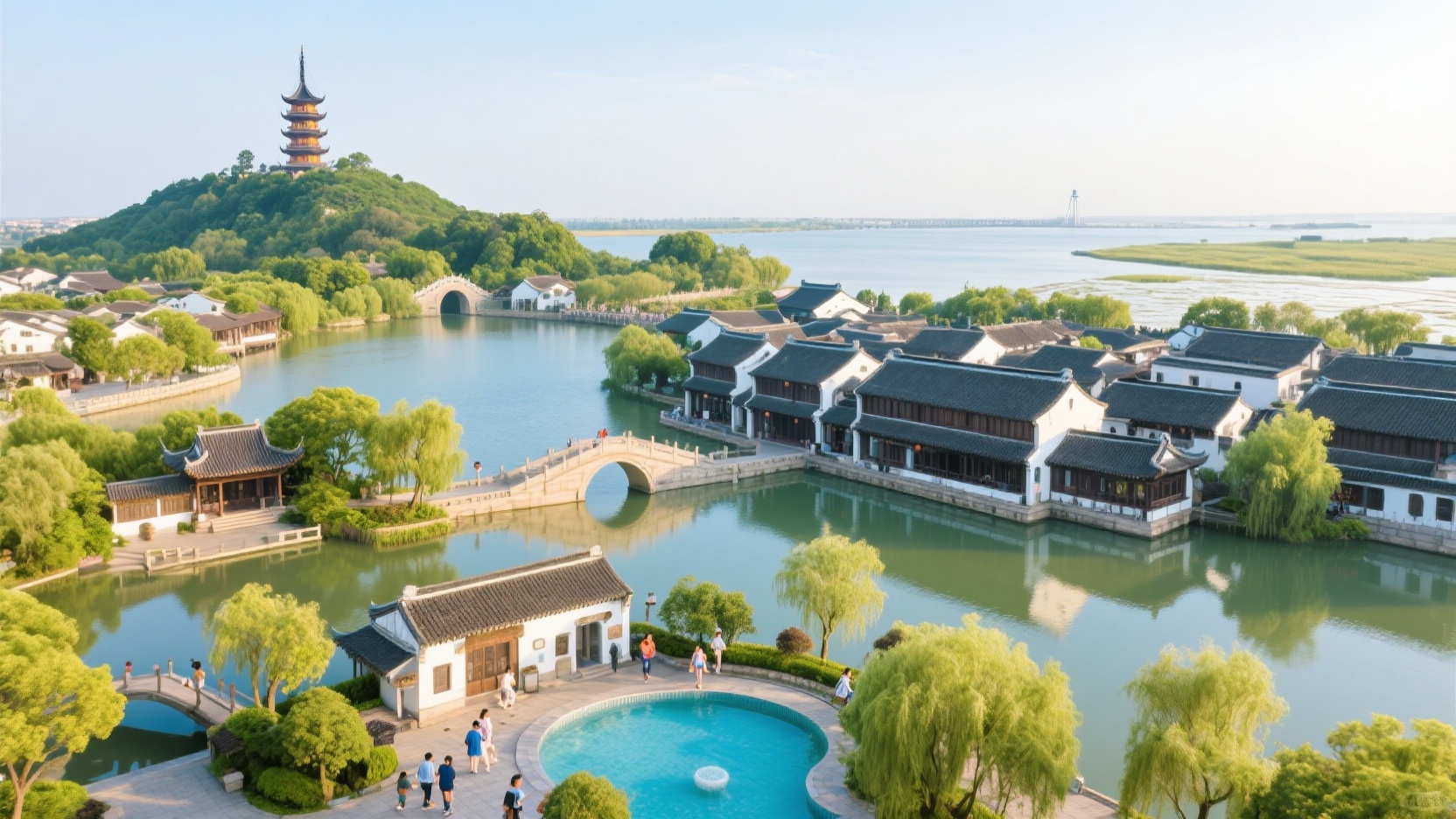
Day 1: Arrive in Nantong, adjust to the rhythm of the night with the Haohe River scenery.
After arriving in the afternoon, check into accommodations near the Haohe River. First, visit the Nantong Museum. This is one of the earliest museums in China, founded by Zhang Jian. The exhibition halls and gardens are connected, making it a pleasant place for a leisurely stroll. In the evening, take a walk along the Haohe River promenade or enjoy a nighttime boat trip, focusing on the Sanyuan Bridge and Wenfeng Pagoda area. No long-distance activities are scheduled for the day.
Day 2: Slow hike up Langshan Mountain and enjoy the breeze by the river.
In the morning, visit Langshan Scenic Area. Choose the gentle hiking route on the south slope or take the cable car. Elderly people and children don't need to climb to the top; the Yangtze River can be seen from the Guangjiao Temple platform halfway up the mountain. After lunch outside the scenic area, spend the afternoon exploring Binjiang Park and the Wushan Trail. The riverside trail is gentle and suitable for strollers and wheelchairs. The main attraction is seeing cargo ships and the Shanghai-Suzhou-Tongzhou Yangtze River Bridge.
Day 3-Day 4: Choose one of the following: a nearby ancient town or a hot spring nature reserve.
This itinerary offers two branch routes. Before setting off, choose one based on your physical condition and interests; do not combine the two.
Route A: Slow travel through suburban ancient towns and gardens
Day 3: In the morning, visit Tangzha Ancient Town to see the Dasheng Textile Factory, the Bell Tower, and the old factory buildings along the canal. The industrial heritage area has flat roads and moderate shade. Have lunch by the Tangzha River. In the afternoon, stroll along the Tongyang Canal Trail and return to the city. Day 4: Visit Rugao Shuihui Garden and the Dongdajie Historical and Cultural District. Shuihui Garden has many bridges and few steps, making it suitable for leisurely walking. Dongdajie retains old brick houses on both sides, and you can find riverside teahouses to rest.
Route B: Hot Spring and Nature Reserve Buffer Tour
Day 3: Head to Rudong Xiaoyangkou Hot Spring Resort. Enjoy a soak in the hot springs in the morning, and visit the windmills and mudflats at Xiaoyangkou beach in the afternoon. Return to the hotel in the evening. Day 4: Visit Rudong Spoon-billed Sandpiper Wetland or nearby mudflat wetlands. Choose the boardwalk for birdwatching, avoiding deep into the mudflats. Binoculars are recommended. This route is heavily dependent on the weather; check boardwalk availability during the rainy season.
Day 5: Botanical Greenhouse and New City Park served as a mid-day rest stop.
Whether it was the ancient town or the hot springs the day before, slow down today. In the morning, visit the Nantong Intercontinental Green Expo Park. The indoor greenhouse is unaffected by the weather, and the tropical and desert plant areas are particularly attractive to children. In the afternoon, stroll around Zilang Lake Park or the exterior of the Nantong Grand Theatre. The lakeside path is gentle, and you can rent bicycles or strollers for a leisurely walk.
Day 6 Qidong Yuandujiao and Golden Beach
Allocate one day to Qidong Yuandujiao, located at the confluence of the Yangtze River, the Yellow Sea, and the East China Sea. A flat walkway connects the landmark square to the mudflats. It's windy at the beach, so umbrellas are not suitable; prepare a windproof jacket. In the afternoon, visit Golden Beach for sand digging and mudflat walking; swimming is not planned. Allow approximately two hours for your return trip back to the city.
Day 7: Return trip after finishing at the city park.
On the last day, only one of the two parks, Siyuan or Wenfeng Park, is planned. Siyuan has flat green spaces, Zhang Jian's tomb, and a memorial forest, making it suitable for a stroll; Wenfeng Park is closer to the Haohe River, offering opportunities to take photos of the city's morning scenery. If you are returning late, you can visit the Nantong Museum to see the temporary exhibitions.
Recommended gentle slope routes suitable for the elderly and children
For Langshan Mountain, choose the south slope or cable car and avoid the steps on the north slope; for the Haohe River loop, we recommend the section from Wenfeng Park to Nantong Museum, which is entirely along the water and has no slope; for Yuandujiao, only walk on the paved road from the square to the seawall; the main roads inside the Intercontinental Green Expo Park and Siyuan Garden are all without steps, making them suitable for wheelchairs and strollers.
List of frequently used local apps
For public transportation inquiries, use "Changxing Nantong" and "Nantong Metro" for relatively accurate real-time arrival information. For inter-district travel to Rugao, Qidong, and Rudong, it's recommended to use Gaode Maps or Baidu Maps to check intercity bus and charter bus routes. For food delivery and local services, Meituan and Ele.me offer comprehensive coverage. Download offline maps before your trip, as signal strength is weak in some mudflat areas of Qidong and Rudong.
Clothing suggestions for rainy and dry seasons
Nantong's plum rain season is concentrated from June to early July, characterized by significant humidity and heat. It is recommended to bring quick-drying short-sleeved shirts, a light sun-protective jacket, and non-slip sports shoes. Bring a folding umbrella when going out during the day. Autumn and winter, from November to March of the following year, are damp and cold, with strong winds along the coast. A windproof jacket or light down jacket is necessary. The temperature difference between indoors and outdoors is not significant, but it feels colder near the river. Spring and autumn are the best times for leisurely travel, with a temperature difference of about eight to ten degrees Celsius between day and night. Layering is recommended.