
Exploring the Flavors of Nantong's Markets: 10 Local Delicacies Locals Frequently Buy at Duanpingqiao Old Market
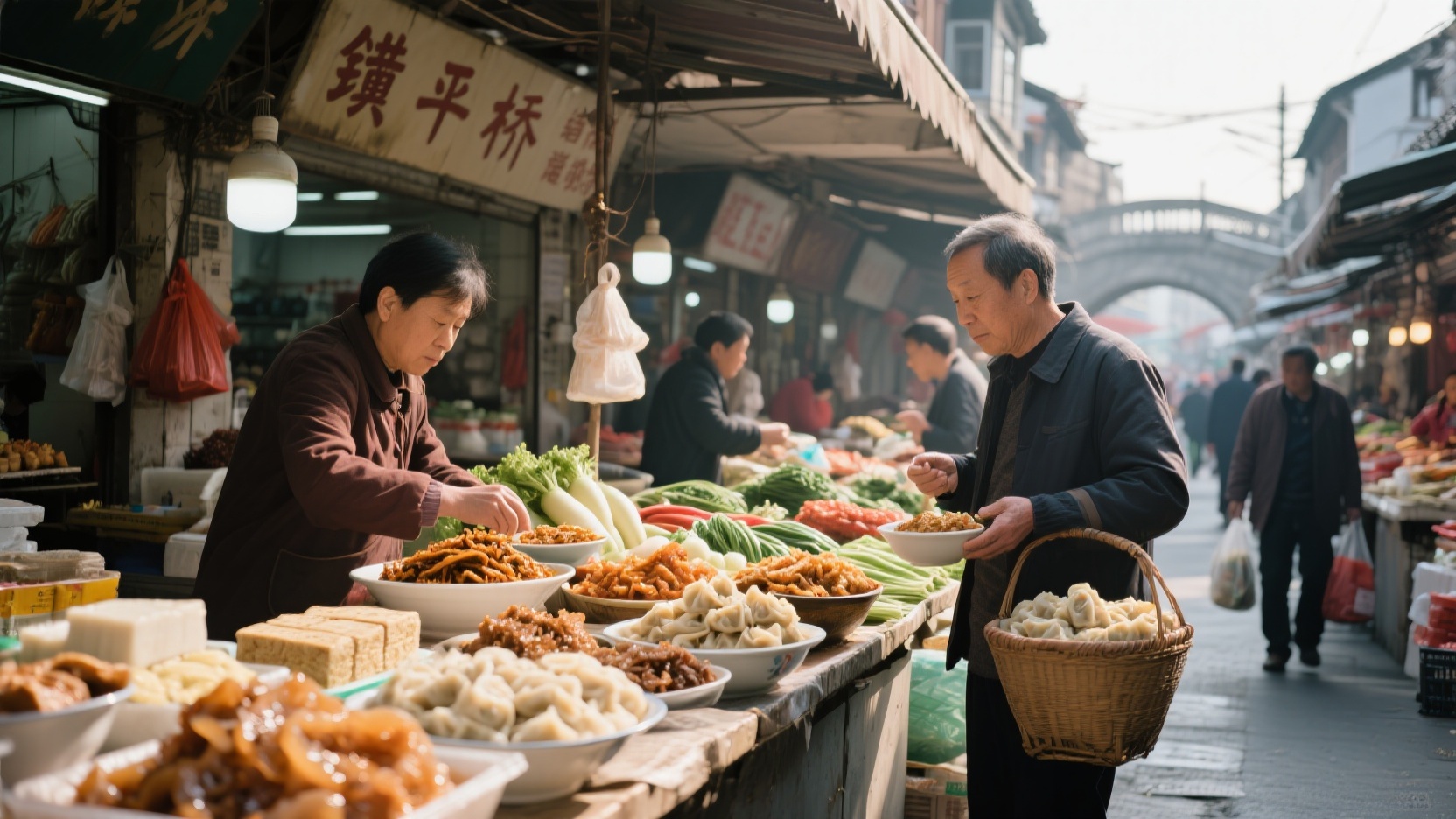
The Duanpingqiao Farmers Market in Nantong's old city wakes up as early as 5 a.m. It's one of the oldest and most authentically local farmers markets in Nantong; the nearby Xinyuan Road Farmers Market, on the other hand, retains a more intimate community shopping atmosphere. Neither market is particularly well-organized, but both offer many unique items that are hard to find outside of Nantong. Below, we've compiled ten must-buy local products, categorized by stall type.
Deli and handmade snacks
Cold-steamed wheat kernels are a springtime specialty of Nantong, often sold in markets by farmers from the suburbs in straw bundles. When selecting them, look for a natural, bright green color; a handful should feel firm and not crumble, and they should have a sweet, raw wheat aroma. If the color is yellowish or watery, they are no longer fresh. The most straightforward way to eat them is with white sugar, but they can also be slowly stir-fried with a little oil, which brings out the wheat flavor. Cold-steamed wheat kernels are highly seasonal; once you miss the period around Qingming Festival, they are hard to find.
Gangpan is a unique type of flatbread from Nantong, long and thick, densely covered with sesame seeds. There are usually two types at the market stalls: one savory with scallion oil, and the other with local shrimp roe. When choosing, select one with a slightly charred bottom, a substantial feel, and a strong sesame aroma; avoid those that are too dry or hard. As for how to eat it, older Nantong residents typically tear it open, add a fried dough stick, and enjoy it with soy milk, or eat it plain. The shrimp roe version has a more granular texture and a richer umami flavor.
Dumplings are a star attraction at the market's deep-fry stalls. Shaped like a half-moon, their filling is primarily shredded radish and minced meat, with red bean paste being a common filling. Good dumplings have a golden-brown skin, the pinched edges don't leak oil, and when broken open, you can see steam and juice. They must be eaten hot; the skin hardens as they cool. You can ask them to fry them fresh when you buy them; if the vendor is willing to wait two minutes, the taste difference is significant.
Linzi Chaogao (林梓潮糕) originates from Linzi, Rugao, and can often be found in handmade pastry stalls selling freshly steamed, cut pieces. Good Chaogao should have evenly distributed fine pores on its surface, slowly spring back when pressed, and have a delicate, non-sour rice aroma. At home, you can steam it for three to five minutes to restore its softness, or enjoy it chilled; pairing it with tea enhances its sweetness. When choosing a piece, ask the vendor to cut a small piece to taste; its freshness will be immediately apparent.
Pickled and preserved vegetables and bean products
Rugao dried radish is available in almost every pickle section of Nantong's vegetable markets. When choosing it, select those with slightly wrinkled skin, a bright yellow color, and distinct strips; they should feel crisp and not sticky when squeezed. If the surface is too moist or the color is dark, it may have been stored for a long time. It is salty with a hint of sweetness, and it's best served diced with white porridge. It can also be soaked to reduce the sweetness and then stir-fried with edamame, a staple summer dish for Nantong locals.
Tongzhou Shigang fermented bean curd is mainly made in red and fermented varieties, and is usually sold in bulk by weight at the market. Choose whole, unbroken pieces of fermented bean curd with clear brine without a white film, and smell of fermentation rather than sourness. Besides eating it directly with rice porridge, you can also take two pieces, mash them, marinate them with pork belly, and steam them as fermented bean curd pork. After buying bulk fermented bean curd, transfer it to a clean container and refrigerate it to prevent flavor transfer.
Baipu dried bean curd is a small, square-shaped dried bean curd from Baipu Town, Rugao. It has a dark brown color, a firm texture, and a subtle bean aroma with a slightly sweet aftertaste. When selecting it, check that the edges are neat, it is elastic but not sticky when squeezed, and the surface is not slippery. It is best served cold with tea, or sliced and mixed with celery and herbs without adding extra salt. If you buy too much, you can refrigerate it and let it come to room temperature before eating.
In the cured meat section of Rugao, the lean-to-fat ratio of sausages is usually close to 3:7 or 4:6. Choose sausages with intact casings, a clear distinction between red and white on the cut surface, and a springy texture when pinched; after steaming, the aroma of wine and meat will come out simultaneously, and they are suitable for slicing and eating directly or stewing with rice. If you see sausages that have been air-dried around the twelfth lunar month, you can buy a couple more, as they can be stored in the refrigerator for a long time. Do not choose sausages with a grayish cut surface or cracked casings.
Seafood and seasonal fruits
Nantong is located by both the river and the sea, and jellyfish heads and skins are commonly found at seafood stalls and pickling stands in the markets. When choosing jellyfish heads, select those with thick, firm flesh, a natural pale yellow color, and no unpleasant odor; those that are too white may have been over-processed. At home, soak them repeatedly in clean water to remove the salt, then cut them and toss them with minced garlic, balsamic vinegar, and sesame oil for a crisp and refreshing taste, more substantial than many restaurant versions. Jellyfish skin is best cut into strips, quickly blanched, cooled, and then tossed.
Fruit stalls in both markets often offer produce from the suburbs of Nantong: Haimen strawberries in late spring, Rugao yellow peaches and riverside watermelons in summer, and local crisp pears in autumn. The principle is to only buy what is in season and only what the stall owner allows you to sample. For yellow peaches, choose those with a strong aroma and slightly soft flesh; for riverside watermelons, look for fresh stems and a dull sound when tapped. Most of these fruits cannot withstand long-distance transportation and will not retain the same flavor once they leave their place of origin.
Exploring a local market is the best way to experience a city. Markets aren't tourist traps; they cater to locals' daily meals. The true flavor of Nantong isn't found on fancy restaurant menus, but in the clatter of oil pans at Duanping Bridge in the early morning, the savory aroma of pickled vegetables, and a small piece of steamed rice cake casually offered by a vendor. To truly understand Nantong, set aside half a day to leisurely explore a market before deciding what to have for lunch.