
A Pictorial Guide to Three Meals a Day in Nantong: From Breakfast Pot-Shaped Rice Cakes to Late-Night Noodle Soup, the Street Food of this Coastal City
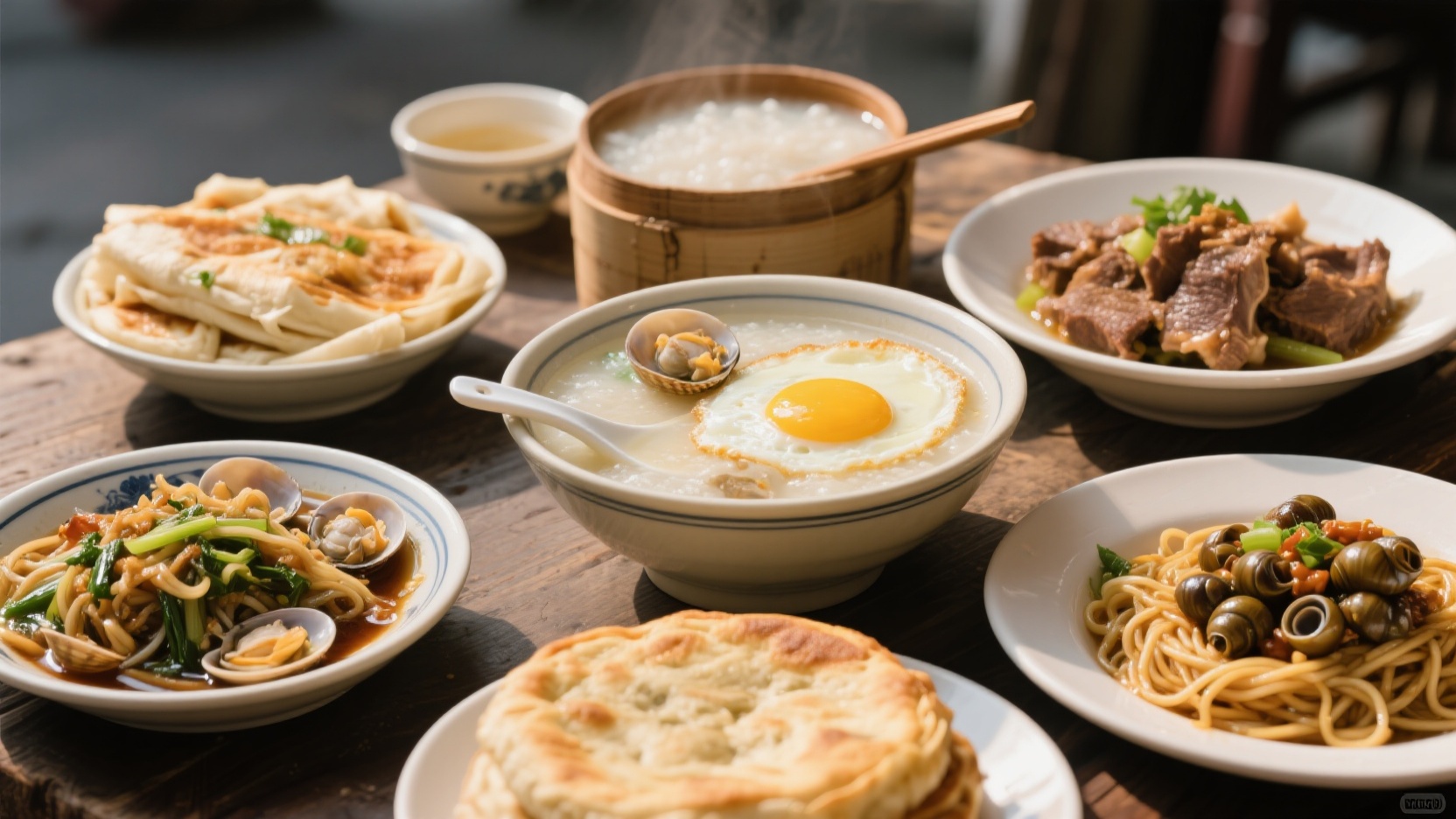
At 5:30 a.m., breakfast stalls in Nantong's old town awaken before the city itself. Located at the mouth of the Yangtze River, where fresh and saltwater meet, Nantong offers both river and seafood. Its everyday flavors are influenced by Huaiyang cuisine, characterized by a savory, slightly sweet taste and meticulous attention to cooking techniques. The locals' culinary clues lie not in tourist attractions, but in markets, alleyways, and noodle stalls lit up late at night. Following the locals' timeline for a day offers a deeper understanding of the city than visiting tourist spots.
Breakfast: Fried dough sticks sandwiched in a clay pot, served with a bowl of rice porridge.
"Gangpan" is a unique type of baked flatbread from Nantong, named for its resemblance to fragments of a water vat. The dough, fermented with old dough, is rolled out, spread with lard, sprinkled with scallions and sesame seeds, and then baked against the inner wall of a charcoal oven over a high, even heat. Freshly baked Gangpan has a crispy exterior and a soft interior, with a savory aroma of scallion oil. The savory version is the most common, though a few are sweet. Locals often slice Gangpan in half, add a fried dough stick, and serve it with a bowl of "Qizi porridge." Qizi porridge is a traditional dish from Rugao and Hai'an areas. It's made by mixing wheat flour into a thin paste, cooking it with rice until the grains bloom, resulting in a reddish-brown color, a smooth texture, and a subtle sweetness from the grains. Served with a side of pickled radish or salted duck egg, it's a staple for Nantong locals, a way to wake up their stomachs in the morning.
Lunch: Cabbage, clams stewed with eggs, and braised mutton from Haimen.
During lunchtime, the most popular local dish in small restaurants is "Nantong First Dish." This dish is made by stewing fried pork skin, fish balls, meatballs, egg dumplings, quail eggs, wood ear mushrooms, and bamboo shoots together in a rich broth. The fried pork skin is soaked in advance to absorb the broth, and the fish balls are handmade, resulting in a soft and elastic texture. The mixed ingredients blend together in a clear broth. People in Nantong consider this dish a "family reunion," and while the ingredients can be varied according to budget, pork skin and fish balls are essential. Originally the first hot dish served at Nantong banquets, it is now served in small bowls on everyday tables, retaining its sense of ritual for entertaining guests and celebrating festivals.
Living by the sea, people rely on the sea for sustenance. "Clam and Egg Stew," made by steaming Rudong clams with egg, is a quintessential delicacy on the Nantong table. The clams must first be kept alive until they purge all sand, then the shells are removed and the meat extracted. Eggs are beaten with warm water and steamed with the clam meat until the egg surface is set. A drizzle of light soy sauce and a sprinkle of chopped scallions complete the dish. The steamed egg is smooth as pudding, the clam meat tender and sweet, and the salty freshness of the sea complements the aroma of the egg perfectly. It's a simple dish, yet requires exceptional skill in controlling the heat.
Braised Haimen mutton is a common lunch choice in winter. Haimen goats are raised in the sandy areas of the Yangtze River Delta, resulting in tender meat with a mild gamey flavor. The mutton, skin and all, is cut into chunks and stewed with Shaoxing wine, soy sauce, rock sugar, ginger, and white radish. The radish absorbs excess oil and adds a touch of sweetness. The mutton is tender and falls off the bone, the skin and fat are soft and melt-in-your-mouth, and the broth is slightly sweet and not gamey at all. A pot of braised mutton with white rice is the most comforting way for locals to combat the damp, cold river winds.
Afternoon tea: Xiting crispy biscuits with tea
In the late afternoon, around three or four o'clock, the common afternoon snack for Nantong locals is "Xiting Crispy Cake," produced in Xiting Town, Tongzhou District. This long, crispy cake is made by repeatedly folding and rolling out a dough, then baking it until it's covered in sesame seeds. When broken open, you can see its fine, flaky layers; some pieces can have more than ten layers. The first taste is the aroma of sesame, followed by layers of crispness and a subtle sweetness. It pairs well with either green or black tea; it can also be eaten dry or soaked in milk or soy milk. Older Nantong residents are accustomed to breaking the crispy cake into small pieces and chewing slowly; it's a common afternoon tea treat found in offices and living rooms.
Late at night: Nantong-style noodles and stir-fried snails with soy sauce
Late at night, a bowl of "Nantong Jumping Noodles" is a comforting treat after a long day at a noodle shop. Also known as Cao Gong noodles, the dough is repeatedly pressed and rolled on bamboo poles, resulting in thin yet chewy noodles. The broth is made with pork bones and shrimp roe soy sauce, a traditional Nantong seasoning known for its savory flavor derived from freshwater shrimp roe. Toppings include pickled mustard greens with shredded pork, pork chops, or smoked fish. The noodles are smooth and chewy, and the broth is flavorful yet clear. A bowl of this late at night relaxes both the stomach and the nerves.
"Stir-fried snails with soy sauce" at roadside stalls is a popular social food for late-night snacks in Nantong. The green-shelled snails are fattest around the Qingming Festival. After the tails are trimmed and the snails are purged of sand, they are stir-fried in hot oil with scallions, ginger, garlic, dried chili peppers, soy sauce, sugar, and Shaoxing wine. The snail meat is firm and chewy, and the sauce is savory, slightly spicy, and irresistible. A group of people chatting while enjoying snails create the most vibrant and down-to-earth sounds of a summer night in this riverside town.
From the steamed rice cakes of dawn to the late-night noodles, Nantong's daily meals don't rely on elaborate tricks, but rather on infusing every bite with river and sea ingredients and home-style cooking techniques. From the main streets to the back alleys, experience the city through its diverse cuisine in a single day.