
Discover Liuzhou Deep Within the Market: 10 Hidden Gems of Qingyun Old Market
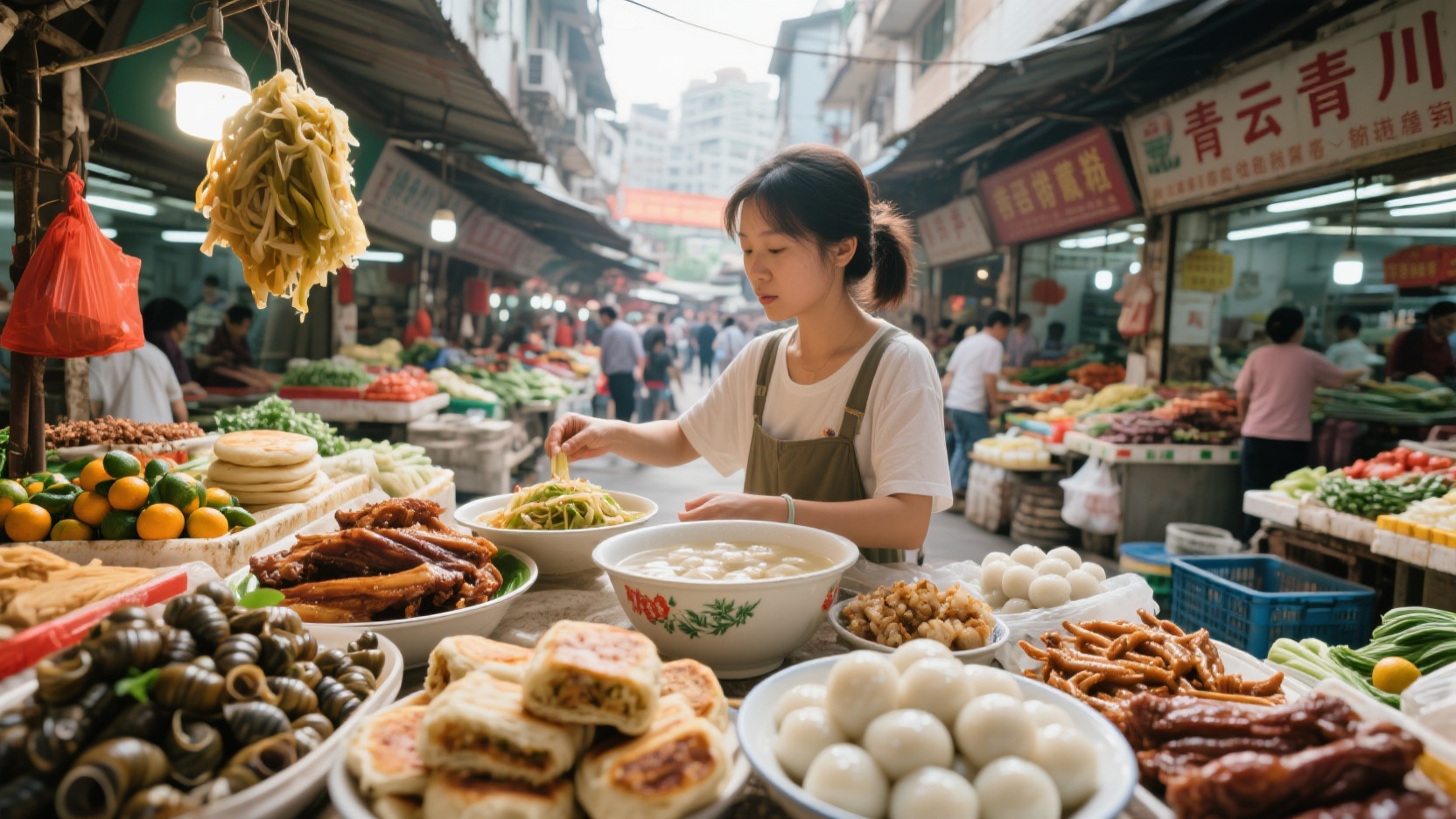
Locals in Liuzhou call Qingyun Market their "city stomach," and for good reason. At 5:30 a.m., the pickled bamboo shoot jars awaken before the rice noodle steamers, filling the air with the sour aroma of fermentation and the smell of rice milk. If you want to avoid the must-try street food and truly understand the sour, spicy, glutinous, and fragrant flavors of Liuzhou, visiting the market is a more direct way to experience it than queuing at trendy restaurants.
The following focuses on Qingyun Market, while also examining Qianjin Market in Liunan. Ten local specialties are highlighted by stall type, including selection and preparation methods. The two markets have slightly different focuses: Qingyun Market excels in its concentration of cooked food and handmade snacks, while Qianjin Market is more renowned for its pickled and preserved vegetables.
Pickled bamboo shoots and Liuzhou sour flavor: First, learn to smell the "fermentation aroma".
The closest stall to the entrance of Qingyun Vegetable Market is usually the pickled bamboo shoot stall. Liuzhou pickled bamboo shoots and Guilin pickled bamboo shoots share the same origin, but Liuzhou emphasizes a "crisp yet sour" flavor. The color should be off-white with a yellowish tinge, and it should have a naturally fermented lactic acid aroma, not a pungent, sour smell. Choose shoots that feel plump to the touch, have no slimy surface when cut, and short segments for a more tender texture. Don't wash them excessively after buying them. When stir-frying snails, rice noodles, or beef, dry-fry them briefly in a pan to bring out their aroma. Next to them is often "Liuzhou pickled vegetables," made with rice vinegar, sugar, and chili peppers, including radishes, papayas, cabbages, and lotus roots. Choose those with clear juice and still crisp flesh. It's best to buy and eat them immediately; they tend to soften overnight.
Handmade pastries: Bean flour buns must be eaten fresh.
Handmade snack stalls in the market usually open before 8 a.m. Doufenmo (豆粉馍), a unique glutinous rice snack from Liuzhou, is coated with cooked soybean flour and filled with sesame seeds, peanuts, or savory minced meat. When choosing, check if the outer skin is soft and doesn't collapse, and if the soybean flour is fine and without lumps; it's best if it's slightly warm to the touch, as the skin hardens when cold, significantly reducing its flavor. Dew-covered glutinous rice balls (露水汤圆) are also savory, with a glutinous rice skin filled with minced meat, wood ear mushrooms, and shiitake mushrooms. They're eaten by drizzling a spoonful of bone broth, sprinkling with chopped green onions and a little white pepper—the broth is clear and the filling is fresh. Taro cake is cut into pieces in a steamer; choose cakes with evenly distributed taro shreds and slightly browned edges. Ask the vendor for extra crushed peanuts and sauce for a more complex texture.
Cooked Food Stall: Reheating Techniques for Snails, Duck Feet, and Roasted Sausage
The cooked food stalls in the middle section of Qingyun Market are a shortcut to dinner for working people. For snails and duck feet, choose those with intact skin and a deep, bright red color. Don't microwave them directly at home; it's recommended to cook them with the broth, add half a spoonful of pickled bamboo shoot water and a few fried peanuts, and simmer over low heat for three minutes to allow the duck feet to absorb the broth again. For braised sausage, look at the cross-section; the ideal ratio is about 3:7 fat to lean meat, with a firm casing and a slightly moist center. Slicing and eating it cold best brings out the wine aroma, or you can steam it on top of rice to let the cured meat seep into the rice grains. In Liuzhou, stuffed tofu is often made by stuffing fried tofu with glutinous rice, taro, and minced meat. Choose tofu that feels heavy and has a shiny surface. After steaming thoroughly, drizzle with a little soy sauce and chili rings.
Pickled and preserved vegetables: a congee-eating combination at Qianjin Market
If you're willing to walk a bit further, the cured meat section of Liunan Qianjin Market is more concentrated. Beef curd is a representative of Liuzhou cuisine, perfect for pairing with drinks and porridge. Choose dark brown cuts with distinct meat fibers that are fibrous but not dry when torn; the sweet and spicy or five-spice flavors each have their own emphasis. Next to it, you can choose sausages and cured pork according to their lean-to-fat ratio. The casings should be dry without mold spots and spring back quickly when pressed, indicating proper drying. After taking them home, wash them with warm water, steam for twenty minutes, slice them, and stir-fry with kale. Also, grab a small jar of local fermented bean curd or black bean chili sauce. The best fermented bean curd has a red yeast rice coating and a smooth interior without a white core; it's a ready-made dipping sauce for poached chicken or mixed vegetables.
Seasonal Fruit: Rong'an Kumquats - Eat with Peel
The fruit stalls outside the market follow the seasons year-round. When Rong'an kumquats are in season, choose those with smooth peels, small oil cells, and bright green stems; sweetness is more important than size. Locals in Liuzhou traditionally eat them with the peel on, and soak them in lightly salted water for five minutes before eating to remove the astringent taste. For seasonal fruits like Liucheng tangerines and Xiahei grapes, the same principle applies: "they should feel springy when lightly squeezed, and the aroma should emanate from the navel"; don't be greedy for large ones.
Visiting the local market is the best way to experience a city. The aroma of pickled bamboo shoots at Qingyun Market, the cured meats at Qianjin Market, and the glutinous rice at the snack stalls—these are authentic slices of Liuzhou people's daily meals. Don't bother asking which stall is the most "popular." Just stop by with the elderly women buying groceries, sample the food before you buy, and use your taste buds to judge your choices. The character of a city is hidden in these everyday foods that require patience.