
Five-Day Leisure Trip to Harbin | A Test-Track Guide for Parents in Early Winter: Elevators, Toilets, and Hospitals All Included (with a 20-Item Checklist)
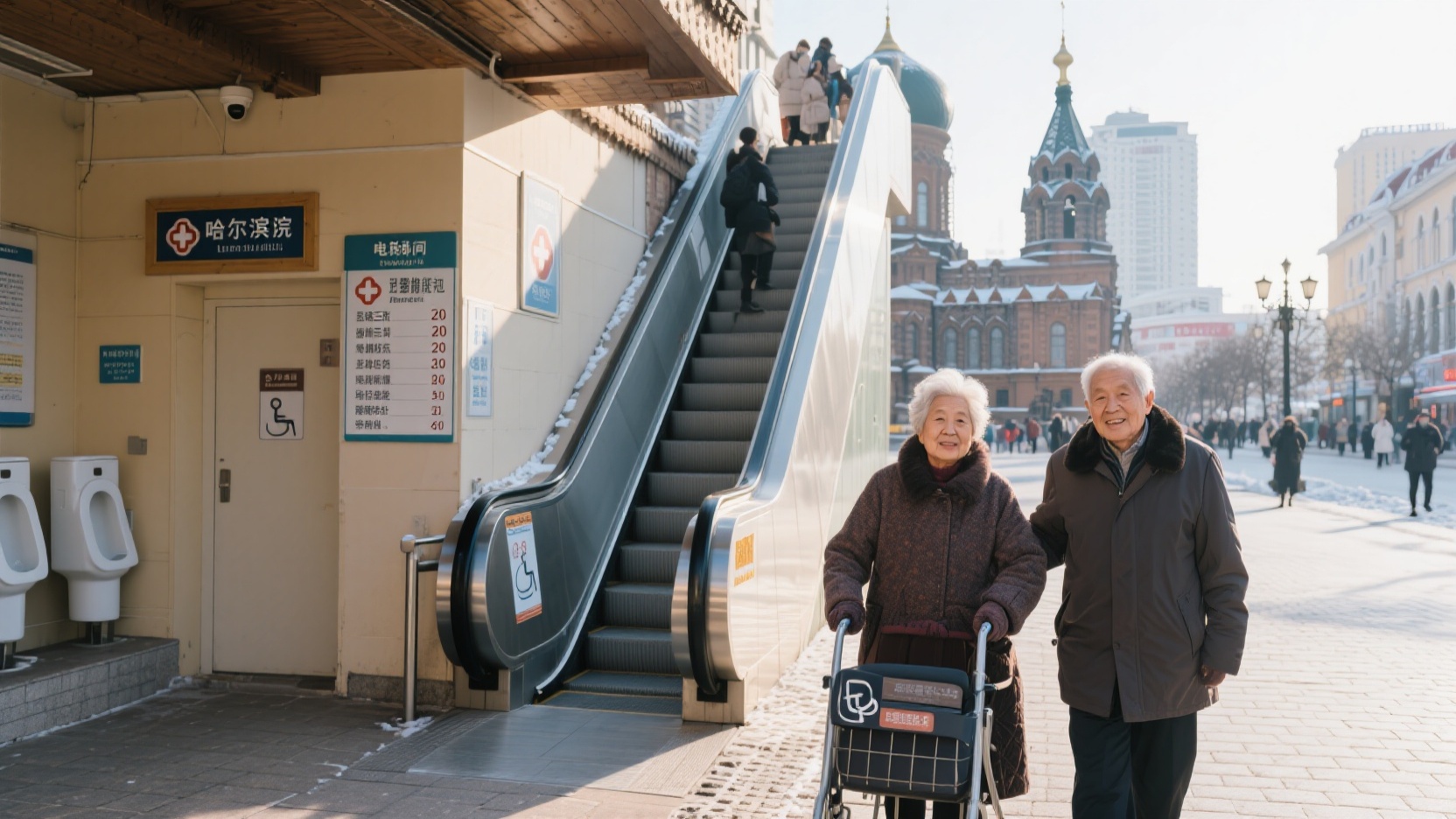
The biggest mistake I made when taking my parents to Harbin was forcing them to follow an online itinerary of "three days, two nights, ten attractions" on their behalf. After visiting Central Street and the Ice and Snow World on the first day, my mother was so tired in the taxi that she didn't want to talk. Later, I completely scrapped the original plan and changed it to a five-day, four-night "slow travel" itinerary, focusing on only one or two key attractions each day and ensuring a two-hour midday rest at the hotel. Below is my personal record of this slow travel experience in Harbin, after checking elevator coverage, accessible pathways, toilet density, and distance to nearby level-two or higher hospitals for all the attractions beforehand.
I. Lessons Learned After Trips: Slow Travel for Seniors Doesn't Mean "Fewer Attractions," But Rather a Change in Travel Itinerary Standards
The hardest part of taking elderly people out isn't their slow walking speed, but rather how we often plan routes based on the standards of young people. Many popular tourist attractions in Harbin are large, with slippery surfaces and numerous steps. In summer, the intense sun beats down, and in winter, the ground freezes, which is detrimental to knees and blood pressure. I set three strict standards for myself: no more than 800 meters on a single trip; a public restroom or shopping mall restroom within every 200 meters along the route; and the nearest level-two or higher hospital no more than a 15-minute drive from the hotel.
We chose a well-established hotel near the subway station on Central Street, making sure it had a lobby elevator, accessible handrails in the rooms, and non-slip floor tiles. Our routine of returning to the hotel for a two-hour nap at noon is unwavering. Don't think it's a waste of time; for seniors, a midday nap is the best "sightseeing."
II. Day 1-2: The "Elevator-Friendly Way" Between Central Avenue and Sofia Hotel
The first day's itinerary only included Central Avenue and the Flood Control Monument, which are connected and have a flat route, requiring no crossings or climbing. The shopping malls on both sides of Central Avenue have accessible ramps and internal elevators, allowing seniors to easily sit down, use the restroom, and get a drink of hot water. Instead of a long walk from one end of the street to the other, I led my parents slowly from the intersection of Jingwei Street to the Flood Control Monument, resting at two shopping malls along the way. The total time was two hours, and we walked less than 4,000 steps. The nearest level-two or higher hospital is about a ten-minute drive from Central Avenue, which reassured me.
The next morning, we visited Hagia Sophia. A gentle ramp runs around the square surrounding the cathedral, and an elevator takes you directly to the observation deck. The restrooms are mainly located in the visitor center on the east side of the square; they are clean and spacious. After visiting the cathedral, don't rush off. The Daoli Market is just 300 meters away. It has air conditioning, non-slip floors, and seating in the prepared food area, making it suitable for seniors to enjoy a leisurely brunch. We returned to the hotel promptly at 11:30 am for a midday rest.
Day 3: Choose between an ancient town or a hot spring; don't make the elderly make a choice.
On the third day, I offered my parents two options, letting them decide based on their physical condition the night before departure. Option A was the Laodaowai Chinese Baroque Style Street, often referred to by locals as an "ancient town within the city." The street is pedestrianized with smooth surfaces, and the old buildings on both sides have been converted into elevators or ramps. It has even more restrooms than Central Street, making it suitable for elderly people who enjoy taking photos and leisurely strolling. Option B was a large hot spring resort on the outskirts of the city, featuring indoor hot springs and a rest hall. The entire process from changing rooms to the soaking pools is barrier-free, allowing wheelchair access. Both options were within a 40-minute one-way drive, and both were near hospitals of level two or above.
If you choose an ancient town, remember to avoid entering unrenovated old courtyards, as they often have many steps and are dimly lit. If you choose a hot spring, remind the elderly to get out and rest after soaking for fifteen minutes and not to stay in the hot pool for too long. That day, we chose the hot spring, returned to the hotel for a two-hour nap, and then had dinner at the hotel's Chinese restaurant, without going out again.
Day 4: Ended with an indoor activity, followed by a 4,000-step walk after lunch.
On the fourth day, we chose the Heilongjiang Provincial Museum for a simple reason: it's indoors, single-level, has an elevator, plenty of restrooms, and ample seating. The museum isn't large; a complete tour takes less than two hours, requiring minimal physical exertion for seniors. The temperature is just right—warm in winter and not too hot in summer. I specifically scheduled the visit for 2 PM, allowing myself to rest until I naturally woke up before heading out. Afterward, we ate Russian cuisine near the hotel—again, a restaurant in a shopping mall with an elevator.
Some people asked why we didn't go to Sun Island or the Polar Aquarium. Sun Island is too big, and the shuttle buses don't run very far, so a museum is a safer option. While the Polar Aquarium is interesting, it gets crowded on weekends with long queues, which can cause anxiety for older people. The core of senior travel isn't "going to more places," but rather "taking it easy in each place." We didn't plan any sightseeing on the fifth day. After sleeping in, we went to the supermarket next to the hotel to buy some sausages, checked out, and headed back. Harbin Airport and the train station both have accessible elevators and wheelchair services; you can book in advance.
V. Blogger's Summary and Packing Checklist for Seniors (20 Items) + 5 Types of Commonly Used Medications
Over five days and four nights, my parents kept their daily step count under 5,000 steps, never missed a two-hour lunch break, and never experienced any discomfort from finding a toilet, climbing stairs, or walking too far. Harbin is actually very friendly to senior citizens, provided you're willing to give up your obsession with "checking off landmarks" and re-plan your trip based on five dimensions: elevator coverage, accessible pathways, toilet density, walking distance, and hospital distance.
20-Item Packing Checklist for Seniors: 1. Non-slip soft-soled shoes; 2. Folding seat cushion; 3. Thermos cup; 4. Folding umbrella; 5. Lightweight down-filled liner; 6. Knee pads; 7. Hat; 8. Scarf; 9. Gloves; 10. Wool socks; 11. Commonly used medication containers; 12. Blood pressure monitor; 13. Blood glucose meter; 14. Reading glasses; 15. Spare batteries for hearing aids; 16. Photocopy of ID card; 17. Medical insurance card; 18. Emergency contact card; 19. Small packs of tissues; 20. Individually packaged snacks. Five categories of commonly used medications to remember: antihypertensive drugs, hypoglycemic drugs, cardiovascular emergency medications, gastrointestinal medications, and cold and fever reducers. Carry all medications with you and take photos of the prescriptions for future reference.
One point must be emphasized: If the elderly person has mobility issues, prioritize hotels with elevators and accessible rooms; check the Harbin weather forecast every day before going out, and if there are icy or slippery roads, change to indoor activities. Taking it slow is not a compromise, but the most comfortable way to show your parents the world.