
Forget counting bricks on Central Street | A local's secret: a 5km artsy, one-way route – don't be fooled by travel guides!
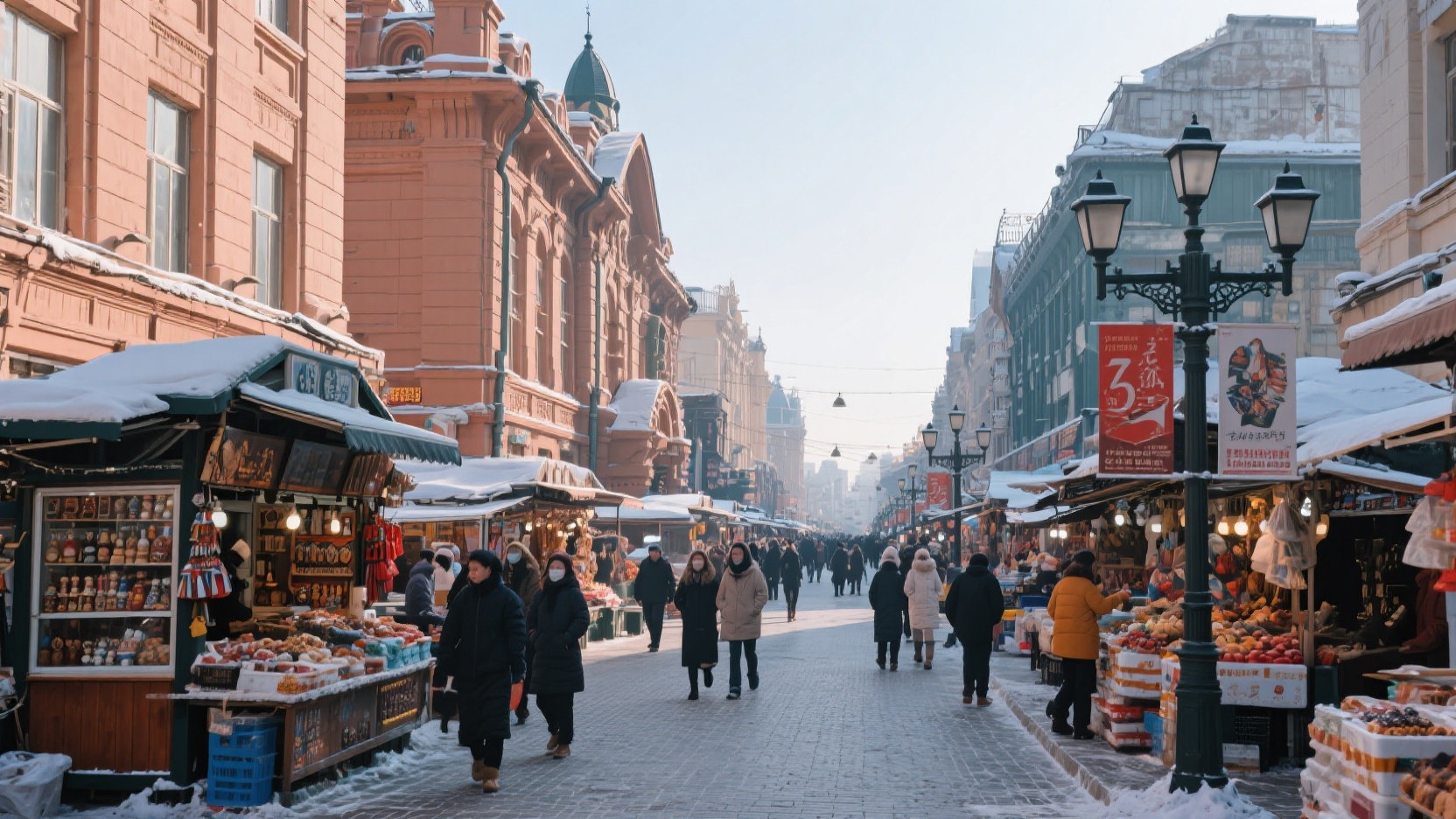
On the cobblestone streets of Central Avenue, locals no longer bother counting the bricks; what truly draws Harbin residents back time and again are the side streets, morning markets, old factories, and semi-underground bookstores that are often only briefly mentioned in travel guides. If you follow a list of popular tourist spots, you'll only capture crowds of people; but if I take you on a five-kilometer non-return route, you'll capture the "living Harbin."
This route is free, requires no queuing, and doesn't include any "pretend you're in Europe" sets, making it suitable for people who don't want to turn Harbin into a photo studio.
Three popular tourist traps that even locals wouldn't want to enter.
The first pitfall is the main street of the "Chinese Baroque Style Street". It's too newly renovated and the shop signs are too uniform, like Hengdian World Studios. Locals will mostly go to the area near the North Third Market to buy snacks and won't take photos on the main street.
The second pitfall is the interior of Hagia Sophia. While the onion domes outside are indeed photogenic on a sunny day, the interior is small with limited exhibits. During peak season, you might queue for half an hour to get in but only to come out three minutes later. It's better to walk around to the Zhaolin Street side to take photos of the reflections.
The third pitfall is the Russian goods stores and grilled red sausage and giant squid stalls on the main street of Central Avenue. Most of those "Russian chocolates" are not things that Harbin locals would normally buy; the taste and price are written all over the tourists' faces.
A five-kilometer walking route: from the morning market to the old factory, without turning back.
The route starts from the Hongzhuan Street morning market, heads west past the old guild hall on Tongjiang Street, turns into Hongxia Street and Zhongyi Street, then passes through Zhaolin Park, walks along Diduan Street to Shitoudao Street, enters the former vehicle factory renovation area on Shanghai Street, and finally returns to Daoli Vegetable Market to finish.
The entire route is about five kilometers, and it will take about three hours if you walk slowly. Don't rush; the important thing is to stop at the designated spots. It's recommended to arrive at the morning market before 8:00 AM, as the light will have faded by 9:00 AM.
Stops 1-2: Hongzhuan Street Morning Market and Tongjiang Street Old Meeting Hall
The Hongzhuan Street morning market is a popular spot for local seniors to buy groceries and for commuters to grab breakfast on their way to work. It's worth stopping for ten minutes because it offers a glimpse into a genuine Harbin morning: the steam rising and vendors shouting – far more authentic than the horse-drawn carriages on Central Street. The best vantage point is at the intersection of Hongzhuan Street and Gaoyi Street, facing east with good lighting; this will allow you to capture the steam, the oil pans, and people's faces.
Don't bother looking at the signs for food nearby; the longest queues are for fried cakes, tofu pudding, and soy milk soup—you can get a very filling meal for just a few yuan per person. After you finish eating, don't buy Russian nesting dolls; head towards Tongjiang Street.
The Tongjiang Street Old Synagogue Concert Hall is a small theater converted from an old Jewish synagogue. With its orange-red brick walls, pointed windows, and unassuming entrance, it's worth stopping for ten minutes. It's open to the public free of charge during the day and often hosts chamber music and ensemble performances in the evenings. Seating is limited, so the sound is incredibly immersive. The best vantage point is a low angle across the street from the sidewalk, capturing the streetlights and the texture of the brick walls.
You can grab a bowl of spicy noodles near the residential building on Hongxia Street. Just order a small bowl and don't add too much chili.
Stops 3-4: Hongxia Street Bookstore and Zhaolin Park
Turning off the old auditorium onto Hongxia Street, you'll find "Xueshan Bookstore" in the semi-basement. Its selection leans towards Harbin local history, architecture, and Russian émigré culture; it's not a trendy photo-op bookstore. It's worth stopping for ten minutes because you can find local historical materials not mentioned in other city guides. The best spot for a photo is down the entrance steps; the small storefront and warm lighting make it perfect for a subtle reading snapshot.
The old houses on the side streets like Hongxia Street and Zhongyi Street have more enduring charm in terms of their doorways and wooden staircases than those on the main street. Nearby, you can find grilled cold noodles and candied hawthorns on Hongxia Street; for street food, you don't need to chase after established brands. Next, walk to Zhaolin Park, but don't enter through the main gate; enter through the small gate in the southeast corner.
Zhaolin Park is a popular spot for local elderly people to play chess and children to feed squirrels. It features Russian-style bridges, poplar trees, and dappled sunlight in the early morning. It's worth stopping for ten minutes because it lacks a sense of enclosure, allowing you to capture the relaxed atmosphere of Harbin's old parks. The best shooting location is by the water in front of the antique-style pavilion in the southeast corner of the park; the morning backlighting is most stable.
There are also stalls selling roasted sweet potatoes near the park. Buy one and hold it in your hands to warm them up; it feels more like a Harbin winter than coffee.
Stop 5: Shanghai Street Old Factory Renovation Area
Walking along Diduan Street to Shanghai Street, some of the old red-brick factory buildings from the former Harbin Vehicle Factory have been preserved and transformed into a planning exhibition hall and a high-ceilinged public space. This place used to be a place for industrial workers, and now it occasionally hosts urban photography exhibitions and architectural model exhibitions, but it's not very lively.
It's worth stopping for ten minutes because it's a rare example of "industrial heritage reuse" in Harbin; the red brick walls and steel staircases are very photogenic. The best vantage point is under the red brick wall on the west side of the exhibition hall, shooting upwards; the afternoon light creates a beautiful angled effect.
There are home-style dumpling restaurants near Shanghai Street nearby. You can order a plate of sauerkraut and pork dumplings and be full for just a few dozen yuan per person.
Stop 6: Daoli Farmers Market
Our last stop was back at Daoli Market. Located on the first floor, it's a place where locals buy groceries and also eat cooked food. It's worth stopping for ten minutes because it offers truly representative Harbin everyday foods like Qiulin kvass, red sausage, large loaves of bread, cold rice cakes, and baked steamed buns—not the touristy, packaged versions. Looking back up the escalator at the entrance, the warm lighting and the bustling food stalls create a vibrant, everyday atmosphere.
After you've finished shopping, don't rush into the mall. Stand at the market entrance and listen to the locals bargaining for a while; that's the real Harbin accent.
In conclusion: Don't ask what the locals didn't tell you.
Don't go to this route around noon. Many stalls at the morning market close up after 9 a.m., and the park is also under direct sunlight at noon.
Don't wear thin-soled shoes; walking on the cobblestones and brick floors of the old factory area is more tiring than it looks. Don't mistake "Russian goods stores" for culture; the real traces of Russian expatriates can be found in the small buildings and concert halls on Tongjiang Street and Hongxia Street.
Don't just go to the front of Hagia Sophia; the old buildings and window frames on the adjacent Rue de la Paix and Rue de la Diploma are more photogenic.
Don't ask the locals "where's the best place to take photos," we'll just say: go early, don't block the way to the grocery store.