
Slow Travel in Hangzhou Without Tiring Your Legs | A 5-Day, 4-Night Trip with Parents: A Tested Guide to Avoiding Pitfalls (Includes a 20-Item Checklist for Seniors)
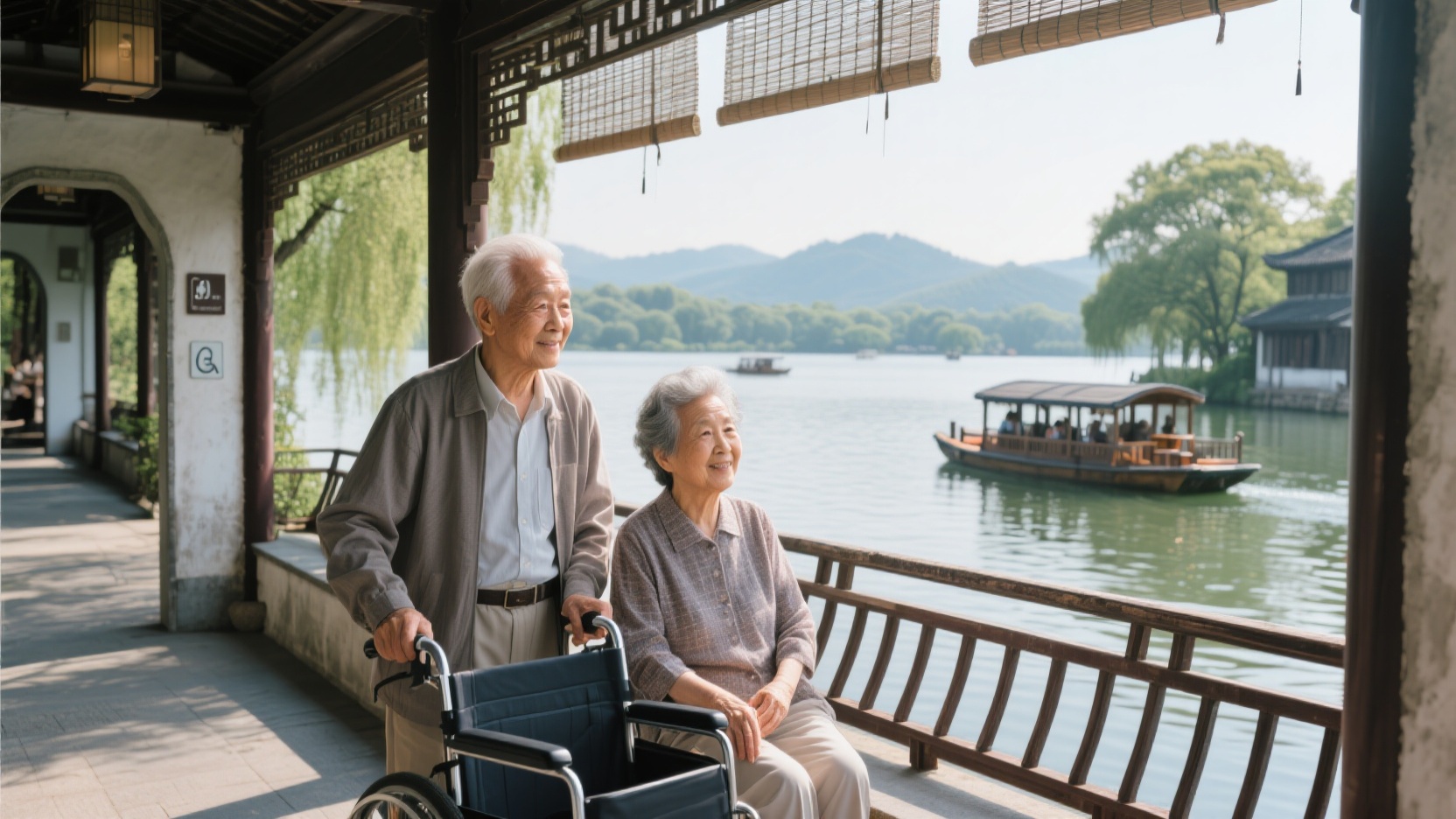
This is the third time I've brought my parents to Hangzhou. The first two times, I made the same mistake: treating West Lake like a flat park. As a result, my mother turned pale after walking only one kilometer on the Su Causeway, couldn't find a restroom anywhere, and had to take a taxi back to the hotel early. This time, I streamlined the five-day, four-night trip: only one or two key destinations each day, and a two-hour lunch break at the hotel. All the locations below are marked with information such as "elevator accessibility, barrier-free access, restroom density, walking distance, and distance to nearby level-two or higher hospitals."
How to choose a hotel: Treat "two-hour lunch break" as a key indicator.
When bringing senior citizens to Hangzhou, hotel location is more important than star rating. This time, I chose hotels near Hubin or Wulinmen because the roads are flat, public restrooms are plentiful, and it's close to West Lake and hospitals. On the first day, we didn't plan any sightseeing; we only walked within 800 meters of the hotel to allow my parents to adjust to the pace. My bottom line was that there should be a convenience store and pharmacy within 800 meters of the hotel, and a top-tier hospital within a ten-minute drive. We tried to choose rooms on lower floors with elevators, and made sure to ask if accessible rooms had handrails and non-slip mats in the shower area—don't just look at pictures.
A midday rest isn't something you can "take care of when you're tired," but rather something you include in your daily schedule: after lunch, go back to the hotel, draw the curtains, and lie down for two hours. Go out again after 3 PM, when the light is better and the crowds have thinned out. Many parents insist on not taking a midday rest, but they'll break down after walking around for two days straight. It's better to get a good night's sleep back at the hotel than to doze off on a park bench.
Don't rely on your legs to get to West Lake: a combination of cruise ships and sightseeing buses is the right way.
The second day, I only planned to visit the core area of West Lake. At 9:00 AM, we took a taxi from the hotel to Lakeside Park No. 1, then boarded the lakeside sightseeing bus, choosing a route that circled the lake for about an hour without getting off. My parents were given the opportunity to familiarize themselves with Bai Causeway, Broken Bridge, and Leifeng Pagoda from the bus. The sightseeing bus had an audio guide, allowing us to enjoy the scenery without walking. We chose to get off near Flower Harbor Park, as the dock and public restrooms were close by, within 500 meters of walking distance.
In the afternoon, take a boat trip to Three Pools Mirroring the Moon. The stone paths on the island are relatively flat, but the pier has slight inclines and declines, so wheelchairs will need assistance. If your parents have knee problems, they can just take the boat trip without going to the island, circling the lake before returning to shore. The key is not "checking off landmarks," but minimizing transfers, queues, and finding places to sit whenever possible. There's a high density of public restrooms in the area, with one every few hundred meters along the lakeside pedestrian street, and also near the Broken Bridge. The nearest top-tier hospital is about a ten-minute drive away, so you'll have peace of mind. For lunch, choose a Hangzhou-style restaurant near the lakeside, and arrive before 11:30 am to avoid the peak hours and avoid waiting.
On the third day, choose one of two options: go to a hot spring if it's cold, or visit an ancient town if it's hot.
On the third day, a choice needs to be made. If you want less walking, shade from covered walkways, and convenient restrooms, go to Tangqi Ancient Town. It's about a 40-minute taxi ride from the city center. The covered walkway along the canal is mostly flat, with slightly uneven stone slabs, but wheelchairs can navigate slowly. Restrooms are located on both sides of the main street, with a higher density than in typical water towns. There's a secondary hospital nearby, about a 10-minute drive. This area is best visited in the sunny spring and autumn months. Return to the city around 3 PM for a midday rest and then go for a walk again.
If your parents are prone to feeling cold or experiencing knee stiffness during autumn, winter, or early spring, Lin'an Hot Springs is a good choice. The drive takes about an hour and a half. It's recommended to book a room with a private soaking pool to avoid prolonged soaking in the public pool. The hot spring area is slippery, so make sure there are accessible changing rooms and non-slip walkways. People with high blood pressure or heart conditions should not soak for more than fifteen minutes at a time, and the water temperature should not be too high. The nearest hospital is about a thirty-minute drive away; please note this in your phone's notes beforehand.
My own experience is: choose an ancient town when your parents' legs are obviously weak, and choose a hot spring when they are in good health but afraid of the cold. Don't go to both, as senior citizens hate "rushing between two places" when traveling.
Xixi Wetland and Canal Street Area: Electric boats are preferred; elevators are available indoors.
On the morning of the fourth day, we went to Xixi Wetland. We took an electric boat from the Zhoujiacun entrance; the ride was smooth, and staff at the dock assisted with boarding and disembarking, so there was no need to walk long distances. We observed the reeds and water birds from the boat, stopping at any dock along the way to rest and have tea; we didn't want to force ourselves to walk the entire length of the Fu Causeway. Public restrooms are available at almost every dock and visitor center in Xixi, so it's safe to bring elderly people. The nearest secondary-level hospital is about a 15-minute drive away.
If it rains or is too hot, we'll switch to the Gongchen Bridge West Historical District. This area houses several indoor museums, including the China Knife, Scissors and Sword Museum and the China Fan Museum. All museums have elevators and accessible pathways, good air conditioning, plenty of seating, and clean restrooms. The riverside walkway is gentle, perfect for a leisurely stroll. Choose one of the two options; the key is to "consider the weather for the outdoor option, and keep the indoor option as a backup."
The fifth day will only include one indoor activity, and the return trip will not be rushed.
On the last day, avoid visiting major outdoor attractions. In the morning, visit either the Gushan branch of the Zhejiang Provincial Museum or the Shuangfeng branch of the China National Tea Museum. Both have elevators or single-level access and ample indoor rest areas, suitable for a couple of hours to relax before dragging your luggage. Avoid visiting these museums on Mondays as they are closed. Return to the hotel around 11:00 AM to check out, allowing plenty of time to get to the train station or airport. It's better to arrive an hour early than to make your parents run.
The five-day itinerary can be summarized as follows: one hour in the morning, a two-hour nap at the hotel at noon, and one hour in the afternoon, or simply a walk around the hotel area. The total daily walking distance was kept under 4,000 steps; taking public transport whenever possible and boating instead of hiking. Hangzhou is suitable for slow travel, but not for strenuous walking.
20 items to pack for seniors when traveling and 5 categories of commonly used medicines
Packing List: 1. Foldable lightweight wheelchair or walker; 2. Knee and back braces; 3. Two pairs of non-slip soft-soled shoes; 4. Foldable cushion or small stool; 5. Thermos cup; 6. Commonly used medications in individual containers; 7. Blood pressure monitor or blood glucose meter; 8. Umbrella and disposable raincoat; 9. Light jacket and sun hat; 10. ID card and medical insurance card; 11. Emergency contact card with medical history and allergies; 12. Power bank and mobile phone lanyard; 13. A small amount of cash; 14. Tissues, wet wipes, and hand sanitizer; 15. Spare plastic bags; 16. Small towel; 17. Sugar-free snacks; 18. Eye mask and earplugs; 19. Portable kettle; 20. Spare batteries for reading glasses and hearing aids.
Five categories of commonly used medications to remind you: Category 1: Cardiovascular medications, such as antihypertensive drugs and nitroglycerin, should be divided into daily portions and carried with you. Category 2: Diabetes medications; add glucose tablets or candy to hypoglycemic agents to prevent hypoglycemia. Category 3: Respiratory or allergy medications; do not check in asthma inhalers and antihistamines. Category 4: Gastrointestinal medications, such as montmorillonite powder, oral rehydration salts, and stomach medications. Category 5: Topical medications, such as adhesive bandages, iodine swabs, pain relief patches, and mosquito repellent. Keep all medications in their original packaging and instructions, and proactively declare them during security checks.
Taking my parents on a leisurely trip to Hangzhou wasn't about seeing as many sights as possible, but about ensuring they weren't tired each day, could sit down whenever they wanted, could use the restroom whenever they wanted, and felt relaxed. My biggest takeaway from these five days was: less planning leads to greater enjoyment.